More Sleep, Fewer Work Hours Recommended for Hospital Residents
|
By HospiMedica International staff writers Posted on 23 Dec 2008 |


|
A new report recommends strategies to reduce medical resident fatigue-related errors and improve patient safety and medical training by reducing residents' duty hours, increasing their sleep hours, and increasing supervision of work hour limits.
Researchers at the Institute of Medicine (IOM, Washington, DC, USA) performed a 15-month study examining the associations between residents' work schedules, their performance, and quality of care provided, under the auspices of the U.S. Agency for Healthcare Research and Quality (AHRQ, Rockville, MD, USA). Based on their study results, the IOM researchers recommend that (1) residents who complete a 30-hour shift may treat patients for only up to 16 hours, followed by a 5-hour protected sleep period between 22:00 and 08:00, during which time patient care would be managed by other residents or additional staff members. (2) Supervision of work hours should be increased because of frequent, often underreported lack of compliance with the U.S. accreditation council for graduate medical education (ACGME) limits. The IOM recommends periodic independent reviews of hours worked by residents, as well as increased protections for those who report failure to comply with current work hour restrictions. (3) Moonlighting restrictions should be increased so that both internal and external moonlighting will count against the ACGME 80-hour weekly limit. Only internal moonlighting, defined as additional paid healthcare work at the same healthcare facility, is currently considered part of the 80-hour weekly limit. Because moonlighting outside residency training affects strategically designed periods for rest and sleep and may hinder residents' abilities to complete their primary duties, the IOM recommends that both internal and external moonlighting be counted toward the total work week hourly limit. (4) To facilitate recovery after working long shifts, the IOM recommends a guaranteed 5 days off per month, with 24 hours off each week and one 48-hour period off each month. (5) Hospital on-call periods for residents should be limited to no more than every third night. (6) Because the risk for motor vehicle accidents more than doubles when residents drive home after working extended shifts, hospitals should provide safe transportation to residents who are too fatigued to drive home. (7) Residents should receive more training on better communication, using a structured team approach, during change-of-shift handovers. On the other hand, these handovers will increase as resident shift duration decreases; possibly increasing the risk for adverse events unless training and team communication improve. (8) Residents should be more involved in patient safety activities and in adverse event reporting not only to improve quality of care but also to enhance their educational experience. The recommendations were published on December 2, 2008, in the online issue of the New England Journal of Medicine (NEJM).
"The study provides the clear evidence to prove what we have long-believed is true - fatigue increases the chance for human error," said AHRQ Director Carolyn Clancy, M.D. "Most importantly, this report provides solid recommendations that can improve patient safety, as well as increase the quality of the resident training experience."
Related Links:
Institute of Medicine
Agency for Healthcare Research and Quality





Researchers at the Institute of Medicine (IOM, Washington, DC, USA) performed a 15-month study examining the associations between residents' work schedules, their performance, and quality of care provided, under the auspices of the U.S. Agency for Healthcare Research and Quality (AHRQ, Rockville, MD, USA). Based on their study results, the IOM researchers recommend that (1) residents who complete a 30-hour shift may treat patients for only up to 16 hours, followed by a 5-hour protected sleep period between 22:00 and 08:00, during which time patient care would be managed by other residents or additional staff members. (2) Supervision of work hours should be increased because of frequent, often underreported lack of compliance with the U.S. accreditation council for graduate medical education (ACGME) limits. The IOM recommends periodic independent reviews of hours worked by residents, as well as increased protections for those who report failure to comply with current work hour restrictions. (3) Moonlighting restrictions should be increased so that both internal and external moonlighting will count against the ACGME 80-hour weekly limit. Only internal moonlighting, defined as additional paid healthcare work at the same healthcare facility, is currently considered part of the 80-hour weekly limit. Because moonlighting outside residency training affects strategically designed periods for rest and sleep and may hinder residents' abilities to complete their primary duties, the IOM recommends that both internal and external moonlighting be counted toward the total work week hourly limit. (4) To facilitate recovery after working long shifts, the IOM recommends a guaranteed 5 days off per month, with 24 hours off each week and one 48-hour period off each month. (5) Hospital on-call periods for residents should be limited to no more than every third night. (6) Because the risk for motor vehicle accidents more than doubles when residents drive home after working extended shifts, hospitals should provide safe transportation to residents who are too fatigued to drive home. (7) Residents should receive more training on better communication, using a structured team approach, during change-of-shift handovers. On the other hand, these handovers will increase as resident shift duration decreases; possibly increasing the risk for adverse events unless training and team communication improve. (8) Residents should be more involved in patient safety activities and in adverse event reporting not only to improve quality of care but also to enhance their educational experience. The recommendations were published on December 2, 2008, in the online issue of the New England Journal of Medicine (NEJM).
"The study provides the clear evidence to prove what we have long-believed is true - fatigue increases the chance for human error," said AHRQ Director Carolyn Clancy, M.D. "Most importantly, this report provides solid recommendations that can improve patient safety, as well as increase the quality of the resident training experience."
Related Links:
Institute of Medicine
Agency for Healthcare Research and Quality

Gold Member
STI Test
Vivalytic Sexually Transmitted Infection (STI) Array
Gold Member
12-Channel ECG
CM1200B
Blood Pressure Monitor
Cuff Blood Pressure Monitor
Resorbable Bovine Collagen Membrane
GenDerm
Latest Patient Care News
- AI Avatar Doctor Improves Patient Understanding Before Radiotherapy
- Wearable Sleep Data Predict Adherence to Pulmonary Rehabilitation
- Revolutionary Automatic IV-Line Flushing Device to Enhance Infusion Care
- VR Training Tool Combats Contamination of Portable Medical Equipment
- Portable Biosensor Platform to Reduce Hospital-Acquired Infections
- First-Of-Its-Kind Portable Germicidal Light Technology Disinfects High-Touch Clinical Surfaces in Seconds
- Surgical Capacity Optimization Solution Helps Hospitals Boost OR Utilization

- Game-Changing Innovation in Surgical Instrument Sterilization Significantly Improves OR Throughput
- Next Gen ICU Bed to Help Address Complex Critical Care Needs
- Groundbreaking AI-Powered UV-C Disinfection Technology Redefines Infection Control Landscape
- Clean Hospitals Can Reduce Antibiotic Resistance, Save Lives
- Smart Hospital Beds Improve Accuracy of Medical Diagnosis
- New Fast Endoscope Drying System Improves Productivity and Traceability
- World’s First Automated Endoscope Cleaner Fights Antimicrobial Resistance
- Portable High-Capacity Digital Stretcher Scales Provide Precision Weighing for Patients in ER
- Portable Clinical Scale with Remote Indicator Allows for Flexible Patient Weighing Use
Channels
Artificial Intelligence
view channel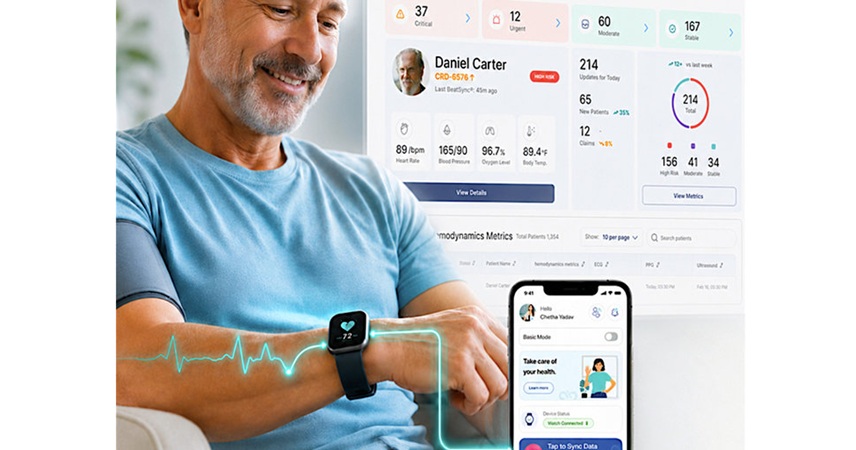
AI Platform Supports Noninvasive Remote Hemodynamic Monitoring in Heart Failure
Heart failure remains a leading cause of hospitalization in adults over 65, affecting more than 6.7 million people in the U.S. Clinicians often lose visibility into hemodynamic deterioration once patients... Read more
AI Tool Predicts Unplanned Care and Symptom Burden in Cancer Survivors
Unplanned emergency visits and hospitalizations remain common in cancer survivorship, when routine clinical contact often tapers while new symptoms emerge. These events reflect unmet needs and disrupt... Read more

Surgical Techniques
view channel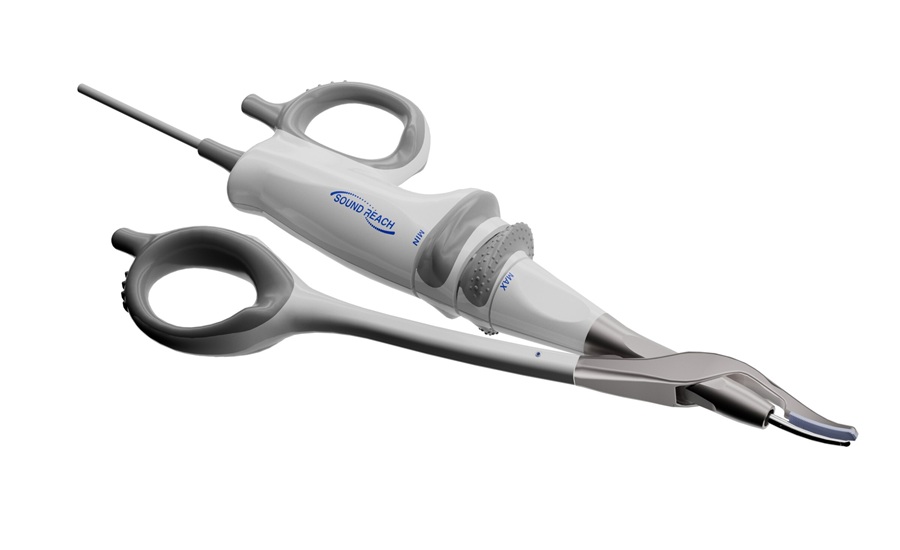
CE-Marked Ultrasonic Shears Streamline Breast and Thyroid Surgery
Thyroid and breast surgeries are often performed in confined anatomical spaces near critical structures, making precise dissection and controlled thermal management essential. As the global disease burden... Read more
3D Map of Heart Electrical Wiring Aims to Guide Congenital Heart Repair
Tetralogy of Fallot is one of the most common congenital heart problems and often requires surgery in infancy. Many survivors later develop conduction abnormalities because the cardiac electrical system... Read more
Patient Care
view channel
AI Avatar Doctor Improves Patient Understanding Before Radiotherapy
Radiation oncology consultations require patients to grasp complex concepts quickly, yet anxiety and information overload often undermine understanding and informed consent. Poor comprehension can also... Read more
Wearable Sleep Data Predict Adherence to Pulmonary Rehabilitation
Chronic obstructive pulmonary disease (COPD) is a long-term lung disorder that makes breathing difficult and often disturbs sleep, reducing energy for daily activities. Limited engagement in pulmonary... Read more

Health IT
view channel
AI-Native EHR Achieves EU Medical Device Certification
InterSystems (Boston, MA, USA) announced that its IntelliCare electronic health record (EHR) solutions have been certified as Class IIa medical devices under the European Union Medical Device Regulation... Read more
EHR-Integrated Screening Workflow Detects Cognitive Impairment at Admission
Cognitive impairment involves difficulties with thinking, learning, memory, and decision-making, and is more common in older adults. In U.S. hospitals, more than 40% of admitted older adults have dementia,... Read more
Point of Care
view channel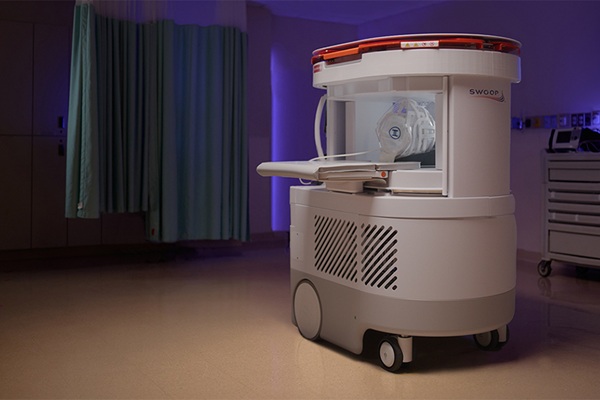
Portable MRI System Accelerates Emergency Brain Imaging and Triage
Emergency departments frequently face delays accessing conventional magnetic resonance imaging (MRI) for patients with suspected neurological emergencies. Such waits can slow triage, prolong boarding,... Read more
Point-of-Care Viscoelastic Testing System Supports Obstetric Bleeding Management
HemoSonics (Durham, NC, USA) announced on May 5, 2026 that the company's Quantra Hemostasis System for Obstetric Procedures won Silver in the 2026 Edison Awards in the Women’s Health and Reproductive Innovations... Read more

Business
view channel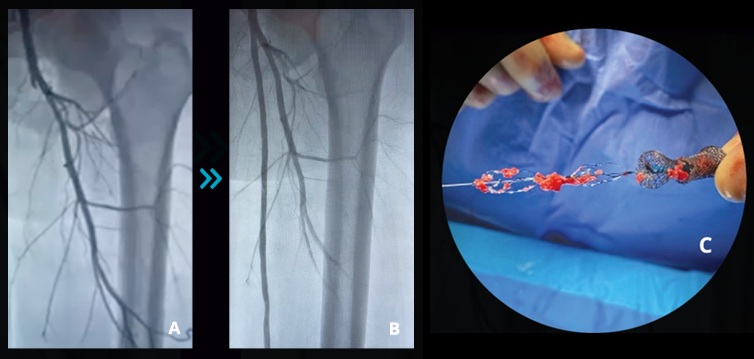
Endologix Adds FDA-Cleared Peripheral Thrombectomy System
Endologix (Santa Rosa, CA, USA) has acquired the Pounce Thrombectomy System from Surmodics, with the transaction closing on May 18, 2026. The FDA-cleared system is indicated for the non-surgical removal... Read more