






Telehealth Market Fuelled by Healthcare Demands
|
By HospiMedica International staff writers Posted on 05 Feb 2010 |


|
As the more developed countries improve reimbursement and liability legislations, growth in the telehealth market is forecast to start picking up in response to the needs of an aging population. These are the latest findings of InMedica (Wellingborough, United Kingdom), a point of care markets research company.
InMedica asserts that the initiatives taken by governments and private healthcare providers to increase reimbursements and reduce the legal and liability issues will help in the roll out of telehealth as a mainstream technology for remote disease and home-health monitoring. Consequently, InMedica predicts telehealth will start to be used by healthcare providers on a wider scale from the year 2012 onwards, and forecasts that the number of gateways used in telehealth applications will increase to over one million in 2014 and to around 3.6 million in 2018.
InMedica believes that in the short to medium term, health hubs--which currently constitute about 80% of the total gateways market--will remain the most practical solution for professional healthcare providers to supply to patients, as the infrastructure can then be standardized and simplified on a large scale. In addition, while the number of integrated cellular handsets used as telehealth gateways was estimated to be small in 2009, they are forecast to grow to over 350,000 in 2014.
"The use of mobile phones as telehealth gateways has had a surge of interest over the last couple of years; with patients and device companies recognizing the benefits of data transmission on the move,” said Neha Khandelwal, a market research analyst at InMedica. "We anticipate that cellular service providers will play an increasingly important role in the long-term future of the telehealth market.”
InMedica forecasts that health hubs will increasingly be used for managing disease conditions such as chronic heart failure (CHF) and chronic obstructive pulmonary disease (COPD). In chronic disease conditions such as diabetes, cellular handsets will also find an increasing acceptance. Diabetics are already used to regular self-monitoring with blood glucose meters, and a number of device companies have already launched diabetes management programs that use cellular handsets for transmitting blood-glucose readings to care professionals. For these patients, progressing to a telehealth service will not be a massive lifestyle change for them; moreover, receiving regular feedback on their condition would be a great benefit.
Related Links:
InMedica



InMedica asserts that the initiatives taken by governments and private healthcare providers to increase reimbursements and reduce the legal and liability issues will help in the roll out of telehealth as a mainstream technology for remote disease and home-health monitoring. Consequently, InMedica predicts telehealth will start to be used by healthcare providers on a wider scale from the year 2012 onwards, and forecasts that the number of gateways used in telehealth applications will increase to over one million in 2014 and to around 3.6 million in 2018.
InMedica believes that in the short to medium term, health hubs--which currently constitute about 80% of the total gateways market--will remain the most practical solution for professional healthcare providers to supply to patients, as the infrastructure can then be standardized and simplified on a large scale. In addition, while the number of integrated cellular handsets used as telehealth gateways was estimated to be small in 2009, they are forecast to grow to over 350,000 in 2014.
"The use of mobile phones as telehealth gateways has had a surge of interest over the last couple of years; with patients and device companies recognizing the benefits of data transmission on the move,” said Neha Khandelwal, a market research analyst at InMedica. "We anticipate that cellular service providers will play an increasingly important role in the long-term future of the telehealth market.”
InMedica forecasts that health hubs will increasingly be used for managing disease conditions such as chronic heart failure (CHF) and chronic obstructive pulmonary disease (COPD). In chronic disease conditions such as diabetes, cellular handsets will also find an increasing acceptance. Diabetics are already used to regular self-monitoring with blood glucose meters, and a number of device companies have already launched diabetes management programs that use cellular handsets for transmitting blood-glucose readings to care professionals. For these patients, progressing to a telehealth service will not be a massive lifestyle change for them; moreover, receiving regular feedback on their condition would be a great benefit.
Related Links:
InMedica

Gold Member
12-Channel ECG
CM1200B
New
Medical Examination & Procedure Light
Vega 80
New
Blood Gas Analyzer
i-Check200
Channels
Artificial Intelligence
view channel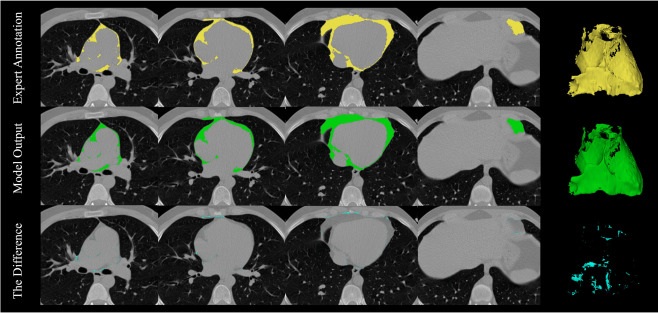
AI Analysis of Pericardial Fat Refines Long-Term Heart Disease Risk
Accurately identifying long-term cardiovascular disease risk in asymptomatic adults remains challenging for clinicians. Missed or underestimated risk delays preventive therapy and increases the chance... Read more
Machine Learning Approach Enhances Liver Cancer Risk Stratification
Hepatocellular carcinoma, the most common form of primary liver cancer, is often detected late despite targeted surveillance programs. Current screening guidelines emphasize patients with known cirrhosis,... Read more

Critical Care
view channel
Noninvasive Monitoring Device Enables Earlier Intervention in Heart Failure
Hospitalizations for heart failure with preserved ejection fraction (HFpEF) remain common because lung congestion often worsens before symptoms prompt treatment changes. Missed early decompensation... Read more
Automated IV Labeling Solution Improves Infusion Safety and Efficiency
Medication administration in high-acuity settings is often complicated by multiple concurrent infusions, making accurate line identification essential. In a 10-hospital intensive care unit study, 60% of... Read more
Surgical Techniques
view channel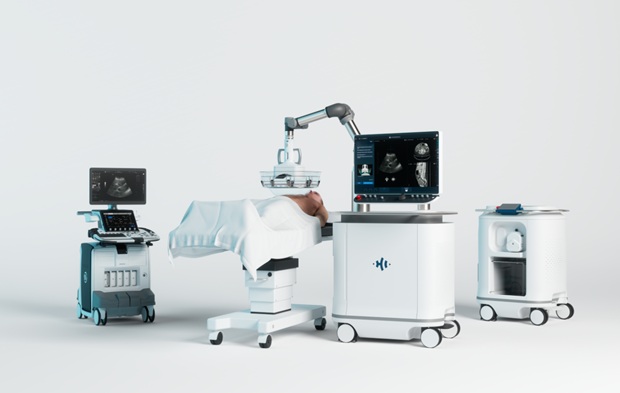
Ultrasound Technology Aims to Replace Invasive BPH Procedures
Benign prostatic hyperplasia (BPH) is a frequent cause of lower urinary tract symptoms in aging men and often requires invasive procedures or prolonged recovery. With prevalence expected to rise as populations... Read more
Continuous Monitoring with Wearables Enhances Postoperative Patient Safety
Postoperative hypoxemia on general surgical wards is common and often missed by intermittent vital sign checks. Undetected low oxygen levels can delay recovery and raise the risk of complications that... Read more
Patient Care
view channel
Wearable Sleep Data Predict Adherence to Pulmonary Rehabilitation
Chronic obstructive pulmonary disease (COPD) is a long-term lung disorder that makes breathing difficult and often disturbs sleep, reducing energy for daily activities. Limited engagement in pulmonary... Read more
Revolutionary Automatic IV-Line Flushing Device to Enhance Infusion Care
More than 80% of in-hospital patients receive intravenous (IV) therapy. Every dose of IV medicine delivered in a small volume (<250 mL) infusion bag should be followed by subsequent flushing to ensure... Read more


Business
view channel
GE HealthCare Leads Major European Initiative to Advance Cardio-Oncology Care
Cardiovascular complications are increasingly recognized among people undergoing or recovering from cancer treatment, driven by pre‑existing disease and the cardiotoxic effects of chemotherapy, radiotherapy,... Read more

