Medical Pad Targets Mobile Healthcare Applications
|
By Nadia Liefsoens Posted on 02 Sep 2014 |
A lightweight medical tablet provides an embedded barcode scanner, front and rear cameras, and a host of connectivity options.
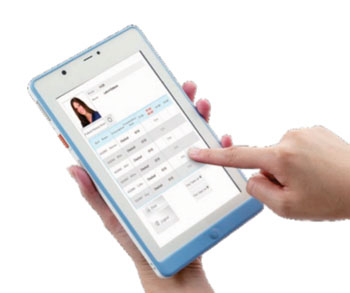
The Advantech 7” Handheld Medical Pocket Pad is a handheld mobile computing platform designed especially for use in mobile healthcare as an extension of an existing hospital information system (HIS). The durable, flexible, pad runs the Intel Atom Bay Trail-T processor, and is certified for Microsoft Windows 8.1 supported medical applications, including electronic medical records (EMRs), bar-coded medication administration (BCMA), closed-loop medication administration (CLMA), computerized physician order entry (CPOE), picture archiving and communication system (PACS), and Mobile Workstation on Cart.
The Pocket Pad can be used as a handheld device, but can also be mounted to medical equipment and nursing carts. Sheathed in an IP54-rated enclosure to protect the unit from dust and water, it is easy to clean with antibacterial agents to provide contamination control. It is also rugged, surviving a drop test at 90 cm. The embedded 1D/2D barcode scanner allows easy identification, tracking, and tracing of patients and medications throughout their hospital stay, improving patient experience and safeguarding against mistakes in medication dispensing and identification.
Other features include a two megapixel front camera and an 8 megapixel rear camera with auto-focus and flash, ideal for video conferencing. Connectivity includes Bluetooth 4.0., Wi-Fi, and near field communication (NFC), a microSD card slot, and HDMI and USB 3.0 ports. A docking port for practical uses is also provided. An embedded GPS chip supports location-based applications, and a quick-charge battery provides 4-6 hours of uninterrupted use. The Advantech 7” Handheld Medical Pocket Pad is a product of Advantech (Taipei, Taiwan).
Related Links:
Advantech
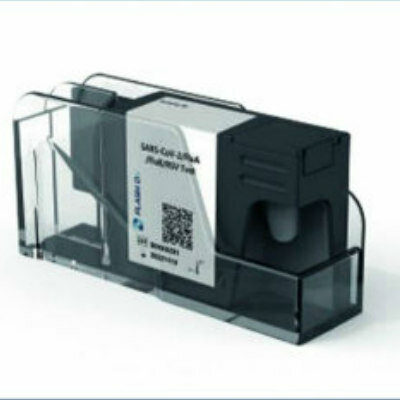
The Advantech 7” Handheld Medical Pocket Pad is a handheld mobile computing platform designed especially for use in mobile healthcare as an extension of an existing hospital information system (HIS). The durable, flexible, pad runs the Intel Atom Bay Trail-T processor, and is certified for Microsoft Windows 8.1 supported medical applications, including electronic medical records (EMRs), bar-coded medication administration (BCMA), closed-loop medication administration (CLMA), computerized physician order entry (CPOE), picture archiving and communication system (PACS), and Mobile Workstation on Cart.
The Pocket Pad can be used as a handheld device, but can also be mounted to medical equipment and nursing carts. Sheathed in an IP54-rated enclosure to protect the unit from dust and water, it is easy to clean with antibacterial agents to provide contamination control. It is also rugged, surviving a drop test at 90 cm. The embedded 1D/2D barcode scanner allows easy identification, tracking, and tracing of patients and medications throughout their hospital stay, improving patient experience and safeguarding against mistakes in medication dispensing and identification.
Other features include a two megapixel front camera and an 8 megapixel rear camera with auto-focus and flash, ideal for video conferencing. Connectivity includes Bluetooth 4.0., Wi-Fi, and near field communication (NFC), a microSD card slot, and HDMI and USB 3.0 ports. A docking port for practical uses is also provided. An embedded GPS chip supports location-based applications, and a quick-charge battery provides 4-6 hours of uninterrupted use. The Advantech 7” Handheld Medical Pocket Pad is a product of Advantech (Taipei, Taiwan).
Related Links:
Advantech
Read the full article by registering today, it's FREE!
Register now for FREE to HospiMedica.com and get access to news and events that shape the world of Hospital Medicine.
- Free digital version edition of HospiMedica International sent by email on regular basis
- Free print version of HospiMedica International magazine (available only outside USA and Canada).
- Free and unlimited access to back issues of HospiMedica International in digital format
- Free HospiMedica International Newsletter sent every week containing the latest news
- Free breaking news sent via email
- Free access to Events Calendar
- Free access to LinkXpress new product services
- REGISTRATION IS FREE AND EASY!
Sign in: Registered website members
Sign in: Registered magazine subscribers
Channels
Artificial Intelligence
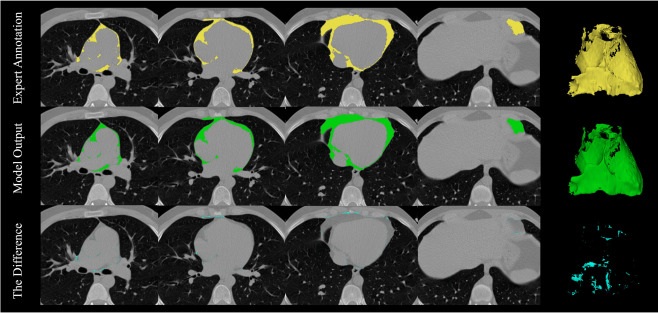
view channelAI Analysis of Pericardial Fat Refines Long-Term Heart Disease Risk
Accurately identifying long-term cardiovascular disease risk in asymptomatic adults remains challenging for clinicians. Missed or underestimated risk delays preventive therapy and increases the chance... Read more
Machine Learning Approach Enhances Liver Cancer Risk Stratification
Hepatocellular carcinoma, the most common form of primary liver cancer, is often detected late despite targeted surveillance programs. Current screening guidelines emphasize patients with known cirrhosis,... Read moreCritical Care
view channel
Noninvasive Monitoring Device Enables Earlier Intervention in Heart Failure
Hospitalizations for heart failure with preserved ejection fraction (HFpEF) remain common because lung congestion often worsens before symptoms prompt treatment changes. Missed early decompensation... Read more
Automated IV Labeling Solution Improves Infusion Safety and Efficiency
Medication administration in high-acuity settings is often complicated by multiple concurrent infusions, making accurate line identification essential. In a 10-hospital intensive care unit study, 60% of... Read moreSurgical Techniques
view channel
Ultrasound Technology Aims to Replace Invasive BPH Procedures
Benign prostatic hyperplasia (BPH) is a frequent cause of lower urinary tract symptoms in aging men and often requires invasive procedures or prolonged recovery. With prevalence expected to rise as populations... Read more
Continuous Monitoring with Wearables Enhances Postoperative Patient Safety
Postoperative hypoxemia on general surgical wards is common and often missed by intermittent vital sign checks. Undetected low oxygen levels can delay recovery and raise the risk of complications that... Read morePatient Care
view channel
Wearable Sleep Data Predict Adherence to Pulmonary Rehabilitation
Chronic obstructive pulmonary disease (COPD) is a long-term lung disorder that makes breathing difficult and often disturbs sleep, reducing energy for daily activities. Limited engagement in pulmonary... Read more
Revolutionary Automatic IV-Line Flushing Device to Enhance Infusion Care
More than 80% of in-hospital patients receive intravenous (IV) therapy. Every dose of IV medicine delivered in a small volume (<250 mL) infusion bag should be followed by subsequent flushing to ensure... Read moreBusiness
view channel