






Anticoagulant Reversal Agents Widen AF Treatment Options
|
By HospiMedica International staff writers Posted on 22 Nov 2015 |


|
Several anticoagulant reversal agents under development may eliminate obstacles to the use of novel oral anticoagulants, according to a panel of experts.
Convened at a special session of the annual Transcatheter Cardiovascular Therapeutics (TCT) meeting, held during October 2015 in San Francisco (CA, USA), the panel discussed the use of the reversal agents, which can swiftly undo the potent effects of anticoagulants during major bleeding episodes or emergency surgery in atrial fibrillation (AF) patients. Numerous questions abound, including how to assess the efficacy of anticoagulation reversal agents, what doses are needed, and optimal intravenous (IV) administration duration and administration.
Leading the way is idarucizumab, a dabigatran reversal agent; it has been used clinically in both major bleeding patients and in patients undergoing emergency surgery with positive results. Other oral anticoagulant reversal agents currently in development are andexanet alfa, a factor Xa decoy has been shown to rapidly attenuate the anti-factor Xa activity of apixaban, rivaroxaban, edoxaban, and enoxaparin and restore thrombin generation in phase 2 studies in healthy human volunteers; reversal is achieved in less than 5 minutes.
Anither is PER977, a water-soluble small-molecule nonspecific reversal agent for multiple anti-Xa and anti-IIa agents. It is currently in phase one to two trials in healthy human volunteers. It has a rapid onset of action, reversing anticoagulation 5 to 10 minutes after IV administration, as evidenced in edoxaban-treated healthy volunteers. Idarucizumab and andexanet alfa received breakthrough therapy designations from the US Food and Drug Administration (FDA); PER977 has received Fast Track status.
“Reversal agents for new anticoagulants are important because anticoagulation is still underused as stroke prevention in patients with atrial fibrillation,” said panel member Prof. Lisa Jennings, PhD, director of the vascular biology center at the University of Tennessee Health Science Center (UTHSC; Memphis, USA). “Underuse persists, although the new anticoagulants overcome some of the difficulties of anticoagulant provided by the Vitamin K antagonists. Perhaps one reason for the lack of wider uptake is the absence of new anticoagulant reversal agents.”
“There is reluctance among physicians to prescribe new anticoagulant agents because there are no available reversible agents,” added Ajay Kirtane, MD, assistant professor of clinical medicine at Columbia University (New York, NY, USA). “At present we don't prefer those newer agents because if somebody were to bleed—not that it happens that frequently—then you would not be able to reverse it. If the reversal agents were available, those scenarios would just go away.”
The pending use of the new oral anticoagulants ranges from 23–36 million people in the developed world by the year 2020, and an estimated 500,000 of these are going to need a drug that can rapidly reverse anticoagulation. It is important to note, however, that while both small-molecule and antibody-based anticoagulant reversal agents are showing promising results, none of these agents are approved for the acute reversal of novel oral anticoagulants.
Related Links:
University of Tennessee Health Science Center
Columbia University




Convened at a special session of the annual Transcatheter Cardiovascular Therapeutics (TCT) meeting, held during October 2015 in San Francisco (CA, USA), the panel discussed the use of the reversal agents, which can swiftly undo the potent effects of anticoagulants during major bleeding episodes or emergency surgery in atrial fibrillation (AF) patients. Numerous questions abound, including how to assess the efficacy of anticoagulation reversal agents, what doses are needed, and optimal intravenous (IV) administration duration and administration.
Leading the way is idarucizumab, a dabigatran reversal agent; it has been used clinically in both major bleeding patients and in patients undergoing emergency surgery with positive results. Other oral anticoagulant reversal agents currently in development are andexanet alfa, a factor Xa decoy has been shown to rapidly attenuate the anti-factor Xa activity of apixaban, rivaroxaban, edoxaban, and enoxaparin and restore thrombin generation in phase 2 studies in healthy human volunteers; reversal is achieved in less than 5 minutes.
Anither is PER977, a water-soluble small-molecule nonspecific reversal agent for multiple anti-Xa and anti-IIa agents. It is currently in phase one to two trials in healthy human volunteers. It has a rapid onset of action, reversing anticoagulation 5 to 10 minutes after IV administration, as evidenced in edoxaban-treated healthy volunteers. Idarucizumab and andexanet alfa received breakthrough therapy designations from the US Food and Drug Administration (FDA); PER977 has received Fast Track status.
“Reversal agents for new anticoagulants are important because anticoagulation is still underused as stroke prevention in patients with atrial fibrillation,” said panel member Prof. Lisa Jennings, PhD, director of the vascular biology center at the University of Tennessee Health Science Center (UTHSC; Memphis, USA). “Underuse persists, although the new anticoagulants overcome some of the difficulties of anticoagulant provided by the Vitamin K antagonists. Perhaps one reason for the lack of wider uptake is the absence of new anticoagulant reversal agents.”
“There is reluctance among physicians to prescribe new anticoagulant agents because there are no available reversible agents,” added Ajay Kirtane, MD, assistant professor of clinical medicine at Columbia University (New York, NY, USA). “At present we don't prefer those newer agents because if somebody were to bleed—not that it happens that frequently—then you would not be able to reverse it. If the reversal agents were available, those scenarios would just go away.”
The pending use of the new oral anticoagulants ranges from 23–36 million people in the developed world by the year 2020, and an estimated 500,000 of these are going to need a drug that can rapidly reverse anticoagulation. It is important to note, however, that while both small-molecule and antibody-based anticoagulant reversal agents are showing promising results, none of these agents are approved for the acute reversal of novel oral anticoagulants.
Related Links:
University of Tennessee Health Science Center
Columbia University

Gold Member
SARS‑CoV‑2/Flu A/Flu B/RSV Sample-To-Answer Test
SARS‑CoV‑2/Flu A/Flu B/RSV Cartridge (CE-IVD)
New
Multi-Chamber Washer-Disinfector
WD 390
New
Fetal Monitor
BT-380
Latest Critical Care News
- Noninvasive Monitoring Device Enables Earlier Intervention in Heart Failure
- Automated IV Labeling Solution Improves Infusion Safety and Efficiency
- First-Of-Its-Kind AI Tool Detects Pulmonary Hypertension from Standard ECGs
- 4D Digital Twin Heart Model Improves CRT Outcomes
- AI Turns Glucose Data Into Actionable Insights for Diabetes Care
- Microscale Wireless Implant Tracks Brain Activity Over Time
- Smart Mask Delivers Continuous, Battery-Free Breath Monitoring
- Routine Blood Pressure Readings May Identify Risk of Future Cognitive Decline
- CGM-Based Algorithm Enhances Insulin Dose Adjustment in Type 2 Diabetes
- Fish Scale–Based Implants Offer New Approach to Corneal Repair
- Dual-Function Wound Patch Combines Infection Sensing and Treatment
- Smartwatch Signals and Blood Tests Team Up for Early Warning on Insulin Resistance
- Smart Fabric Technology Aims to Prevent Pressure Injuries in Hospital Care
- Standardized Treatment Algorithm Improves Blood Pressure Control
- Combined Infection Control Strategy Limits Drug-Resistant Outbreak in NICU
- AI Helps Predict Which Heart-Failure Patients Will Worsen Within a Year
Channels
Artificial Intelligence
view channel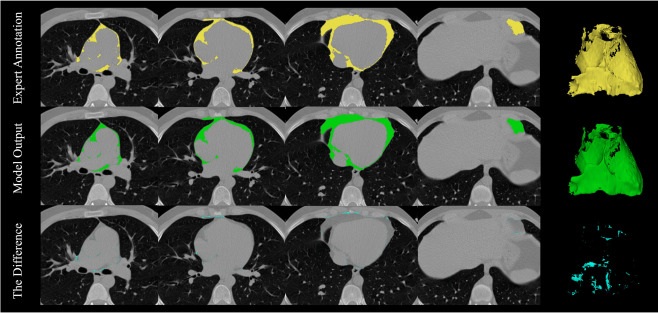
AI Analysis of Pericardial Fat Refines Long-Term Heart Disease Risk
Accurately identifying long-term cardiovascular disease risk in asymptomatic adults remains challenging for clinicians. Missed or underestimated risk delays preventive therapy and increases the chance... Read more
Machine Learning Approach Enhances Liver Cancer Risk Stratification
Hepatocellular carcinoma, the most common form of primary liver cancer, is often detected late despite targeted surveillance programs. Current screening guidelines emphasize patients with known cirrhosis,... Read more

Surgical Techniques
view channel
Ultrasound Technology Aims to Replace Invasive BPH Procedures
Benign prostatic hyperplasia (BPH) is a frequent cause of lower urinary tract symptoms in aging men and often requires invasive procedures or prolonged recovery. With prevalence expected to rise as populations... Read more
Continuous Monitoring with Wearables Enhances Postoperative Patient Safety
Postoperative hypoxemia on general surgical wards is common and often missed by intermittent vital sign checks. Undetected low oxygen levels can delay recovery and raise the risk of complications that... Read more

Patient Care
view channel
Wearable Sleep Data Predict Adherence to Pulmonary Rehabilitation
Chronic obstructive pulmonary disease (COPD) is a long-term lung disorder that makes breathing difficult and often disturbs sleep, reducing energy for daily activities. Limited engagement in pulmonary... Read more
Revolutionary Automatic IV-Line Flushing Device to Enhance Infusion Care
More than 80% of in-hospital patients receive intravenous (IV) therapy. Every dose of IV medicine delivered in a small volume (<250 mL) infusion bag should be followed by subsequent flushing to ensure... Read more

Health IT
view channel
EMR-Based Tool Predicts Graft Failure After Kidney Transplant
Kidney transplantation offers patients with end-stage kidney disease longer survival and better quality of life than dialysis, yet graft failure remains a major challenge. Although a successful transplant... Read more
Printable Molecule-Selective Nanoparticles Enable Mass Production of Wearable Biosensors
The future of medicine is likely to focus on the personalization of healthcare—understanding exactly what an individual requires and delivering the appropriate combination of nutrients, metabolites, and... Read more


Business
view channel
GE HealthCare Leads Major European Initiative to Advance Cardio-Oncology Care
Cardiovascular complications are increasingly recognized among people undergoing or recovering from cancer treatment, driven by pre‑existing disease and the cardiotoxic effects of chemotherapy, radiotherapy,... Read more

