






Cloud-Based Telehealth System Connects Physicians and Patients
|
By HospiMedica International staff writers Posted on 28 Mar 2016 |


|
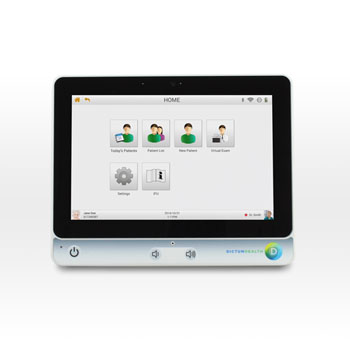
Image: The IDM100 integrated medical tablet (Photo courtesy of Dictum Health).
A virtual exam room (VER) telehealth system allows patients to interact in private with physicians and share medical images and data.
The Dictum Health (Oakland, CA, USA) VER is a completely private examination room that uses clinically accurate medical devices to allow patients to access a physician and share real-time vital signs, cardiopulmonary data, and medical images over a secure, real-time connection. Using the IDM100 integrated medical tablet, patients can establish the physician-to-patient videoconferencing session. The tablet also stores and seamlessly synchronizes patient data to electronic medical records (EMRs).
With the assistance of auxiliary devices, the IDM100 can capture three and 12 lead electrocardiogram (ECG) readings, and can also serve as a digital stethoscope. Two integrated cameras are used for face-to-face videoconferencing or to take an image. The auxiliary devices are used for weight, height, and body mass index (BMI) calculation; noninvasive blood pressure measurement; temperature reading; SpO2 pulse-oximetry and spirometry; and an audiogram hearing test. To take advantage of the auxiliary devices, the tablet is provided with both Bluetooth and USB connectivity.
At the other end, physicians enter the VER using the proprietary Care Central web interface from their laptop or tablet. When a virtual exam is conducted with the IDM100, the clinician can remotely view the patient's diagnostic data in real time with the clinical accuracy of an in-office exam. Using Care Central, clinicians can also set and manage customized alerts and reminders for remote patient monitoring, and can make expedited clinical decisions by analyzing trends of biometric data. The Dictum Health VER platform and IDM100 integrated medical tablet have been approved by the US Food and Drug Administration (FDA).
“The Virtual Exam Room addresses the need for a highly mobile, patient centric model of care that reaches large populations in a way that the old brick and mortar, provider-centric model cannot,” said Elizabeth Keate, vice president of product management at Dictum Health. “What makes the VER stand out is its ability to deliver the same clinical quality as an acute care setting or physician office to patients at a remote location or in their home. This highly secure, portable, telehealth system reinforces the physician/patient relationship in a population health world.”
“Few patients require the level of continual, sophisticated monitoring that cardiac patients require,” said Susan Eisenberg, MD, medical director of the cardiac rhythm center at John Muir Health (Walnut Creek, CA, USA). “Dictum Health’s innovative virtual exam room delivers not only the highest level remote monitoring of our cardiac patients, but enables me as their cardiologist to be present with them in a way that wasn’t previously possible. That’s a critical element in patient-centric care.”
Related Links:
Dictum Health




The Dictum Health (Oakland, CA, USA) VER is a completely private examination room that uses clinically accurate medical devices to allow patients to access a physician and share real-time vital signs, cardiopulmonary data, and medical images over a secure, real-time connection. Using the IDM100 integrated medical tablet, patients can establish the physician-to-patient videoconferencing session. The tablet also stores and seamlessly synchronizes patient data to electronic medical records (EMRs).
With the assistance of auxiliary devices, the IDM100 can capture three and 12 lead electrocardiogram (ECG) readings, and can also serve as a digital stethoscope. Two integrated cameras are used for face-to-face videoconferencing or to take an image. The auxiliary devices are used for weight, height, and body mass index (BMI) calculation; noninvasive blood pressure measurement; temperature reading; SpO2 pulse-oximetry and spirometry; and an audiogram hearing test. To take advantage of the auxiliary devices, the tablet is provided with both Bluetooth and USB connectivity.
At the other end, physicians enter the VER using the proprietary Care Central web interface from their laptop or tablet. When a virtual exam is conducted with the IDM100, the clinician can remotely view the patient's diagnostic data in real time with the clinical accuracy of an in-office exam. Using Care Central, clinicians can also set and manage customized alerts and reminders for remote patient monitoring, and can make expedited clinical decisions by analyzing trends of biometric data. The Dictum Health VER platform and IDM100 integrated medical tablet have been approved by the US Food and Drug Administration (FDA).
“The Virtual Exam Room addresses the need for a highly mobile, patient centric model of care that reaches large populations in a way that the old brick and mortar, provider-centric model cannot,” said Elizabeth Keate, vice president of product management at Dictum Health. “What makes the VER stand out is its ability to deliver the same clinical quality as an acute care setting or physician office to patients at a remote location or in their home. This highly secure, portable, telehealth system reinforces the physician/patient relationship in a population health world.”
“Few patients require the level of continual, sophisticated monitoring that cardiac patients require,” said Susan Eisenberg, MD, medical director of the cardiac rhythm center at John Muir Health (Walnut Creek, CA, USA). “Dictum Health’s innovative virtual exam room delivers not only the highest level remote monitoring of our cardiac patients, but enables me as their cardiologist to be present with them in a way that wasn’t previously possible. That’s a critical element in patient-centric care.”
Related Links:
Dictum Health

Gold Member
SARS‑CoV‑2/Flu A/Flu B/RSV Sample-To-Answer Test
SARS‑CoV‑2/Flu A/Flu B/RSV Cartridge (CE-IVD)
New
Hypodermic Syringe
SurTract™ Safety Syringe
New
Blood Pressure Monitor
Cuff Blood Pressure Monitor
Channels
Artificial Intelligence
view channel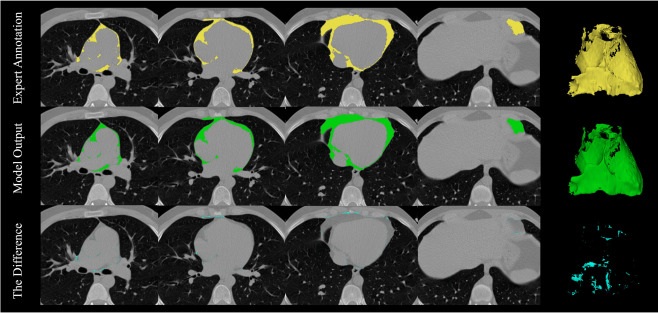
AI Analysis of Pericardial Fat Refines Long-Term Heart Disease Risk
Accurately identifying long-term cardiovascular disease risk in asymptomatic adults remains challenging for clinicians. Missed or underestimated risk delays preventive therapy and increases the chance... Read more
Machine Learning Approach Enhances Liver Cancer Risk Stratification
Hepatocellular carcinoma, the most common form of primary liver cancer, is often detected late despite targeted surveillance programs. Current screening guidelines emphasize patients with known cirrhosis,... Read more

Critical Care
view channel
Noninvasive Monitoring Device Enables Earlier Intervention in Heart Failure
Hospitalizations for heart failure with preserved ejection fraction (HFpEF) remain common because lung congestion often worsens before symptoms prompt treatment changes. Missed early decompensation... Read more
Automated IV Labeling Solution Improves Infusion Safety and Efficiency
Medication administration in high-acuity settings is often complicated by multiple concurrent infusions, making accurate line identification essential. In a 10-hospital intensive care unit study, 60% of... Read more
Surgical Techniques
view channel
Ultrasound Technology Aims to Replace Invasive BPH Procedures
Benign prostatic hyperplasia (BPH) is a frequent cause of lower urinary tract symptoms in aging men and often requires invasive procedures or prolonged recovery. With prevalence expected to rise as populations... Read more
Continuous Monitoring with Wearables Enhances Postoperative Patient Safety
Postoperative hypoxemia on general surgical wards is common and often missed by intermittent vital sign checks. Undetected low oxygen levels can delay recovery and raise the risk of complications that... Read more
Patient Care
view channel
Wearable Sleep Data Predict Adherence to Pulmonary Rehabilitation
Chronic obstructive pulmonary disease (COPD) is a long-term lung disorder that makes breathing difficult and often disturbs sleep, reducing energy for daily activities. Limited engagement in pulmonary... Read more
Revolutionary Automatic IV-Line Flushing Device to Enhance Infusion Care
More than 80% of in-hospital patients receive intravenous (IV) therapy. Every dose of IV medicine delivered in a small volume (<250 mL) infusion bag should be followed by subsequent flushing to ensure... Read more


Business
view channel
GE HealthCare Leads Major European Initiative to Advance Cardio-Oncology Care
Cardiovascular complications are increasingly recognized among people undergoing or recovering from cancer treatment, driven by pre‑existing disease and the cardiotoxic effects of chemotherapy, radiotherapy,... Read more

