Sony Europe Acquires eSATURNUS
|
By HospiMedica International staff writers Posted on 16 Aug 2016 |


|
Sony Europe Ltd. (Weybridge, UK) has acquired eSATURNUS NV (Leuven, Belgium), which provides clinical video over IP solutions in the medical field.
The acquisition includes all of eSATURNUS’s assets, covering intellectual property rights, as well as its technologies and software solution capabilities, and will allow Sony to provide new services and end-to-end clinical image workflow solutions for hospitals.
eSATURNUS' know-how of hospital operating room workflows, as well as IP-based video integration software, enables processing, control and distribution of multiple image sources combined with medical information. This, along with Sony’s imaging and AV/IT technologies in this field, will allow the combined company to develop further smart clinical video over IP solutions for inside and outside operating rooms. Sony plans to initially expand the business in Europe, followed by international deployment in the future.
Adam Fry, Vice President, Sony Professional, Sony Europe, commented, “Over the past few years, we’ve seen the requirements within hospitals significantly change. There is a constant need to maximize the investment hospitals make in clinical equipment. But with the advent of new technology and workflow solutions, it has never been more important to them to be able to invest in ‘future proofed’ installations, with a holistic and long-range view. This means hospitals are looking for end-to-end and state-of-the-art workflows that perform efficiently but that can also evolve over time. Together with eSATURNUS, Sony will aim to further develop smart, scalable and leading-edge clinical Video over IP workflow solutions in digitally-integrated operating room systems.”
Thomas Koninckx, CEO & Co-founder, eSATURNUS NV, added, “The integration of eSATURNUS within Sony will make us part of an incredible organization, and provide access to Sony’s leading technology platform. The aligned vision of eSATURNUS and Sony means that existing and prospective customers can expect even faster technological evolution in the future, and excellent global service. We are pleased to be able to deliver new smart solutions in digitally integrated operating rooms. The motto ‘Better Healthcare through Smart Innovation’ will be more alive than ever, and we plan to keep delivering solutions for better and safer clinical care. We believe the best is yet to come.”
Toru Katsumoto, President of the Medical Business Unit, Business Executive of Sony Corporation commented, “The acquisition of eSATURNUS is an important milestone toward the mid-range growth of Sony Corporation, where the medical business is positioned as one of Sony’s core growth drivers. Sony and eSATURNUS plan to harness their respective strengths in hardware and software to develop and deliver state-of-the-art medical solutions and services to customers. Sony aims to become a major contributor to the future of medical industry.”
Related Links:
Sony Europe
eSATURNUS





The acquisition includes all of eSATURNUS’s assets, covering intellectual property rights, as well as its technologies and software solution capabilities, and will allow Sony to provide new services and end-to-end clinical image workflow solutions for hospitals.
eSATURNUS' know-how of hospital operating room workflows, as well as IP-based video integration software, enables processing, control and distribution of multiple image sources combined with medical information. This, along with Sony’s imaging and AV/IT technologies in this field, will allow the combined company to develop further smart clinical video over IP solutions for inside and outside operating rooms. Sony plans to initially expand the business in Europe, followed by international deployment in the future.
Adam Fry, Vice President, Sony Professional, Sony Europe, commented, “Over the past few years, we’ve seen the requirements within hospitals significantly change. There is a constant need to maximize the investment hospitals make in clinical equipment. But with the advent of new technology and workflow solutions, it has never been more important to them to be able to invest in ‘future proofed’ installations, with a holistic and long-range view. This means hospitals are looking for end-to-end and state-of-the-art workflows that perform efficiently but that can also evolve over time. Together with eSATURNUS, Sony will aim to further develop smart, scalable and leading-edge clinical Video over IP workflow solutions in digitally-integrated operating room systems.”
Thomas Koninckx, CEO & Co-founder, eSATURNUS NV, added, “The integration of eSATURNUS within Sony will make us part of an incredible organization, and provide access to Sony’s leading technology platform. The aligned vision of eSATURNUS and Sony means that existing and prospective customers can expect even faster technological evolution in the future, and excellent global service. We are pleased to be able to deliver new smart solutions in digitally integrated operating rooms. The motto ‘Better Healthcare through Smart Innovation’ will be more alive than ever, and we plan to keep delivering solutions for better and safer clinical care. We believe the best is yet to come.”
Toru Katsumoto, President of the Medical Business Unit, Business Executive of Sony Corporation commented, “The acquisition of eSATURNUS is an important milestone toward the mid-range growth of Sony Corporation, where the medical business is positioned as one of Sony’s core growth drivers. Sony and eSATURNUS plan to harness their respective strengths in hardware and software to develop and deliver state-of-the-art medical solutions and services to customers. Sony aims to become a major contributor to the future of medical industry.”
Related Links:
Sony Europe
eSATURNUS

Gold Member
Neonatal Heel Incision Device
Tenderfoot
Desk Aneroid Sphyg
Diagnostix 750D+
Glucose Meter
StatStrip®
Latest Business News
- Medtronic Receives FDA Clearance for Vessel-Sealing Instrument for Robotic Surgery
- Robotic Single-Port System Gains CE Mark for Transvaginal Gynecologic Procedures
- Smartphone-Integrated Epinephrine Auto-Injector Concept Wins Red Dot Design Award
- Partnership Advances AI Tool for Predicting Malignant Cerebral Edema
- First U.S. Commercial Cases Demonstrate New Approach to Transseptal Access
- Philips and Imricor Collaboration Advances MRI-Guided Cardiac Procedures
- FDA Approval Clears Path for BCI Integration with Personal Computing Devices
- Abbott LAA Occluder Gains CE Mark for AFib Stroke Risk Reduction
- Smart Hospital Market Set for Strong Growth as Digital Healthcare Adoption Accelerates
- FDA Seeks Feedback on Regulating Generative AI Medical Devices
- Teledyne to Acquire Varex Imaging in $1.1 Billion Deal
- MIMEDX to Add Sanara MedTech’s Regenerative Technologies Through $350 Million Deal
- AI Software Combines Nodule Detection and Diagnosis for Lung Cancer Screening
- AI Care Platform Adds Quantitative MRI Analysis for Multiple Sclerosis
- Danaher Completes Acquisition of Masimo to Expand Patient Monitoring Capabilities
- Endologix Adds FDA-Cleared Peripheral Thrombectomy System
Channels
Artificial Intelligence
view channel
AI Improves Non-Contrast CT Interpretation for Time-Sensitive Stroke Assessment
Acute ischemic stroke occurs when a blood vessel in the brain becomes blocked, requiring rapid diagnosis to enable timely reperfusion therapy. Emergency departments often use computed tomography angiography... Read more
AI-Powered ECG Model Gains FDA Authorization for Emergency Cardiac Assessment
Powerful Medical’s PMcardio Queen of Hearts (ACS AI ECG Model) has received U.S. Food and Drug Administration (FDA) De Novo authorization, announced on September 15, 2026. The model is designed to identify... Read more

Critical Care
view channel
New Approach Helps Identify Materials for More Reliable Wearable Electronics
Wearable health monitors and electronic skin must maintain stable performance while being stretched and bent. Molecular single crystals are promising for such stretchable electronics, yet the microscale... Read more
Scotland Adopts Respiratory Infection Control Guidance Informed by Aerosol Research
Preventing respiratory infection transmission in hospitals remains a core patient and staff safety priority. Many precautions have hinged on the assumption that certain clinical interventions create high-risk... Read more

Surgical Techniques
view channel
Patient-Specific AI Tool Aligns X-Rays With 3D Scans For Surgical Navigation
Minimally invasive procedures rely on real-time X-rays for navigation, but two-dimensional images can obscure the precise location and orientation of instruments inside the body. This uncertainty can prolong... Read more
Hydrogel Dermal Supports Healing of Complex Wounds After Cancer Surgery
Full-thickness skin defects following cancer excision challenge reconstructive teams because grafts and flaps can add donor-site morbidity and prolong recovery. These wounds are common on cosmetically... Read more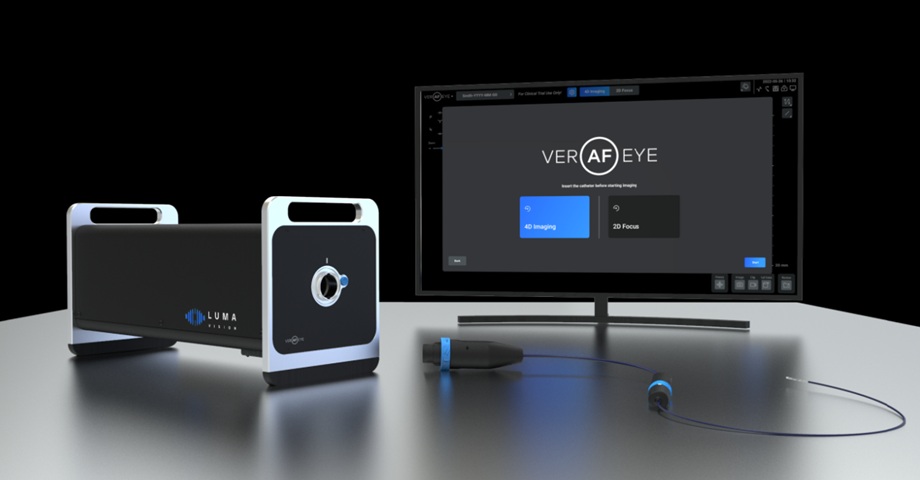
FDA Clears Integrated Platform for Real-Time Cardiac Imaging and Catheter Guidance
Catheter-based treatment of cardiac arrhythmias relies on precise, real-time visualization and navigation for safe, accurate therapy delivery. Yet electrophysiology teams often use separate imaging, mapping,... Read more
Patient Care
view channel
EHR Model Flags High-Risk Periods in Patients with Metastatic Breast Cancer
Determining when patients with metastatic breast cancer are nearing the end of life remains difficult, often leading to intensive interventions with limited benefit. Prognostic uncertainty can delay goals-of-care... Read more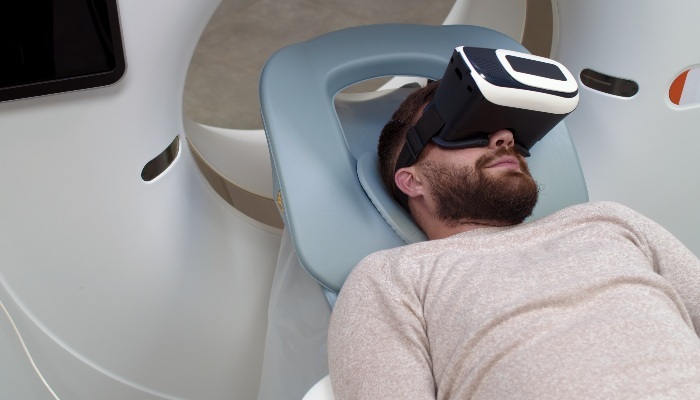
Virtual Reality Helps Claustrophobic Patients Complete Cardiac PET/CT Scans
Anxiety and claustrophobia—intense fear of confined spaces—often prevent patients from completing cardiac positron emission tomography/computed tomography (PET/CT). Aborted scans delay diagnosis, consume... Read more

Medical Imaging
view channel
Structure-Aware AI Aims to Improve Reliability of Medical Image Analysis
Clinicians increasingly rely on medical imaging to guide diagnosis and treatment, but machine learning systems used to analyze these images can be unreliable and difficult to interpret. Small, heterogeneous... Read more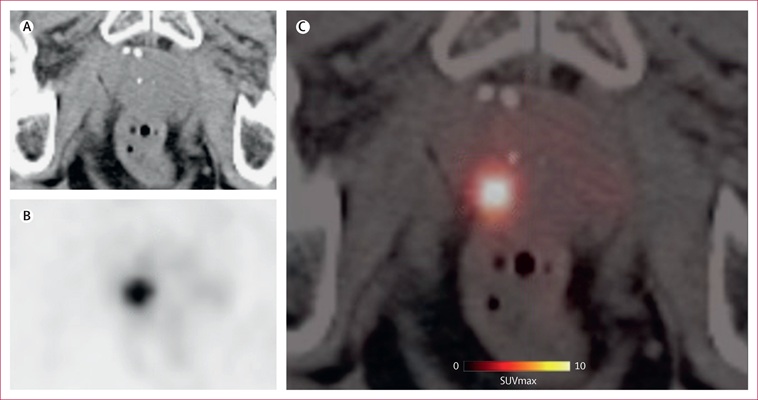
PSMA PET/CT Helps Guide Pre-Biopsy Decisions in Prostate Cancer
Prostate cancer evaluation often begins with prostate-specific antigen (PSA) testing, but elevated levels are not specific to cancer and can lead to unnecessary biopsies. These procedures carry risks of... Read more
AI Models Evaluated for Spotting Ischemic Stroke Lesions on Routine MRI
Rapid detection of ischemic stroke on brain MRI is essential because treatment benefit declines with time. Many centers first acquire contrast-free MRI FLAIR sequences because they are quick and broadly... Read more
Noninvasive MRI Spectroscopy Classifies Pediatric Medulloblastoma Molecular Subgroups
Medulloblastoma, the most common malignant pediatric brain tumor, requires precise molecular classification to guide therapy and predict outcomes. Current subgrouping typically depends on surgical sampling... Read moreHealth IT
view channel
Smartphone App Improves Blood Pressure Control in Hypertension
Hypertension, or high blood pressure, is a major modifiable driver of cardiovascular, renal, and cerebrovascular morbidity. Despite effective therapies, many adults fail to achieve control, leading to... Read more
Registry-Driven Digital Outreach Boosts Use of Heart Failure Medicines
Heart failure affects more than 64 million people worldwide and is linked to high mortality, reduced quality of life, and heavy healthcare use. Although sodium-glucose cotransporter 2 inhibitors are proven... Read more

Point of Care
view channel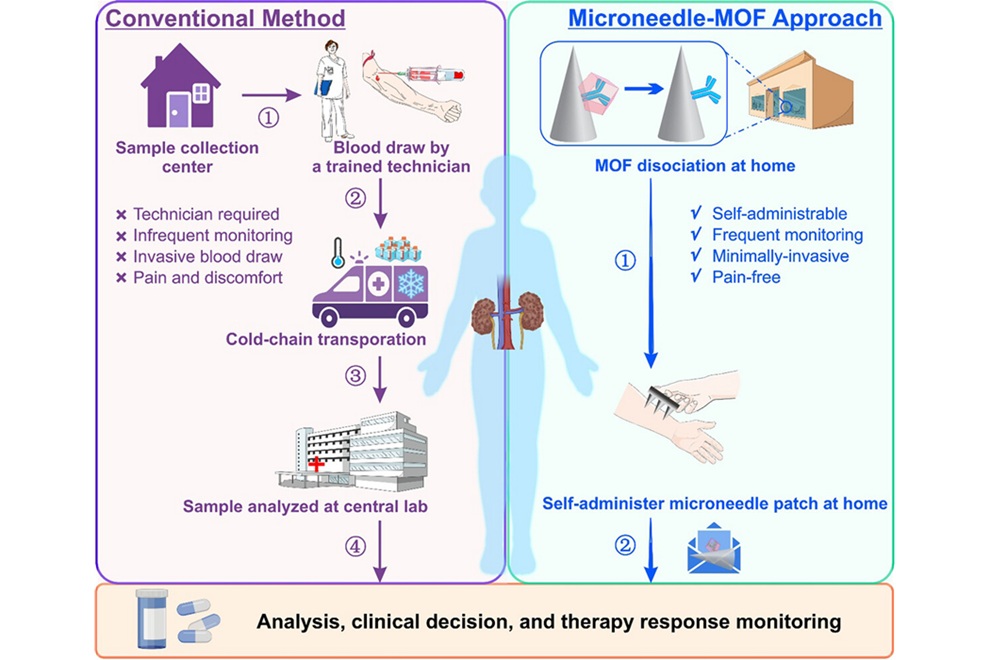
Microneedle Patch Enables At-Home Monitoring of Acute Kidney Injury
Kidney disease is often silent in its early stages, making timely detection difficult outside clinical settings. Early biomarkers such as neutrophil gelatinase–associated lipocalin can require blood draws... Read more