3D-Printing Technique Fabricates Microphysiological Devices
|
By HospiMedica International staff writers Posted on 09 Nov 2016 |


|
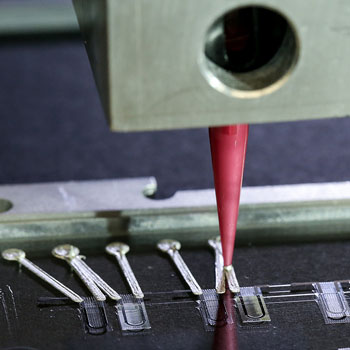
Image: Close up of 3D printer printing heart-on-a-chip MPD (Photo courtesy of Harvard University).
Multi-material three-dimensional (3D) printing may one day be used to design organs-on-chips that match the properties of a specific disease, or even an individual patient’s cells.
Researchers at Harvard University (Cambridge, MA, USA) have developed a new technique to fabricate instrumented cardiac microphysiological devices (MPDs) that uses a mix of six functional inks that are based on piezo-resistive, high-conductance, biocompatible soft materials. By using 3D printing, the researchers were able to print a physio-mimetic, laminar cardiac tissue MPD that integrates soft strain sensors into the micro-architecture of the tissue, all in a single, continuous procedure.
The chip contains multiple wells, each with separate tissues and integrated sensors, which allows the researchers to study many engineered cardiac tissues at once. To demonstrate the efficacy of the device, the researchers first validated that the embedded sensors provided non-invasive, electronic readouts of tissue contractile stresses inside cell incubator environments. They then used the MPD to study drug responses, as well as the contractile development of human stem cell-derived laminar cardiac tissues over four weeks. The study was published on October 24, 2016, in Nature Materials.
“Researchers are often left working in the dark when it comes to gradual changes that occur during cardiac tissue development and maturation, because there has been a lack of easy, non-invasive ways to measure the tissue functional performance,” said lead author Johan Ulrik Lind, PhD. “These integrated sensors allow researchers to continuously collect data while tissues mature and improve their contractility. Similarly, they will enable studies of gradual effects of chronic exposure to toxins.”
“Our microfabrication approach opens new avenues for in vitro tissue engineering, toxicology, and drug screening research,” said study co-author professor of bioengineering and applied physics Kit Parker, PhD. “Translating microphysiological devices into truly valuable platforms for studying human health and disease requires that we address both data acquisition and manufacturing of our devices. This work offers new potential solutions to both of these central challenges.”
MPDs, also known as organs-on-chips, mimic the structure and function of native tissue in-vitro and have emerged as a promising alternative to traditional animal testing; but the fabrication and data collection process is expensive and laborious. Currently, these devices are built in clean rooms using a complex, multi-step lithographic process, and collecting data requires microscopy or high-speed cameras, since they do not have integrated sensors.
Related Links:
Harvard University





Researchers at Harvard University (Cambridge, MA, USA) have developed a new technique to fabricate instrumented cardiac microphysiological devices (MPDs) that uses a mix of six functional inks that are based on piezo-resistive, high-conductance, biocompatible soft materials. By using 3D printing, the researchers were able to print a physio-mimetic, laminar cardiac tissue MPD that integrates soft strain sensors into the micro-architecture of the tissue, all in a single, continuous procedure.
The chip contains multiple wells, each with separate tissues and integrated sensors, which allows the researchers to study many engineered cardiac tissues at once. To demonstrate the efficacy of the device, the researchers first validated that the embedded sensors provided non-invasive, electronic readouts of tissue contractile stresses inside cell incubator environments. They then used the MPD to study drug responses, as well as the contractile development of human stem cell-derived laminar cardiac tissues over four weeks. The study was published on October 24, 2016, in Nature Materials.
“Researchers are often left working in the dark when it comes to gradual changes that occur during cardiac tissue development and maturation, because there has been a lack of easy, non-invasive ways to measure the tissue functional performance,” said lead author Johan Ulrik Lind, PhD. “These integrated sensors allow researchers to continuously collect data while tissues mature and improve their contractility. Similarly, they will enable studies of gradual effects of chronic exposure to toxins.”
“Our microfabrication approach opens new avenues for in vitro tissue engineering, toxicology, and drug screening research,” said study co-author professor of bioengineering and applied physics Kit Parker, PhD. “Translating microphysiological devices into truly valuable platforms for studying human health and disease requires that we address both data acquisition and manufacturing of our devices. This work offers new potential solutions to both of these central challenges.”
MPDs, also known as organs-on-chips, mimic the structure and function of native tissue in-vitro and have emerged as a promising alternative to traditional animal testing; but the fabrication and data collection process is expensive and laborious. Currently, these devices are built in clean rooms using a complex, multi-step lithographic process, and collecting data requires microscopy or high-speed cameras, since they do not have integrated sensors.
Related Links:
Harvard University

Gold Member
STI Test
Vivalytic Sexually Transmitted Infection (STI) Array
Adjustable Mobile Barrier
M-458
VTE Prevention System
Flowtron ACS900
Channels

Critical Care
view channel
Magnetically Guided Microrobots to Enable Targeted Drug Delivery
Stroke affects 12 million people globally each year, often causing death or lasting disability. Current treatment relies on systemic administration of clot-dissolving drugs, which circulate throughout... Read more
Smart Nanomaterials Detect and Treat Traumatic Brain Injuries Simultaneously
Traumatic brain injury (TBI) continues to leave millions with long-term disabilities every year. After a sudden impact from a fall, collision, or accident, the brain undergoes inflammation, oxidative stress,... Read more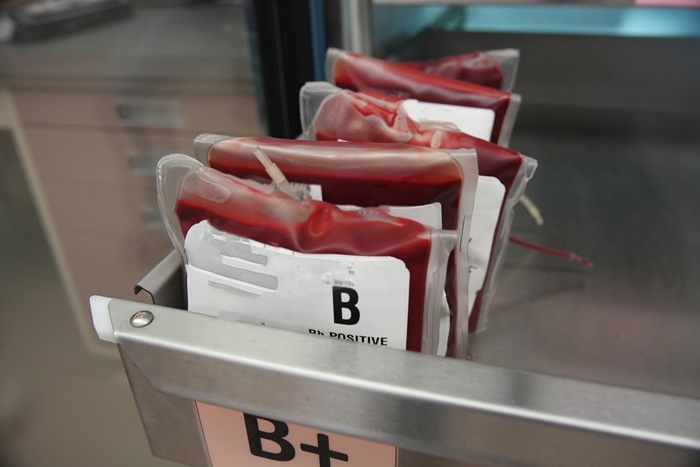
Earlier Blood Transfusion Could Reduce Heart Failure and Arrhythmia in Heart Disease Patients
Blood loss during or after surgery can place significant stress on people with heart disease, increasing the risk of dangerous complications. Transfusions are often delayed until hemoglobin levels fall... Read more
Surgical Techniques
view channel
New Study Findings Could Halve Number of Stent Procedures
When a coronary artery becomes acutely blocked during a heart attack, opening it immediately is essential to prevent irreversible damage. However, many patients also have other narrowed vessels that appear... Read more
Breakthrough Surgical Device Redefines Hip Arthroscopy
Hip arthroscopy has surged in popularity, yet surgeons still face major mechanical constraints when navigating deep joint spaces through traditional cannulas. Limited tool mobility and the need for an... Read more
Patient Care
view channel
Revolutionary Automatic IV-Line Flushing Device to Enhance Infusion Care
More than 80% of in-hospital patients receive intravenous (IV) therapy. Every dose of IV medicine delivered in a small volume (<250 mL) infusion bag should be followed by subsequent flushing to ensure... Read more
VR Training Tool Combats Contamination of Portable Medical Equipment
Healthcare-associated infections (HAIs) impact one in every 31 patients, cause nearly 100,000 deaths each year, and cost USD 28.4 billion in direct medical expenses. Notably, up to 75% of these infections... Read more
Portable Biosensor Platform to Reduce Hospital-Acquired Infections
Approximately 4 million patients in the European Union acquire healthcare-associated infections (HAIs) or nosocomial infections each year, with around 37,000 deaths directly resulting from these infections,... Read more
First-Of-Its-Kind Portable Germicidal Light Technology Disinfects High-Touch Clinical Surfaces in Seconds
Reducing healthcare-acquired infections (HAIs) remains a pressing issue within global healthcare systems. In the United States alone, 1.7 million patients contract HAIs annually, leading to approximately... Read moreBusiness
view channel
Philips and Masimo Partner to Advance Patient Monitoring Measurement Technologies
Royal Philips (Amsterdam, Netherlands) and Masimo (Irvine, California, USA) have renewed their multi-year strategic collaboration, combining Philips’ expertise in patient monitoring with Masimo’s noninvasive... Read more
B. Braun Acquires Digital Microsurgery Company True Digital Surgery
The high-end microsurgery market in neurosurgery, spine, and ENT is undergoing a significant transformation. Traditional analog microscopes are giving way to digital exoscopes, which provide improved visualization,... Read more
CMEF 2025 to Promote Holistic and High-Quality Development of Medical and Health Industry
The 92nd China International Medical Equipment Fair (CMEF 2025) Autumn Exhibition is scheduled to be held from September 26 to 29 at the China Import and Export Fair Complex (Canton Fair Complex) in Guangzhou.... Read more