






Hospitals Face Increased Risk of Data Breaches
|
By HospiMedica International staff writers Posted on 26 Apr 2017 |


|
A new study suggests that as health providers adopt health information technology, they increasingly suffer from data breaches.
Researchers at Michigan State University, Ball State University, and Johns Hopkins University conducted a retrospective data analysis of data breaches reported to the U.S. Department of Health and Human Services between October 2009 and December 2016. By law, U.S. hospitals covered by the Health Insurance Portability and Accountability Act (HIPPA), must notify the HHS of any breach affecting 500 or more individuals within 60 days of the discovery of the breach.
The results revealed that during the study period, healthcare providers reported 1,225 of the 1,798 recorded breaches, while business associates, health plans, and healthcare clearinghouses reported the remaining 573 data breaches. Of these, 257 breaches were reported by 216 hospitals; importantly, 33 hospitals experienced more than one breach, many of them large, major teaching hospitals, such as UC Davis Medical Center (CA, USA) and Henry Ford Hospital (Detroit, MI, USA). The study was published on April 3, 2017, in JAMA Internal Medicine.
“This research reinforces the critical trade-off patient’s face: healthcare systems having access to information they need, versus a hacker planning to spend your savings at Best Buy,” said lead author Xuefeng Jiang, PhD, of MSU, and colleagues. “While the law requires health care professionals and systems to cross-share patient data, the more people who can access data, the less secure it is.”
A data breach is defined as a security incident in which sensitive, protected, or confidential data is copied, transmitted, viewed, stolen or used by an individual unauthorized to do so. Data breaches may involve financial information such as credit card or bank details, personal health information, personally identifiable information, trade secrets of corporations, or intellectual property.






Researchers at Michigan State University, Ball State University, and Johns Hopkins University conducted a retrospective data analysis of data breaches reported to the U.S. Department of Health and Human Services between October 2009 and December 2016. By law, U.S. hospitals covered by the Health Insurance Portability and Accountability Act (HIPPA), must notify the HHS of any breach affecting 500 or more individuals within 60 days of the discovery of the breach.
The results revealed that during the study period, healthcare providers reported 1,225 of the 1,798 recorded breaches, while business associates, health plans, and healthcare clearinghouses reported the remaining 573 data breaches. Of these, 257 breaches were reported by 216 hospitals; importantly, 33 hospitals experienced more than one breach, many of them large, major teaching hospitals, such as UC Davis Medical Center (CA, USA) and Henry Ford Hospital (Detroit, MI, USA). The study was published on April 3, 2017, in JAMA Internal Medicine.
“This research reinforces the critical trade-off patient’s face: healthcare systems having access to information they need, versus a hacker planning to spend your savings at Best Buy,” said lead author Xuefeng Jiang, PhD, of MSU, and colleagues. “While the law requires health care professionals and systems to cross-share patient data, the more people who can access data, the less secure it is.”
A data breach is defined as a security incident in which sensitive, protected, or confidential data is copied, transmitted, viewed, stolen or used by an individual unauthorized to do so. Data breaches may involve financial information such as credit card or bank details, personal health information, personally identifiable information, trade secrets of corporations, or intellectual property.

New
Gold Member
Neonatal Heel Incision Device
Tenderfoot
New
Resorbable Bovine Collagen Membrane
GenDerm
New
Rapid Sepsis Test
SeptiCyte RAPID
Channels
Artificial Intelligence
view channel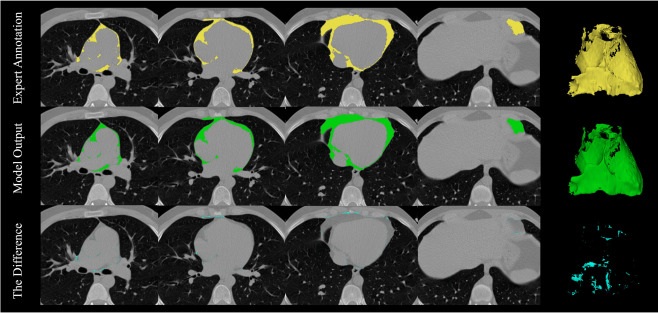
AI Analysis of Pericardial Fat Refines Long-Term Heart Disease Risk
Accurately identifying long-term cardiovascular disease risk in asymptomatic adults remains challenging for clinicians. Missed or underestimated risk delays preventive therapy and increases the chance... Read more
Machine Learning Approach Enhances Liver Cancer Risk Stratification
Hepatocellular carcinoma, the most common form of primary liver cancer, is often detected late despite targeted surveillance programs. Current screening guidelines emphasize patients with known cirrhosis,... Read more

Critical Care
view channel
Noninvasive Monitoring Device Enables Earlier Intervention in Heart Failure
Hospitalizations for heart failure with preserved ejection fraction (HFpEF) remain common because lung congestion often worsens before symptoms prompt treatment changes. Missed early decompensation... Read more
Automated IV Labeling Solution Improves Infusion Safety and Efficiency
Medication administration in high-acuity settings is often complicated by multiple concurrent infusions, making accurate line identification essential. In a 10-hospital intensive care unit study, 60% of... Read more

Surgical Techniques
view channel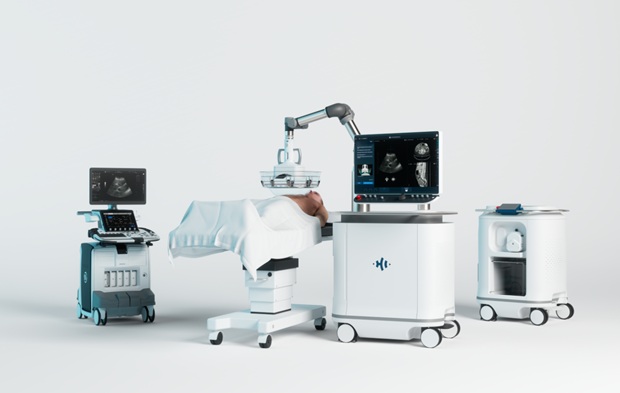
Ultrasound Technology Aims to Replace Invasive BPH Procedures
Benign prostatic hyperplasia (BPH) is a frequent cause of lower urinary tract symptoms in aging men and often requires invasive procedures or prolonged recovery. With prevalence expected to rise as populations... Read more
Continuous Monitoring with Wearables Enhances Postoperative Patient Safety
Postoperative hypoxemia on general surgical wards is common and often missed by intermittent vital sign checks. Undetected low oxygen levels can delay recovery and raise the risk of complications that... Read more
Patient Care
view channel
Wearable Sleep Data Predict Adherence to Pulmonary Rehabilitation
Chronic obstructive pulmonary disease (COPD) is a long-term lung disorder that makes breathing difficult and often disturbs sleep, reducing energy for daily activities. Limited engagement in pulmonary... Read more
Revolutionary Automatic IV-Line Flushing Device to Enhance Infusion Care
More than 80% of in-hospital patients receive intravenous (IV) therapy. Every dose of IV medicine delivered in a small volume (<250 mL) infusion bag should be followed by subsequent flushing to ensure... Read more


Business
view channel
GE HealthCare Leads Major European Initiative to Advance Cardio-Oncology Care
Cardiovascular complications are increasingly recognized among people undergoing or recovering from cancer treatment, driven by pre‑existing disease and the cardiotoxic effects of chemotherapy, radiotherapy,... Read more

