






Technology Uptake Could Improve Treatment Success
|
By HospiMedica International staff writers Posted on 13 Jun 2017 |


|
Medical workers in Europe are optimistic about technological innovation in healthcare over the next decade, according to new research.
Conducted by Epson (Suwa, Japan) and FTI Consulting (Baltimore, MD, USA), the research project consisted of two separate phases. Phase one consisted of qualitative telephone interviews with 17 global futurists and European experts from various sectors in order to gain insights and develop hypotheses on the future of the workplace, and the changing roles of the workforce, leading up to 2025. Phase two consisted of an online survey of 7,016 full-time employees across five major sectors (corporate, manufacturing, education, healthcare, and retail) in workplaces in the United Kingdom, France, Germany, Italy, and Spain.
The results revealed 67% of medical professionals believe big data will significantly improve diagnosis and treatment success, while nearly three quarters of respondents believe collaborative technologies will improve knowledge sharing between specialists. Other technologies like remote monitoring (45%), surgical training via augmented reality (44%), organic and bio printing (42%), and surgery and diagnoses with the aid of robots and artificial intelligence (40%) were also identified as game-changing. Over 57% considered three-dimensional (3D) printing a revolutionary force, and that 3D printing of organs and cells will speed up medical processes.
There was also widespread agreement that virtual consultations would improve access to healthcare (69%), while 64% felt that personalized prescriptions will dramatically improve treatment outcomes, and 36% indicating that technology would improve access to medical services, shortening waiting times. In addition, 70% see remote monitoring improving patient care, with people being given wearables to feed vital signs to a central data hub for analysis. As a result, 38% think that future patients would be more proactive in managing their own health, diagnosis and treatment.
“With the challenges of an ageing population, technological innovation has the potential to address the most pressing concerns facing the NHS, such as stretched resources, patient access, and waiting times,” said Rob Clark, managing director of Epson UK and Ireland. “To implement technology effectively, IT leaders must stay aware of the latest developments and launch consultation processes with patients and regulators. We simply cannot afford to miss the benefits of innovation over the next ten years, so collaboration between stakeholders to address and mitigate any potential issues is critical.”
Related Links:
Epson
FTI Consulting





Conducted by Epson (Suwa, Japan) and FTI Consulting (Baltimore, MD, USA), the research project consisted of two separate phases. Phase one consisted of qualitative telephone interviews with 17 global futurists and European experts from various sectors in order to gain insights and develop hypotheses on the future of the workplace, and the changing roles of the workforce, leading up to 2025. Phase two consisted of an online survey of 7,016 full-time employees across five major sectors (corporate, manufacturing, education, healthcare, and retail) in workplaces in the United Kingdom, France, Germany, Italy, and Spain.
The results revealed 67% of medical professionals believe big data will significantly improve diagnosis and treatment success, while nearly three quarters of respondents believe collaborative technologies will improve knowledge sharing between specialists. Other technologies like remote monitoring (45%), surgical training via augmented reality (44%), organic and bio printing (42%), and surgery and diagnoses with the aid of robots and artificial intelligence (40%) were also identified as game-changing. Over 57% considered three-dimensional (3D) printing a revolutionary force, and that 3D printing of organs and cells will speed up medical processes.
There was also widespread agreement that virtual consultations would improve access to healthcare (69%), while 64% felt that personalized prescriptions will dramatically improve treatment outcomes, and 36% indicating that technology would improve access to medical services, shortening waiting times. In addition, 70% see remote monitoring improving patient care, with people being given wearables to feed vital signs to a central data hub for analysis. As a result, 38% think that future patients would be more proactive in managing their own health, diagnosis and treatment.
“With the challenges of an ageing population, technological innovation has the potential to address the most pressing concerns facing the NHS, such as stretched resources, patient access, and waiting times,” said Rob Clark, managing director of Epson UK and Ireland. “To implement technology effectively, IT leaders must stay aware of the latest developments and launch consultation processes with patients and regulators. We simply cannot afford to miss the benefits of innovation over the next ten years, so collaboration between stakeholders to address and mitigate any potential issues is critical.”
Related Links:
Epson
FTI Consulting

Gold Member
12-Channel ECG
CM1200B
New
Gas Analyzer
GE SAM
New
Hybrid Arch Device
Neo EDE
Channels
Artificial Intelligence
view channel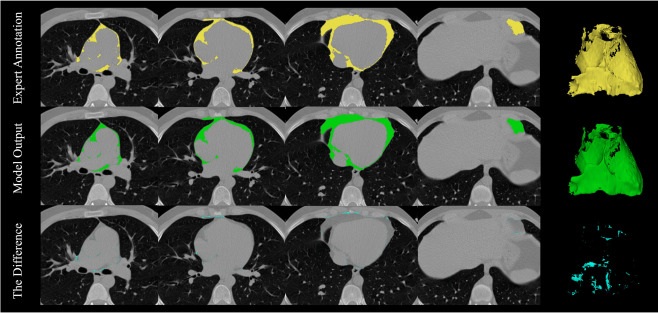
AI Analysis of Pericardial Fat Refines Long-Term Heart Disease Risk
Accurately identifying long-term cardiovascular disease risk in asymptomatic adults remains challenging for clinicians. Missed or underestimated risk delays preventive therapy and increases the chance... Read more
Machine Learning Approach Enhances Liver Cancer Risk Stratification
Hepatocellular carcinoma, the most common form of primary liver cancer, is often detected late despite targeted surveillance programs. Current screening guidelines emphasize patients with known cirrhosis,... Read more

Critical Care
view channel
Noninvasive Monitoring Device Enables Earlier Intervention in Heart Failure
Hospitalizations for heart failure with preserved ejection fraction (HFpEF) remain common because lung congestion often worsens before symptoms prompt treatment changes. Missed early decompensation... Read more
Automated IV Labeling Solution Improves Infusion Safety and Efficiency
Medication administration in high-acuity settings is often complicated by multiple concurrent infusions, making accurate line identification essential. In a 10-hospital intensive care unit study, 60% of... Read more

Surgical Techniques
view channel
Ultrasound Technology Aims to Replace Invasive BPH Procedures
Benign prostatic hyperplasia (BPH) is a frequent cause of lower urinary tract symptoms in aging men and often requires invasive procedures or prolonged recovery. With prevalence expected to rise as populations... Read more
Continuous Monitoring with Wearables Enhances Postoperative Patient Safety
Postoperative hypoxemia on general surgical wards is common and often missed by intermittent vital sign checks. Undetected low oxygen levels can delay recovery and raise the risk of complications that... Read more
Patient Care
view channel
Wearable Sleep Data Predict Adherence to Pulmonary Rehabilitation
Chronic obstructive pulmonary disease (COPD) is a long-term lung disorder that makes breathing difficult and often disturbs sleep, reducing energy for daily activities. Limited engagement in pulmonary... Read more
Revolutionary Automatic IV-Line Flushing Device to Enhance Infusion Care
More than 80% of in-hospital patients receive intravenous (IV) therapy. Every dose of IV medicine delivered in a small volume (<250 mL) infusion bag should be followed by subsequent flushing to ensure... Read more


Business
view channel
GE HealthCare Leads Major European Initiative to Advance Cardio-Oncology Care
Cardiovascular complications are increasingly recognized among people undergoing or recovering from cancer treatment, driven by pre‑existing disease and the cardiotoxic effects of chemotherapy, radiotherapy,... Read more

