






Google Searches Can Track Dengue Fever Outbreaks
|
By HospiMedica International staff writers Posted on 01 Aug 2017 |


|

Image: Google search trends can help identify dengue outbreaks (Photo courtesy of Google).
An analytical tool that combines Google (Mountain View, CA, USA) search data with government-provided clinical data can quickly and accurately track dengue fever in less-developed countries, according to a new study.
Researchers at Harvard University (Cambridge, MA, USA) and Boston Children’s Hospital (BCH; MA, USA) modified a mathematical modeling tool known as AutoRegression with GOogle search queries (ARGO) to explore its potential to track dengue activity in Mexico, Brazil, Thailand, Singapore, and Taiwan. The researchers used Google Trends to track the top ten dengue-related search queries made by users in each country during the study period; they also gathered historical dengue data from government health agencies and input both datasets into ARGO.
Using the assumption that more dengue-related searches occur when more people are infected, the researchers used ARGO to calculate near real-time estimates of dengue prevalence for each country. When ARGO's estimates were compared with those of five other methods, it returned more accurate estimates than did any other method for Mexico, Brazil, Thailand, and Singapore. Estimates for Taiwan were less accurate, possibly because the country experienced less-consistent seasonal disease patterns from year to year. The study was published on July 20, 2017, in PLOS Computational Biology.
“The wide availability of internet throughout the globe provides the potential for an alternative way to reliably track infectious diseases, such as dengue, faster than traditional clinical-based systems,” said senior author Mauricio Santillana, PhD, of BCH and HMS. “This alternative way of tracking disease could be used to alert governments and hospitals when elevated dengue incidence is anticipated, and provide safety information for travelers.”
Dengue transmission is subject to complex environmental factors influencing the Aedes aegypti and Aedes albopictus mosquitoes, which spread the disease. A mosquito is able to transmit dengue within a few weeks of contracting the virus, and a person bitten by such a mosquito will usually fall ill within a week, with symptoms lasting for up to 10 days afterward. There is thus a 5-day window when another mosquito can pick up the virus from an infected person. The time scale of these transmission dynamics lends itself to tracking patterns of infection at a weekly or monthly level.
Related Links:
Harvard University
Boston Children’s Hospital




Researchers at Harvard University (Cambridge, MA, USA) and Boston Children’s Hospital (BCH; MA, USA) modified a mathematical modeling tool known as AutoRegression with GOogle search queries (ARGO) to explore its potential to track dengue activity in Mexico, Brazil, Thailand, Singapore, and Taiwan. The researchers used Google Trends to track the top ten dengue-related search queries made by users in each country during the study period; they also gathered historical dengue data from government health agencies and input both datasets into ARGO.
Using the assumption that more dengue-related searches occur when more people are infected, the researchers used ARGO to calculate near real-time estimates of dengue prevalence for each country. When ARGO's estimates were compared with those of five other methods, it returned more accurate estimates than did any other method for Mexico, Brazil, Thailand, and Singapore. Estimates for Taiwan were less accurate, possibly because the country experienced less-consistent seasonal disease patterns from year to year. The study was published on July 20, 2017, in PLOS Computational Biology.
“The wide availability of internet throughout the globe provides the potential for an alternative way to reliably track infectious diseases, such as dengue, faster than traditional clinical-based systems,” said senior author Mauricio Santillana, PhD, of BCH and HMS. “This alternative way of tracking disease could be used to alert governments and hospitals when elevated dengue incidence is anticipated, and provide safety information for travelers.”
Dengue transmission is subject to complex environmental factors influencing the Aedes aegypti and Aedes albopictus mosquitoes, which spread the disease. A mosquito is able to transmit dengue within a few weeks of contracting the virus, and a person bitten by such a mosquito will usually fall ill within a week, with symptoms lasting for up to 10 days afterward. There is thus a 5-day window when another mosquito can pick up the virus from an infected person. The time scale of these transmission dynamics lends itself to tracking patterns of infection at a weekly or monthly level.
Related Links:
Harvard University
Boston Children’s Hospital

Gold Member
12-Channel ECG
CM1200B
New
Medical Adhesive
MED 5570U
New
Digital Radiography System (Ceiling Free)
Digix CF Series
Channels
Artificial Intelligence
view channel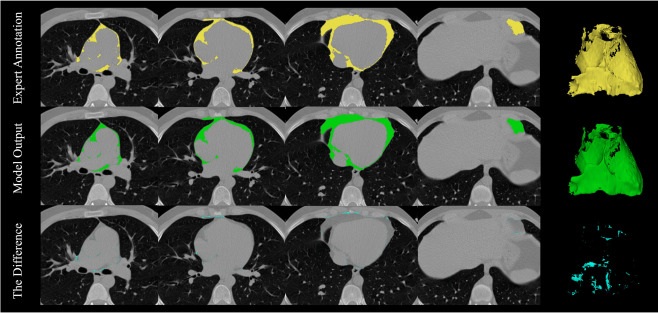
AI Analysis of Pericardial Fat Refines Long-Term Heart Disease Risk
Accurately identifying long-term cardiovascular disease risk in asymptomatic adults remains challenging for clinicians. Missed or underestimated risk delays preventive therapy and increases the chance... Read more
Machine Learning Approach Enhances Liver Cancer Risk Stratification
Hepatocellular carcinoma, the most common form of primary liver cancer, is often detected late despite targeted surveillance programs. Current screening guidelines emphasize patients with known cirrhosis,... Read more

Critical Care
view channel
Noninvasive Monitoring Device Enables Earlier Intervention in Heart Failure
Hospitalizations for heart failure with preserved ejection fraction (HFpEF) remain common because lung congestion often worsens before symptoms prompt treatment changes. Missed early decompensation... Read more
Automated IV Labeling Solution Improves Infusion Safety and Efficiency
Medication administration in high-acuity settings is often complicated by multiple concurrent infusions, making accurate line identification essential. In a 10-hospital intensive care unit study, 60% of... Read more

Surgical Techniques
view channel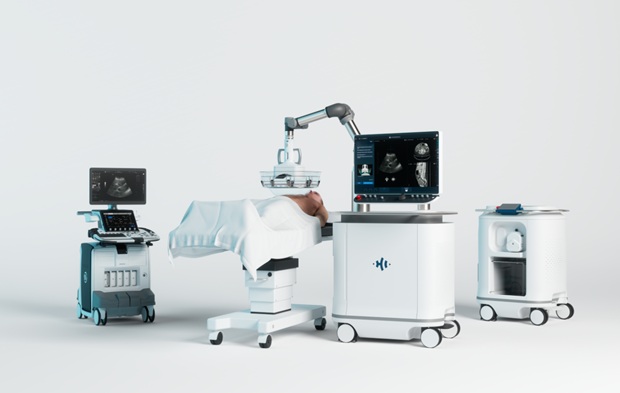
Ultrasound Technology Aims to Replace Invasive BPH Procedures
Benign prostatic hyperplasia (BPH) is a frequent cause of lower urinary tract symptoms in aging men and often requires invasive procedures or prolonged recovery. With prevalence expected to rise as populations... Read more
Continuous Monitoring with Wearables Enhances Postoperative Patient Safety
Postoperative hypoxemia on general surgical wards is common and often missed by intermittent vital sign checks. Undetected low oxygen levels can delay recovery and raise the risk of complications that... Read more

Patient Care
view channel
Wearable Sleep Data Predict Adherence to Pulmonary Rehabilitation
Chronic obstructive pulmonary disease (COPD) is a long-term lung disorder that makes breathing difficult and often disturbs sleep, reducing energy for daily activities. Limited engagement in pulmonary... Read more
Revolutionary Automatic IV-Line Flushing Device to Enhance Infusion Care
More than 80% of in-hospital patients receive intravenous (IV) therapy. Every dose of IV medicine delivered in a small volume (<250 mL) infusion bag should be followed by subsequent flushing to ensure... Read more


Business
view channel
GE HealthCare Leads Major European Initiative to Advance Cardio-Oncology Care
Cardiovascular complications are increasingly recognized among people undergoing or recovering from cancer treatment, driven by pre‑existing disease and the cardiotoxic effects of chemotherapy, radiotherapy,... Read more

