






Healthcare AI Market to Reach USD 19.3 Billion By 2025
|
By HospiMedica International staff writers Posted on 28 Sep 2017 |


|
The global healthcare artificial intelligence (AI) market will reach USD 19.3 billion by 2025, as medical image analysis, virtual assistants for patients, patient data processing, and 18 other key use cases will drive large deployments of AI in the healthcare industry. These are the latest findings of Tractica (Boulder, CO, USA), a market intelligence firm that focuses on human interaction with technology.
Over the past several years, healthcare has witnessed a transformation with a shift from paper-based records systems to electronic records, and incorporation of digital health monitoring devices and other advanced patient screening systems. These advances have resulted in a data explosion, which can best be manipulated and analyzed using AI technology.
According to Tractica, AI is being mainly implemented as a tool to more efficiently and accurately review data, and uncover patterns in the data that can be used to improve analyses, uncover inefficiencies, and streamline care, from both the clinical and an operational perspective. The key driver of these AI implementations is to provide better care for patients, while reducing costs and administrative headaches and bottlenecks. Tractica forecasts global software revenue from 21 key healthcare AI use cases to grow from USD 165 million in 2017 to USD 5.6 billion annually by 2025, with hardware and services sales driven by these software implementations expected to boost the total revenue opportunity for the healthcare AI market.
“Controlling and reducing cost is a major driver of many healthcare initiatives, and the incorporation of AI technology is no exception,” said Tractica’s principal analyst Keith Kirkpatrick. “AI applications generally are designed to address specific, real-world use cases that make the diagnosis, monitoring, and treatment of patients more efficient, accurate, and available to populations around the world.”
Related Links:
Tractica





Over the past several years, healthcare has witnessed a transformation with a shift from paper-based records systems to electronic records, and incorporation of digital health monitoring devices and other advanced patient screening systems. These advances have resulted in a data explosion, which can best be manipulated and analyzed using AI technology.
According to Tractica, AI is being mainly implemented as a tool to more efficiently and accurately review data, and uncover patterns in the data that can be used to improve analyses, uncover inefficiencies, and streamline care, from both the clinical and an operational perspective. The key driver of these AI implementations is to provide better care for patients, while reducing costs and administrative headaches and bottlenecks. Tractica forecasts global software revenue from 21 key healthcare AI use cases to grow from USD 165 million in 2017 to USD 5.6 billion annually by 2025, with hardware and services sales driven by these software implementations expected to boost the total revenue opportunity for the healthcare AI market.
“Controlling and reducing cost is a major driver of many healthcare initiatives, and the incorporation of AI technology is no exception,” said Tractica’s principal analyst Keith Kirkpatrick. “AI applications generally are designed to address specific, real-world use cases that make the diagnosis, monitoring, and treatment of patients more efficient, accurate, and available to populations around the world.”
Related Links:
Tractica

New
Gold Member
Neonatal Heel Incision Device
Tenderfoot
New
Syringe Pump
SP50 Series
New
Gas Analyzer
GE SAM
Latest AI News
- AI Analysis of Pericardial Fat Refines Long-Term Heart Disease Risk
- Machine Learning Approach Enhances Liver Cancer Risk Stratification
- New AI Approach Monitors Brain Health Using Passive Wearable Data
- AI Tool Maps Early Risk Patterns in Bloodstream Infections
- AI Model Identifies Rare Endocrine Disorder from Hand Images
- AI Tool Promises to Reduce Length of Hospital Stays and Free Up Beds
Channels
Critical Care
view channel
Eye Imaging AI Identifies Elevated Cardiovascular Risk
Many adults at risk for atherosclerotic cardiovascular disease are not identified until they undergo formal primary care assessment. Delayed risk recognition can postpone initiation of statins and lifestyle... Read more
Noninvasive Monitoring Device Enables Earlier Intervention in Heart Failure
Hospitalizations for heart failure with preserved ejection fraction (HFpEF) remain common because lung congestion often worsens before symptoms prompt treatment changes. Missed early decompensation... Read more

Surgical Techniques
view channel
Fiber-Form Bone Graft Expands Intraoperative Options for Spinal Fusion
Spinal and orthopedic fusion procedures often require bone graft materials that handle predictably and support bone formation. Surgeons face added complexity in difficult anatomy and challenging fusion environments.... Read more
Ultrasound‑Aided Catheter Treatment Cuts Early Collapse in Pulmonary Embolism
Acute pulmonary embolism can cause rapid hemodynamic deterioration and early death in hospitalized and emergency patients. Systemic thrombolysis can dissolve clots but is limited by a high risk of major... Read more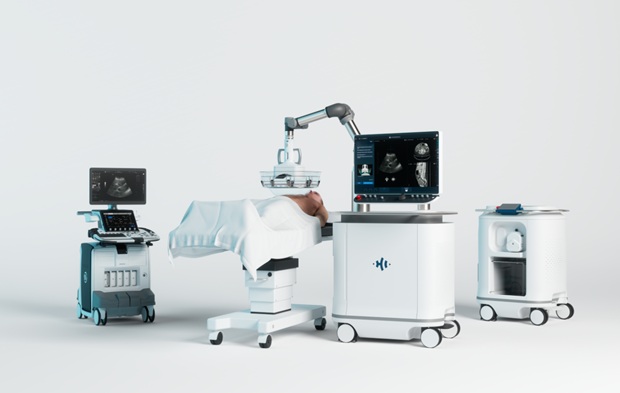

Patient Care
view channel
Wearable Sleep Data Predict Adherence to Pulmonary Rehabilitation
Chronic obstructive pulmonary disease (COPD) is a long-term lung disorder that makes breathing difficult and often disturbs sleep, reducing energy for daily activities. Limited engagement in pulmonary... Read more
Revolutionary Automatic IV-Line Flushing Device to Enhance Infusion Care
More than 80% of in-hospital patients receive intravenous (IV) therapy. Every dose of IV medicine delivered in a small volume (<250 mL) infusion bag should be followed by subsequent flushing to ensure... Read more

Health IT
view channel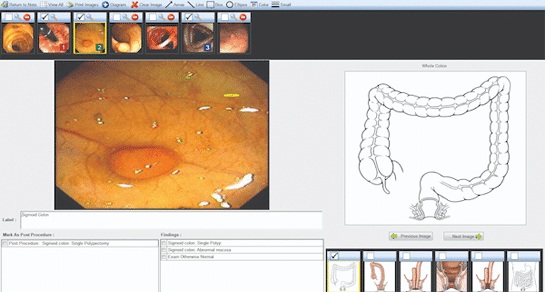
Voice-Driven AI System Enables Structured GI Procedure Documentation
Documentation during gastrointestinal (GI) procedures often competes with real-time clinical decision-making and imposes a significant cognitive burden on physicians. Manual data entry and post-procedure... Read more
EMR-Based Tool Predicts Graft Failure After Kidney Transplant
Kidney transplantation offers patients with end-stage kidney disease longer survival and better quality of life than dialysis, yet graft failure remains a major challenge. Although a successful transplant... Read more
Printable Molecule-Selective Nanoparticles Enable Mass Production of Wearable Biosensors
The future of medicine is likely to focus on the personalization of healthcare—understanding exactly what an individual requires and delivering the appropriate combination of nutrients, metabolites, and... Read more

Business
view channel
GE HealthCare Leads Major European Initiative to Advance Cardio-Oncology Care
Cardiovascular complications are increasingly recognized among people undergoing or recovering from cancer treatment, driven by pre‑existing disease and the cardiotoxic effects of chemotherapy, radiotherapy,... Read more

