






Philips and Huawei Initiate Cloud AI Healthcare Project
|
By HospiMedica International staff writers Posted on 25 Oct 2017 |


|
Royal Philips (Amsterdam, the Netherlands) and Huawei Technologies Co., Ltd. (Shenzhen, China) have signed an MoU for the deployment of a cloud-based healthcare solution. The project targeting China’s smaller urban centers has already completed testing and aims to expand high-quality cloud-driven healthcare to communities that lack advanced healthcare solutions or physicians with specialist skills.
Philips is a health technology company with a focus on diagnostic imaging, image-guided therapy, patient monitoring and health informatics, as well as in consumer health and home care. Huawei is a global information and communications technology solutions provider with a portfolio of end-to-end solutions in telecom and enterprise networks, devices, and cloud technology and services.
Cloud AI reduces work for physicians in the area of clinical processing by allowing them to offload part of their tasks such as diagnostics to computers, which are far superior at observing patterns than humans. It also allows doctors to more efficiently share information and conduct research using massive datasets that can be instantly mined. By using cloud AI to analyze huge datasets, trends can identify potential epidemics, implement constant monitoring, and facilitate AI-enabled research into rare diseases and sub-populations or geographies that are too fine-grained for humans to analyze.
Cloud AI can process vast amounts of data in a much shorter time and with far greater accuracy than a human physician. Ludwig Liang, Head of Population Health Management for Philips in China, points out that this is especially important in China’s tier-2 cities, as many physicians “don’t necessarily have the skills to read image diagnostics like MRI scans and CT scans. If you ask a doctor to process thousands of images a day, he may miss something.” In contrast, AI is adept at spotting patterns in big datasets. In the case of terminal illnesses such as cancer, machine-learning solutions hosted in the cloud can make a real difference in a patient’s prognosis.
Additionally, mobile technology and apps put personal healthcare management in the hands of the individual, moving away from a reactive and sporadic model to one that’s proactive and always on. Apps that log behaviors and sensors that monitor health are not only predictive; they can also help ensure compliance with medication and treatment plans, giving notifications and alerts to optimize treatment efficacy.
“We have to admit that we’re heading into new areas, how healthcare can be extended from hospitals to homes and leveraging apps and connected devices,” said Liang, who believes that the concept of extended healthcare is very important – treatment will no longer start and stop in a hospital or doctor’s office after someone becomes sick. Apps, sensors, smart devices, and the cloud will in effect mean “you have your own health team on call 24/7.”
The Philips-Huawei solution will help in cutting costs and increasing the efficiency, speed, and accuracy of diagnostics and treatments. “Our collaboration basically covers a cloud platform, but it also includes IoT connectivity and solutions,” said Liang. “We’ve tested our solutions on Huawei’s cloud and we’re very satisfied with the results. Now it’s about both companies working together to go to market.”






Philips is a health technology company with a focus on diagnostic imaging, image-guided therapy, patient monitoring and health informatics, as well as in consumer health and home care. Huawei is a global information and communications technology solutions provider with a portfolio of end-to-end solutions in telecom and enterprise networks, devices, and cloud technology and services.
Cloud AI reduces work for physicians in the area of clinical processing by allowing them to offload part of their tasks such as diagnostics to computers, which are far superior at observing patterns than humans. It also allows doctors to more efficiently share information and conduct research using massive datasets that can be instantly mined. By using cloud AI to analyze huge datasets, trends can identify potential epidemics, implement constant monitoring, and facilitate AI-enabled research into rare diseases and sub-populations or geographies that are too fine-grained for humans to analyze.
Cloud AI can process vast amounts of data in a much shorter time and with far greater accuracy than a human physician. Ludwig Liang, Head of Population Health Management for Philips in China, points out that this is especially important in China’s tier-2 cities, as many physicians “don’t necessarily have the skills to read image diagnostics like MRI scans and CT scans. If you ask a doctor to process thousands of images a day, he may miss something.” In contrast, AI is adept at spotting patterns in big datasets. In the case of terminal illnesses such as cancer, machine-learning solutions hosted in the cloud can make a real difference in a patient’s prognosis.
Additionally, mobile technology and apps put personal healthcare management in the hands of the individual, moving away from a reactive and sporadic model to one that’s proactive and always on. Apps that log behaviors and sensors that monitor health are not only predictive; they can also help ensure compliance with medication and treatment plans, giving notifications and alerts to optimize treatment efficacy.
“We have to admit that we’re heading into new areas, how healthcare can be extended from hospitals to homes and leveraging apps and connected devices,” said Liang, who believes that the concept of extended healthcare is very important – treatment will no longer start and stop in a hospital or doctor’s office after someone becomes sick. Apps, sensors, smart devices, and the cloud will in effect mean “you have your own health team on call 24/7.”
The Philips-Huawei solution will help in cutting costs and increasing the efficiency, speed, and accuracy of diagnostics and treatments. “Our collaboration basically covers a cloud platform, but it also includes IoT connectivity and solutions,” said Liang. “We’ve tested our solutions on Huawei’s cloud and we’re very satisfied with the results. Now it’s about both companies working together to go to market.”

Gold Member
POC Blood Gas Analyzer
Stat Profile Prime Plus
Half Apron
Demi
VTE Prevention System
Flowtron ACS900
Latest Business News
- Philips and Masimo Partner to Advance Patient Monitoring Measurement Technologies
- B. Braun Acquires Digital Microsurgery Company True Digital Surgery
- CMEF 2025 to Promote Holistic and High-Quality Development of Medical and Health Industry
- Bayer and Broad Institute Extend Research Collaboration to Develop New Cardiovascular Therapies
- Medtronic Partners with Corsano to Expand Acute Care & Monitoring Portfolio in Europe
- Expanded Collaboration to Transform OR Technology Through AI and Automation
- Becton Dickinson to Spin Out Biosciences and Diagnostic Solutions Business
- Boston Scientific Acquires Medical Device Company SoniVie
- 2026 World Hospital Congress to be Held in Seoul
- Teleflex to Acquire BIOTRONIK’s Vascular Intervention Business
- Philips and Mass General Brigham Collaborate on Improving Patient Care with Live AI-Powered Insights
- Arab Health 2025 Celebrates Landmark 50th Edition
- Boston Scientific Acquires Medical Device Company Intera Oncology
- MEDICA 2024 to Highlight Hot Topics of MedTech Industry
- Start-Ups To Once Again Play Starring Role at MEDICA 2024
- Boston Scientific to Acquire AFib Ablation Company Cortex
Channels
Critical Care
view channel
Nanogel Technology Almost 100% Effective in Destroying Drug-Resistant Bacteria Within Hours
Antibiotic resistance is one of the most serious global health threats, driven by bacteria that evade treatment and form protective biofilms that shield them from drugs. Pathogens such as Pseudomonas aeruginosa,... Read more
Wearable Ultrasound Sensor Delivers Noninvasive Treatment Without Surgery
Wearable ultrasound devices have long struggled with low acoustic power and poor structural stability, limiting their use in high-resolution imaging and therapeutic applications. Conventional flexible... Read more
Surgical Techniques
view channel
Novel Endoscopy Technique Provides Access to Deep Lung Tumors
Detecting lung cancer early can save lives, but diagnosing small tumors deep in the outer regions of the lungs remains a major clinical challenge. Although CT scans frequently identify tiny suspicious... Read more
New Study Findings Could Halve Number of Stent Procedures
When a coronary artery becomes acutely blocked during a heart attack, opening it immediately is essential to prevent irreversible damage. However, many patients also have other narrowed vessels that appear... Read more
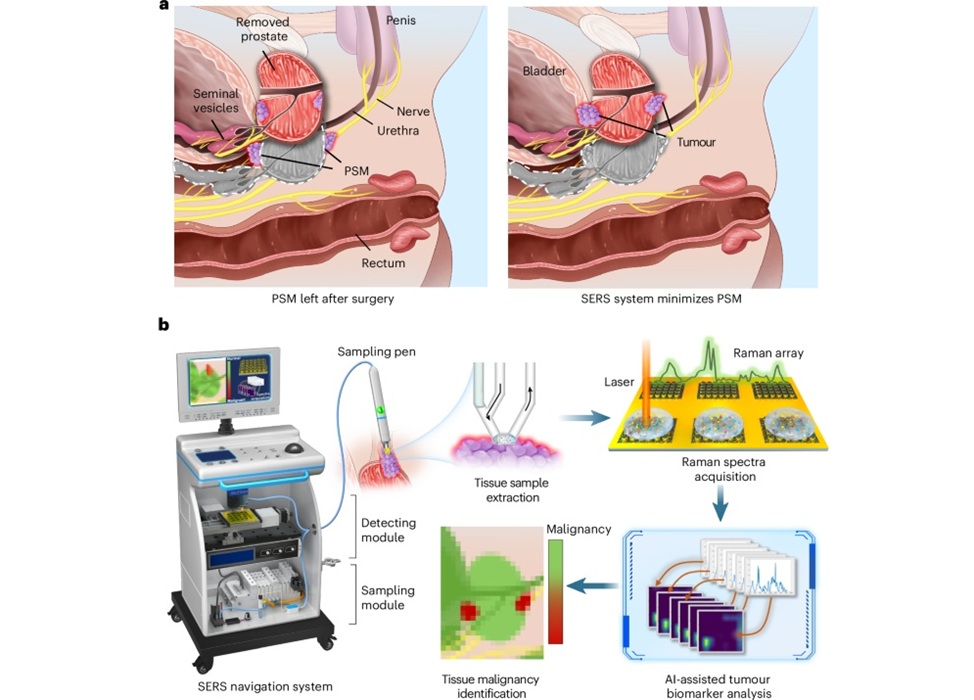
Patient Care
view channel
Revolutionary Automatic IV-Line Flushing Device to Enhance Infusion Care
More than 80% of in-hospital patients receive intravenous (IV) therapy. Every dose of IV medicine delivered in a small volume (<250 mL) infusion bag should be followed by subsequent flushing to ensure... Read more
VR Training Tool Combats Contamination of Portable Medical Equipment
Healthcare-associated infections (HAIs) impact one in every 31 patients, cause nearly 100,000 deaths each year, and cost USD 28.4 billion in direct medical expenses. Notably, up to 75% of these infections... Read more
Portable Biosensor Platform to Reduce Hospital-Acquired Infections
Approximately 4 million patients in the European Union acquire healthcare-associated infections (HAIs) or nosocomial infections each year, with around 37,000 deaths directly resulting from these infections,... Read more
First-Of-Its-Kind Portable Germicidal Light Technology Disinfects High-Touch Clinical Surfaces in Seconds
Reducing healthcare-acquired infections (HAIs) remains a pressing issue within global healthcare systems. In the United States alone, 1.7 million patients contract HAIs annually, leading to approximately... Read moreHealth IT
view channel
EMR-Based Tool Predicts Graft Failure After Kidney Transplant
Kidney transplantation offers patients with end-stage kidney disease longer survival and better quality of life than dialysis, yet graft failure remains a major challenge. Although a successful transplant... Read more

