






Braided Cardiac Implant Grows with Child Heart
|
By HospiMedica International staff writers Posted on 31 Oct 2017 |


|
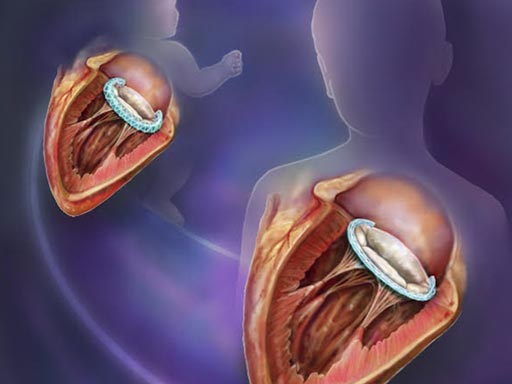
Image: A new study describes how a braided, tubular implant could grow in sync with a child’s heart valve (Photo courtesy of Randal McKenzie / BCH).
A new study describes how a novel valve annuloplasty ring implant can accommodate growth, reducing the number of heart surgeries a child must endure.
Developed at Boston Children’s Hospital (BCH; MA, USA) and Brigham and Women’s Hospital (BWH; Boston, MA, USA), the growth-accommodating tricuspid valve annuloplasty ring implant consists of a biodegradable core and a tubular braided sleeve with an inversely related sleeve length and diameter. Based on the design of the Chinese finger trap, the biodegradable core is designed to constrain sleeve diameter at implantation, with subsequent gradual core degradation enabling both braided sleeve and overall device elongation to accommodate tissue growth.
Mathematical modeling and ex-vivo experiments in swine hearts demonstrated the predictability and tunability of the device for both disease- and patient-specific needs. A further study that used the rat tibia and the piglet heart valve as models of tissue growth demonstrated that polymer degradation enabled device expansion and growth accommodation in vivo. The researchers suggest their proof-of-concept design could also be adapted for a variety of other growth-accommodating implants throughout the body. The study was published on October 10, 2017, in Nature Biomedical Engineering.
“Medical implants and devices are rarely designed with children in mind, and as a result, they almost never accommodate growth,” said co-senior author Professor Pedro del Nido, MD, chief of cardiac surgery at BWH. “So, we've created an environment here where individuals with expertise and interest in medical devices can come together and collaborate towards developing materials for pediatric surgery.”
“We solved this problem of growth accommodation with a concept that already exists in nature: the octopus has a special ability to stretch its arms into confined cracks and spaces between rocks, in search of its prey,” said co-lead author Yuhan Lee, PhD, a materials researcher at BWH. “It can do this because of unique, braid-like crossfibers of connective tissue that enable the simultaneous elongation and shrinking diameter of its arms, allowing it to extend its reach two to three times beyond the original arm length.”
A Chinese finger trap is a joke toy that traps the victim's fingers in both ends of a small, cylindrical, helically wound biaxial braid, usually woven from bamboo; pulling the entire braid lengthens and narrows it by reducing the angle between the warp and weft threads at their crossing points. The more one pulls, the more the circumference shrinks, and the more the trap tightens and lengthens. Contrary to intuition, the victim of the joke must push their finger farther inside the trap for it to loosen.
Related Links:
Boston Children’s Hospital
Brigham and Women’s Hospital





Developed at Boston Children’s Hospital (BCH; MA, USA) and Brigham and Women’s Hospital (BWH; Boston, MA, USA), the growth-accommodating tricuspid valve annuloplasty ring implant consists of a biodegradable core and a tubular braided sleeve with an inversely related sleeve length and diameter. Based on the design of the Chinese finger trap, the biodegradable core is designed to constrain sleeve diameter at implantation, with subsequent gradual core degradation enabling both braided sleeve and overall device elongation to accommodate tissue growth.
Mathematical modeling and ex-vivo experiments in swine hearts demonstrated the predictability and tunability of the device for both disease- and patient-specific needs. A further study that used the rat tibia and the piglet heart valve as models of tissue growth demonstrated that polymer degradation enabled device expansion and growth accommodation in vivo. The researchers suggest their proof-of-concept design could also be adapted for a variety of other growth-accommodating implants throughout the body. The study was published on October 10, 2017, in Nature Biomedical Engineering.
“Medical implants and devices are rarely designed with children in mind, and as a result, they almost never accommodate growth,” said co-senior author Professor Pedro del Nido, MD, chief of cardiac surgery at BWH. “So, we've created an environment here where individuals with expertise and interest in medical devices can come together and collaborate towards developing materials for pediatric surgery.”
“We solved this problem of growth accommodation with a concept that already exists in nature: the octopus has a special ability to stretch its arms into confined cracks and spaces between rocks, in search of its prey,” said co-lead author Yuhan Lee, PhD, a materials researcher at BWH. “It can do this because of unique, braid-like crossfibers of connective tissue that enable the simultaneous elongation and shrinking diameter of its arms, allowing it to extend its reach two to three times beyond the original arm length.”
A Chinese finger trap is a joke toy that traps the victim's fingers in both ends of a small, cylindrical, helically wound biaxial braid, usually woven from bamboo; pulling the entire braid lengthens and narrows it by reducing the angle between the warp and weft threads at their crossing points. The more one pulls, the more the circumference shrinks, and the more the trap tightens and lengthens. Contrary to intuition, the victim of the joke must push their finger farther inside the trap for it to loosen.
Related Links:
Boston Children’s Hospital
Brigham and Women’s Hospital

Gold Member
12-Channel ECG
CM1200B
New
Vessel Sealing Instrument
ERGOseal
New
Wound Irrigation Solution
Prontosan®
Latest Surgical Techniques News
- Ultrasound Technology Aims to Replace Invasive BPH Procedures
- Continuous Monitoring with Wearables Enhances Postoperative Patient Safety
- New Approach Enables Customized Muscle Tissue Without Biomaterial Scaffolds
- Robot-Assisted Brain Angiography Improves Procedural Outcomes
- Brain Mapping Technology Enhances Precision in Brain Tumor Resection
- Handheld Robotic System Expands Options for Total Knee Surgery
- VR Experience Reduces Patient Anxiety Before Kidney Stone Procedure
- Injectable Mini Livers Offer Hope for Patients Awaiting Transplant
- Pulsed Field Ablation Technology Cleared in Europe for Persistent AFib
- AI-Powered Imaging Brings Real-Time Margin Clarity to Breast Cancer Surgery
- Minimally Invasive Device Safely Treats Challenging Brain Aneurysms
- Surgical Robot Makes Complex Liver Tumor Surgery Safer and Less Invasive
- Neurostimulation Implant Reduces Seizure Burden in Drug-Resistant Epilepsy
- Minimally Invasive Procedure Effectively Treats Small Kidney Cancers
- Fluorescence Probe Paired with Engineered Enzymes Lights Up Tumors for Easier Surgical Removal
- Novel Hydrogel Could Become Bone Implant of the Future
Channels
Artificial Intelligence
view channel
AI Analysis of Pericardial Fat Refines Long-Term Heart Disease Risk
Accurately identifying long-term cardiovascular disease risk in asymptomatic adults remains challenging for clinicians. Missed or underestimated risk delays preventive therapy and increases the chance... Read more
Machine Learning Approach Enhances Liver Cancer Risk Stratification
Hepatocellular carcinoma, the most common form of primary liver cancer, is often detected late despite targeted surveillance programs. Current screening guidelines emphasize patients with known cirrhosis,... Read more

Critical Care
view channel
Noninvasive Monitoring Device Enables Earlier Intervention in Heart Failure
Hospitalizations for heart failure with preserved ejection fraction (HFpEF) remain common because lung congestion often worsens before symptoms prompt treatment changes. Missed early decompensation... Read more
Automated IV Labeling Solution Improves Infusion Safety and Efficiency
Medication administration in high-acuity settings is often complicated by multiple concurrent infusions, making accurate line identification essential. In a 10-hospital intensive care unit study, 60% of... Read more

Patient Care
view channel
Wearable Sleep Data Predict Adherence to Pulmonary Rehabilitation
Chronic obstructive pulmonary disease (COPD) is a long-term lung disorder that makes breathing difficult and often disturbs sleep, reducing energy for daily activities. Limited engagement in pulmonary... Read more
Revolutionary Automatic IV-Line Flushing Device to Enhance Infusion Care
More than 80% of in-hospital patients receive intravenous (IV) therapy. Every dose of IV medicine delivered in a small volume (<250 mL) infusion bag should be followed by subsequent flushing to ensure... Read more

Health IT
view channel
EMR-Based Tool Predicts Graft Failure After Kidney Transplant
Kidney transplantation offers patients with end-stage kidney disease longer survival and better quality of life than dialysis, yet graft failure remains a major challenge. Although a successful transplant... Read more
Printable Molecule-Selective Nanoparticles Enable Mass Production of Wearable Biosensors
The future of medicine is likely to focus on the personalization of healthcare—understanding exactly what an individual requires and delivering the appropriate combination of nutrients, metabolites, and... Read more


Business
view channel
GE HealthCare Leads Major European Initiative to Advance Cardio-Oncology Care
Cardiovascular complications are increasingly recognized among people undergoing or recovering from cancer treatment, driven by pre‑existing disease and the cardiotoxic effects of chemotherapy, radiotherapy,... Read more

