






Biometric Clothing Measures Respiratory and Activity Metrics
|
By HospiMedica International staff writers Posted on 13 Nov 2017 |


|
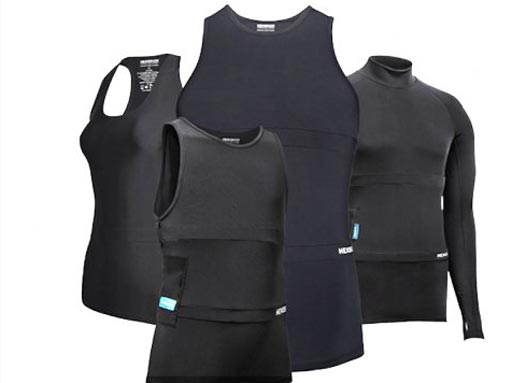
Image: The Hexoskin range of biometric clothing (Photo courtesy of Hexoskin).
Smart clothing with embedded body sensors provides a non-invasive monitoring solution for cardiac, respiratory, and daily activity monitoring.
Developed by Hexoskin (Montreal, Canada), the Hexoskin connected healthcare platform is a range of textile-based, washable, silver coated nylon garments embedded with cardiac, abdominal, and respiratory digital signal processing (DSP) sensors, and a 3-axis accelerometer used to track activity and acceleration. The cardiac sensors allow for electrocardiogram (ECG) one channel data at 256 Hz, heart rate detections at rates ranging from 30 to 220 BPM, respiratory rate intervals at 4 ms resolution, and heart rate variability (HRV) analysis.
The breathing sensors include two channels (at 128 Hz) and can sense breathing rates from three to 80 breaths per minute (BPM), and the movement sensors can detect acceleration at .004 g resolution. The respiratory inductance plethysmography (RIP) sensors have additional assessment channels that include 50-60 Hz noise detection, disconnection detection, and baseline change detection. Additional features include 14+ hours of battery life, 600+ hours of standalone recording, and Bluetooth connectivity with iPhone, iPad, and Android platforms.
“We spend such a huge chunk our economy to cure people. If you want to keep them healthy you have to do preventive health,” said Pierre-Alexandre Fournier, CEO and co-founder of Hexoskin. “If want to do that, we have do education and you have to put sensors on a large group of people. The best way to do that is to have biometric clothing.”
Related Links:
Hexoskin




Developed by Hexoskin (Montreal, Canada), the Hexoskin connected healthcare platform is a range of textile-based, washable, silver coated nylon garments embedded with cardiac, abdominal, and respiratory digital signal processing (DSP) sensors, and a 3-axis accelerometer used to track activity and acceleration. The cardiac sensors allow for electrocardiogram (ECG) one channel data at 256 Hz, heart rate detections at rates ranging from 30 to 220 BPM, respiratory rate intervals at 4 ms resolution, and heart rate variability (HRV) analysis.
The breathing sensors include two channels (at 128 Hz) and can sense breathing rates from three to 80 breaths per minute (BPM), and the movement sensors can detect acceleration at .004 g resolution. The respiratory inductance plethysmography (RIP) sensors have additional assessment channels that include 50-60 Hz noise detection, disconnection detection, and baseline change detection. Additional features include 14+ hours of battery life, 600+ hours of standalone recording, and Bluetooth connectivity with iPhone, iPad, and Android platforms.
“We spend such a huge chunk our economy to cure people. If you want to keep them healthy you have to do preventive health,” said Pierre-Alexandre Fournier, CEO and co-founder of Hexoskin. “If want to do that, we have do education and you have to put sensors on a large group of people. The best way to do that is to have biometric clothing.”
Related Links:
Hexoskin

Gold Member
STI Test
Vivalytic Sexually Transmitted Infection (STI) Array
New
Glucose Meter
StatStrip®
New
Immobilization System
Cranial 4Pi Immobilization
Channels
Artificial Intelligence
view channel
AI Analysis of Pericardial Fat Refines Long-Term Heart Disease Risk
Accurately identifying long-term cardiovascular disease risk in asymptomatic adults remains challenging for clinicians. Missed or underestimated risk delays preventive therapy and increases the chance... Read more
Machine Learning Approach Enhances Liver Cancer Risk Stratification
Hepatocellular carcinoma, the most common form of primary liver cancer, is often detected late despite targeted surveillance programs. Current screening guidelines emphasize patients with known cirrhosis,... Read more

Critical Care
view channel
Noninvasive Monitoring Device Enables Earlier Intervention in Heart Failure
Hospitalizations for heart failure with preserved ejection fraction (HFpEF) remain common because lung congestion often worsens before symptoms prompt treatment changes. Missed early decompensation... Read more
Automated IV Labeling Solution Improves Infusion Safety and Efficiency
Medication administration in high-acuity settings is often complicated by multiple concurrent infusions, making accurate line identification essential. In a 10-hospital intensive care unit study, 60% of... Read more

Surgical Techniques
view channel
Ultrasound Technology Aims to Replace Invasive BPH Procedures
Benign prostatic hyperplasia (BPH) is a frequent cause of lower urinary tract symptoms in aging men and often requires invasive procedures or prolonged recovery. With prevalence expected to rise as populations... Read more
Continuous Monitoring with Wearables Enhances Postoperative Patient Safety
Postoperative hypoxemia on general surgical wards is common and often missed by intermittent vital sign checks. Undetected low oxygen levels can delay recovery and raise the risk of complications that... Read more

Patient Care
view channel
Wearable Sleep Data Predict Adherence to Pulmonary Rehabilitation
Chronic obstructive pulmonary disease (COPD) is a long-term lung disorder that makes breathing difficult and often disturbs sleep, reducing energy for daily activities. Limited engagement in pulmonary... Read more
Revolutionary Automatic IV-Line Flushing Device to Enhance Infusion Care
More than 80% of in-hospital patients receive intravenous (IV) therapy. Every dose of IV medicine delivered in a small volume (<250 mL) infusion bag should be followed by subsequent flushing to ensure... Read more


Business
view channel
GE HealthCare Leads Major European Initiative to Advance Cardio-Oncology Care
Cardiovascular complications are increasingly recognized among people undergoing or recovering from cancer treatment, driven by pre‑existing disease and the cardiotoxic effects of chemotherapy, radiotherapy,... Read more

