






Novel Intracranial Stent Targets Wide-Neck Aneurysms
|
By HospiMedica International staff writers Posted on 04 Dec 2017 |


|
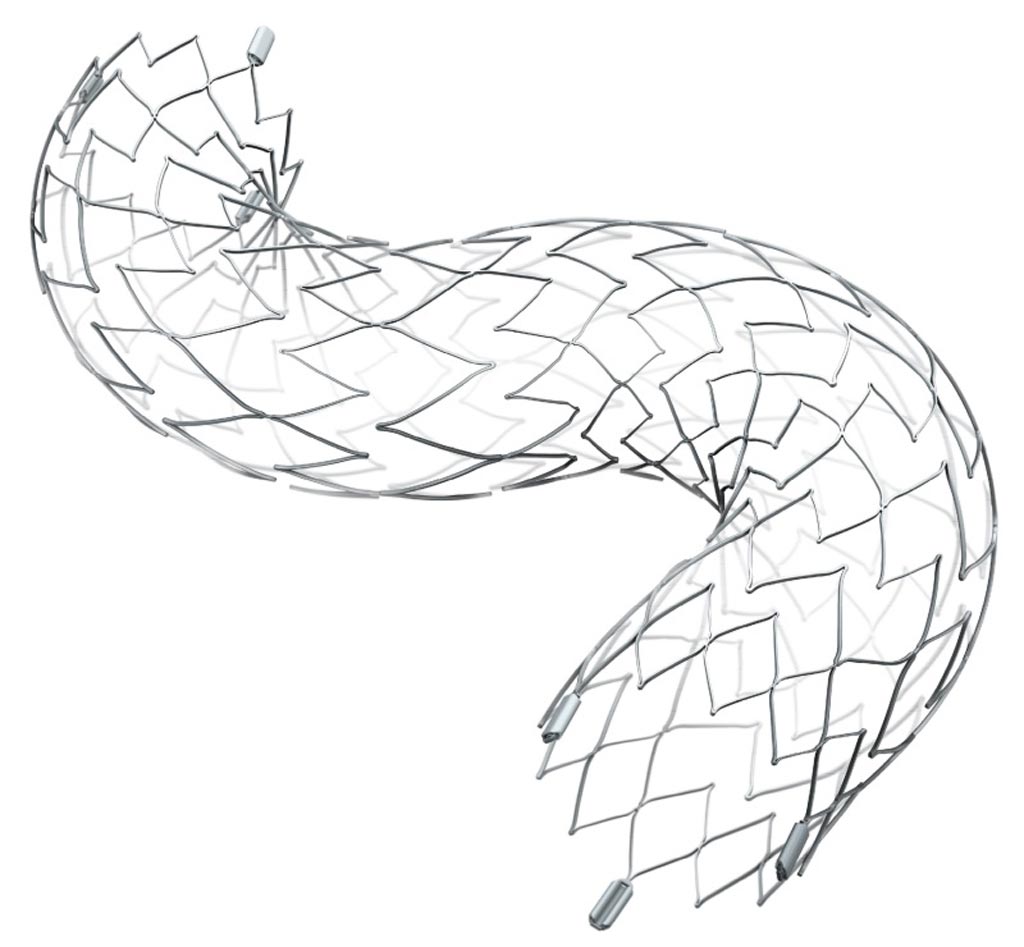
Image: A novel stent system helps treat intracranial aneurysms (Photo courtesy of Stryker).
A new open-cell design stent supports embolic coiling in the treatment of neurovascular aneurysms with torturous anatomy.
The Stryker Corporation (Kalamazoo, MI, USA) Neuroform Atlas Stent is an open cell, self-expanding nitinol stent that provides support of the coil mass within the aneurysm and minimizes stent deflection. The stent has a tubular meshdesign, with 4, 6, or 8 distinct sections, depending on stent length. The sections are joined by two interconnecting struts, and there are eight radiopaque marker bands (four per end), which are secured to tabs on the stent. The stent is deployed in healthy vascular tissue; once in place, the embolic coil is delivered through the struts of the stent, which is then used to retain the embolic coils within the aneurysm.
The Neuroform Atlas Stent system is indicated for the treatment of wide-neck intracranial, saccular aneurysms arising from a parent vessel with a diameter of greater than or equal to two mm, and less than or equal to 4.5 mm. The stent is available in five diameters (2.5-4.5mm) and three lengths (10mm, 15mm, and 20mm). It is provided pre-loaded on a delivery wire, protected by a transfer sheath, and is available with an accessory pouch containing an optional stabilizer that can be attached to the proximal end of the stent delivery wire to facilitate handling and stabilization.
“The Neuroform Atlas Stent System is the most recent addition to Stryker's innovative product portfolio, providing a continuum of complete stroke care for patients suffering from cerebrovascular disease,” said Mark Paul, president of Stryker's neurovascular division. “Patients around the world are now benefiting from significant advancements in intracranial stents designed specifically for the treatment of wide neck aneurysms. This product is an excellent fit with our mission to make healthcare better.”
“The hybrid cell stent design of Neuroform Atlas is designed to improve wall apposition, ease of use, deployment accuracy, and catheter re-entry in even the most challenging cases,” said Osama Zaidat, MD, director of the neuroscience and stroke center at Mercy Hospital (Toledo, OH, USA), co-principal investigator of the U.S. Neuroform Atlas investigational trial. “The Atlas design may improve patient care by facilitating the treatment of wide neck aneurysms in tortuous and more complex anatomies.”
Wide-neck aneurysms are defined as having a neck greater or equal to four mm or a dome-to-neck ratio of less than two. They are often untreatable by surgical clipping, as many wide- neck aneurysms are in vessels deep within the brain that are not amendable to being treated by open brain surgery. Coiling wide neck aneurysms, on the other hand, could lead to coil protrusion and/or embolization, as it is difficult to achieve and maintain sufficiently dense coil packing of the aneurysm to permanently exclude blood flow.







The Stryker Corporation (Kalamazoo, MI, USA) Neuroform Atlas Stent is an open cell, self-expanding nitinol stent that provides support of the coil mass within the aneurysm and minimizes stent deflection. The stent has a tubular meshdesign, with 4, 6, or 8 distinct sections, depending on stent length. The sections are joined by two interconnecting struts, and there are eight radiopaque marker bands (four per end), which are secured to tabs on the stent. The stent is deployed in healthy vascular tissue; once in place, the embolic coil is delivered through the struts of the stent, which is then used to retain the embolic coils within the aneurysm.
The Neuroform Atlas Stent system is indicated for the treatment of wide-neck intracranial, saccular aneurysms arising from a parent vessel with a diameter of greater than or equal to two mm, and less than or equal to 4.5 mm. The stent is available in five diameters (2.5-4.5mm) and three lengths (10mm, 15mm, and 20mm). It is provided pre-loaded on a delivery wire, protected by a transfer sheath, and is available with an accessory pouch containing an optional stabilizer that can be attached to the proximal end of the stent delivery wire to facilitate handling and stabilization.
“The Neuroform Atlas Stent System is the most recent addition to Stryker's innovative product portfolio, providing a continuum of complete stroke care for patients suffering from cerebrovascular disease,” said Mark Paul, president of Stryker's neurovascular division. “Patients around the world are now benefiting from significant advancements in intracranial stents designed specifically for the treatment of wide neck aneurysms. This product is an excellent fit with our mission to make healthcare better.”
“The hybrid cell stent design of Neuroform Atlas is designed to improve wall apposition, ease of use, deployment accuracy, and catheter re-entry in even the most challenging cases,” said Osama Zaidat, MD, director of the neuroscience and stroke center at Mercy Hospital (Toledo, OH, USA), co-principal investigator of the U.S. Neuroform Atlas investigational trial. “The Atlas design may improve patient care by facilitating the treatment of wide neck aneurysms in tortuous and more complex anatomies.”
Wide-neck aneurysms are defined as having a neck greater or equal to four mm or a dome-to-neck ratio of less than two. They are often untreatable by surgical clipping, as many wide- neck aneurysms are in vessels deep within the brain that are not amendable to being treated by open brain surgery. Coiling wide neck aneurysms, on the other hand, could lead to coil protrusion and/or embolization, as it is difficult to achieve and maintain sufficiently dense coil packing of the aneurysm to permanently exclude blood flow.

Gold Member
SARS‑CoV‑2/Flu A/Flu B/RSV Sample-To-Answer Test
SARS‑CoV‑2/Flu A/Flu B/RSV Cartridge (CE-IVD)
New
Blood Gas Analyzer
i-Check200
New
Pediatric Mask
Respire SOFT
Latest Surgical Techniques News
- Fiber-Form Bone Graft Expands Intraoperative Options for Spinal Fusion
- Ultrasound‑Aided Catheter Treatment Cuts Early Collapse in Pulmonary Embolism
- Ultrasound Technology Aims to Replace Invasive BPH Procedures
- Continuous Monitoring with Wearables Enhances Postoperative Patient Safety
- New Approach Enables Customized Muscle Tissue Without Biomaterial Scaffolds
- Robot-Assisted Brain Angiography Improves Procedural Outcomes
- Brain Mapping Technology Enhances Precision in Brain Tumor Resection
- Handheld Robotic System Expands Options for Total Knee Surgery
- VR Experience Reduces Patient Anxiety Before Kidney Stone Procedure
- Injectable Mini Livers Offer Hope for Patients Awaiting Transplant
- Pulsed Field Ablation Technology Cleared in Europe for Persistent AFib
- AI-Powered Imaging Brings Real-Time Margin Clarity to Breast Cancer Surgery
- Minimally Invasive Device Safely Treats Challenging Brain Aneurysms
- Surgical Robot Makes Complex Liver Tumor Surgery Safer and Less Invasive
- Neurostimulation Implant Reduces Seizure Burden in Drug-Resistant Epilepsy
- Minimally Invasive Procedure Effectively Treats Small Kidney Cancers
Channels
Artificial Intelligence
view channel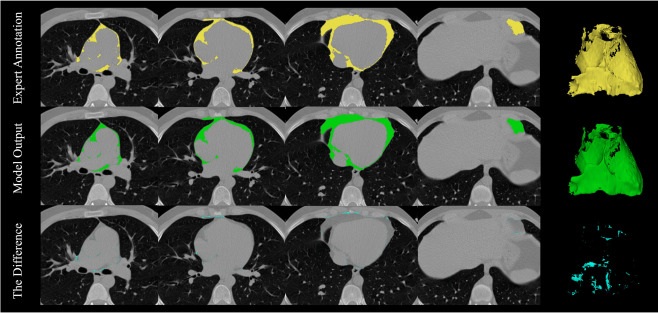
AI Analysis of Pericardial Fat Refines Long-Term Heart Disease Risk
Accurately identifying long-term cardiovascular disease risk in asymptomatic adults remains challenging for clinicians. Missed or underestimated risk delays preventive therapy and increases the chance... Read more
Machine Learning Approach Enhances Liver Cancer Risk Stratification
Hepatocellular carcinoma, the most common form of primary liver cancer, is often detected late despite targeted surveillance programs. Current screening guidelines emphasize patients with known cirrhosis,... Read more

Critical Care
view channel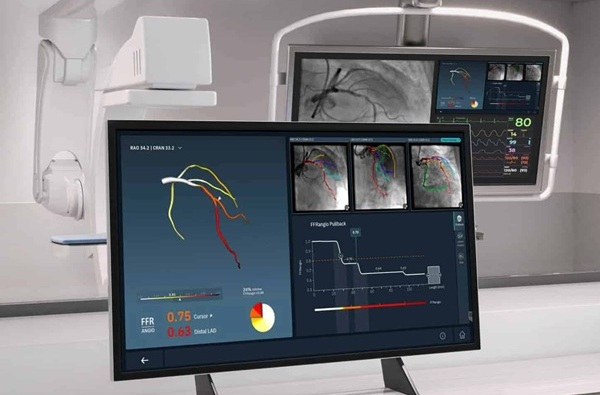
Angiography-Based FFR Approach Matches Gold Standard Results Without Wires
Accurately determining whether a coronary stenosis limits blood flow is essential to guide percutaneous coronary intervention, yet wire-based physiologic testing remains underused due to added procedural... Read more
Eye Imaging AI Identifies Elevated Cardiovascular Risk
Many adults at risk for atherosclerotic cardiovascular disease are not identified until they undergo formal primary care assessment. Delayed risk recognition can postpone initiation of statins and lifestyle... Read more

Patient Care
view channel
Wearable Sleep Data Predict Adherence to Pulmonary Rehabilitation
Chronic obstructive pulmonary disease (COPD) is a long-term lung disorder that makes breathing difficult and often disturbs sleep, reducing energy for daily activities. Limited engagement in pulmonary... Read more
Revolutionary Automatic IV-Line Flushing Device to Enhance Infusion Care
More than 80% of in-hospital patients receive intravenous (IV) therapy. Every dose of IV medicine delivered in a small volume (<250 mL) infusion bag should be followed by subsequent flushing to ensure... Read more

Health IT
view channel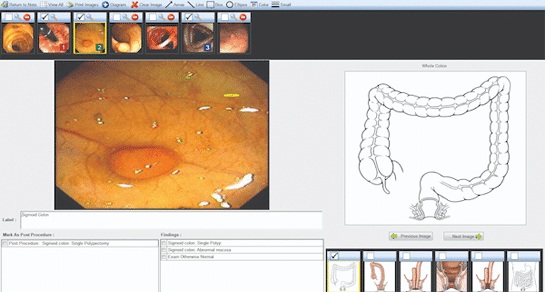
Voice-Driven AI System Enables Structured GI Procedure Documentation
Documentation during gastrointestinal (GI) procedures often competes with real-time clinical decision-making and imposes a significant cognitive burden on physicians. Manual data entry and post-procedure... Read more
EMR-Based Tool Predicts Graft Failure After Kidney Transplant
Kidney transplantation offers patients with end-stage kidney disease longer survival and better quality of life than dialysis, yet graft failure remains a major challenge. Although a successful transplant... Read more
Printable Molecule-Selective Nanoparticles Enable Mass Production of Wearable Biosensors
The future of medicine is likely to focus on the personalization of healthcare—understanding exactly what an individual requires and delivering the appropriate combination of nutrients, metabolites, and... Read more

Business
view channel
GE HealthCare Leads Major European Initiative to Advance Cardio-Oncology Care
Cardiovascular complications are increasingly recognized among people undergoing or recovering from cancer treatment, driven by pre‑existing disease and the cardiotoxic effects of chemotherapy, radiotherapy,... Read more

