






Apple Watch Health Accessory Performs ECG Readings
|
By HospiMedica International staff writers Posted on 11 Dec 2017 |


|
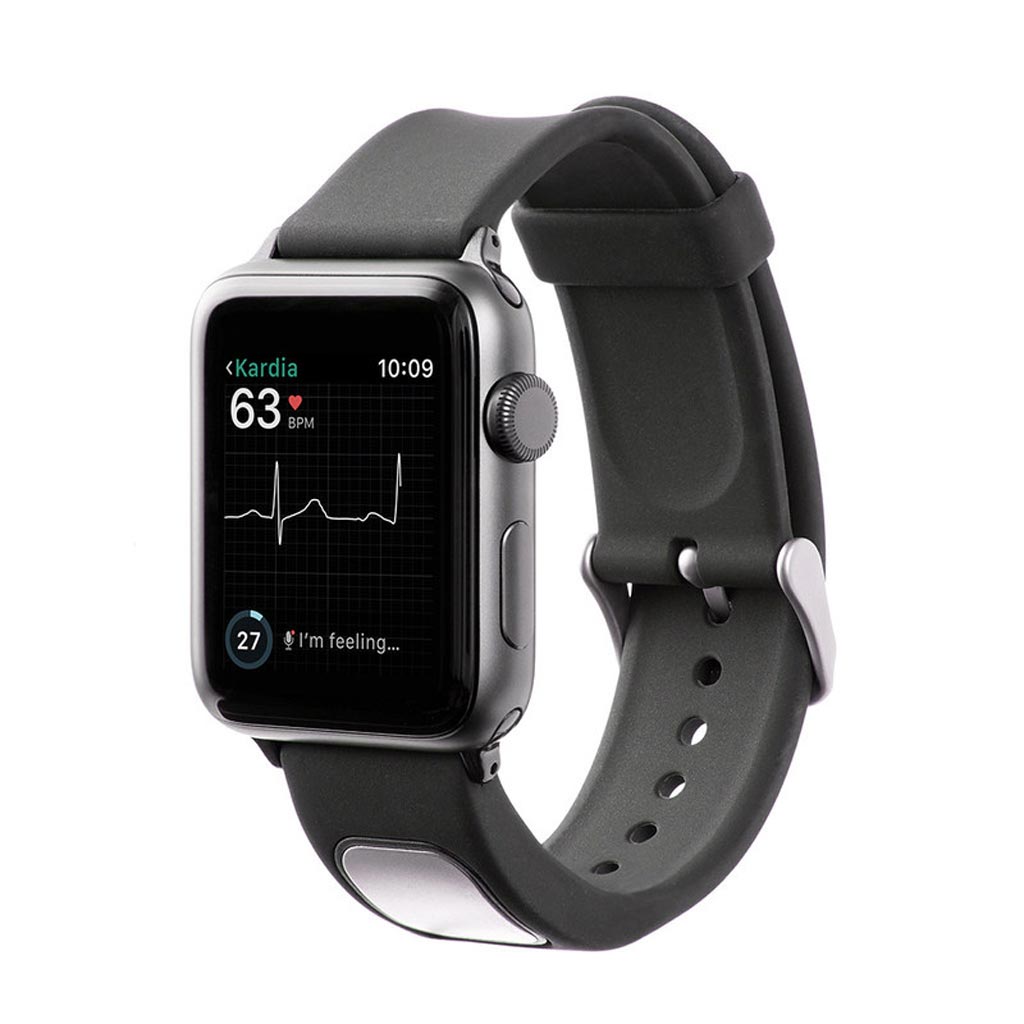
Image: A sensor on the strap of an Apple SmartWatch can record ECGs (Photo courtesy of AliveCor).
A novel accessory for the Apple (Cupertino, Ca, USA) Watch allows users to discreetly capture their electrocardiogram (ECG) anytime, anywhere, in order to quickly detect normal sinus heart rhythms and atrial fibrillation (AF).
The AliveCor (San Francisco, CA, USA) KardiaBand is based on a sensor built into a dedicated Apple Watch strap. The user first places a finger onto the sensor in the strap. It then performs a single point ECG to assess whether the electrical impulses that modulate cardiac contractions are firing properly. The resulting 30-second waveform is shown on the Apple Watch screen, after which the user can share it with their doctor as a PDF document. The system also includes the SmartRhythm machine learning algorithms, which sift through data gathered by Apple Watch’s sensors to monitor heart rate and activity.
When SmartRhythm detects that heart rate and activity are out of synchronization, the device notifies users they should capture an ECG. KardiaBand requires a subscription to the AliveCor Premium service for USD 99 a year, which includes SmartRhythm Apple Watch notifications; unlimited ECG recordings; automatic detection of AF or normal sinus rhythm; unlimited ability to send ECG readings via email; unlimited cloud history and reporting of all ECGs ever taken; weight and medication tracking; and a monthly paper report on readings taken each calendar month.
“KardiaBand paired with SmartRhythm technology will be life-changing for people who are serious about heart health,” said Vic Gundotra, CEO of AliveCor. “These capabilities will allow people to easily and discreetly check their heart rhythms when they may be abnormal, capturing essential information to help doctors identify the issue and inform a clear path of care to help manage atrial fibrillation, a leading cause of stroke and other serious conditions.”
“This is a paradigm shift for cardiac care as well as an important advance in healthcare. Today, ECGs are available only in offices and hospitals, using complex equipment, and usually only after a life threatening event, for example a stroke,” said Professor Ronald Karlsberg, MD, of Cedars Sinai Heart Institute (Los Angeles, CA, USA). “With an ECG device on the wrist, AF can be detected wherever the patient is, 24 hours a day. KardiaBand is a giant leap in personalized health care.”
The Apple Watch is a smartwatch with infrared (IR) and visible-light light-emitting diodes (LEDs) and photodiodes in a set of four rings built into the back, which are used to measure the wearer's pulse. The watch also includes an accelerometer for tracking movement, and a linear actuator for haptic feedback. Integrated appsinclude many built-in health features in order to provide users a complete picture of physical and nutritional activity. Other features include beaming social messages, displaying maps, simplified apps, and, of course, telling the time.




The AliveCor (San Francisco, CA, USA) KardiaBand is based on a sensor built into a dedicated Apple Watch strap. The user first places a finger onto the sensor in the strap. It then performs a single point ECG to assess whether the electrical impulses that modulate cardiac contractions are firing properly. The resulting 30-second waveform is shown on the Apple Watch screen, after which the user can share it with their doctor as a PDF document. The system also includes the SmartRhythm machine learning algorithms, which sift through data gathered by Apple Watch’s sensors to monitor heart rate and activity.
When SmartRhythm detects that heart rate and activity are out of synchronization, the device notifies users they should capture an ECG. KardiaBand requires a subscription to the AliveCor Premium service for USD 99 a year, which includes SmartRhythm Apple Watch notifications; unlimited ECG recordings; automatic detection of AF or normal sinus rhythm; unlimited ability to send ECG readings via email; unlimited cloud history and reporting of all ECGs ever taken; weight and medication tracking; and a monthly paper report on readings taken each calendar month.
“KardiaBand paired with SmartRhythm technology will be life-changing for people who are serious about heart health,” said Vic Gundotra, CEO of AliveCor. “These capabilities will allow people to easily and discreetly check their heart rhythms when they may be abnormal, capturing essential information to help doctors identify the issue and inform a clear path of care to help manage atrial fibrillation, a leading cause of stroke and other serious conditions.”
“This is a paradigm shift for cardiac care as well as an important advance in healthcare. Today, ECGs are available only in offices and hospitals, using complex equipment, and usually only after a life threatening event, for example a stroke,” said Professor Ronald Karlsberg, MD, of Cedars Sinai Heart Institute (Los Angeles, CA, USA). “With an ECG device on the wrist, AF can be detected wherever the patient is, 24 hours a day. KardiaBand is a giant leap in personalized health care.”
The Apple Watch is a smartwatch with infrared (IR) and visible-light light-emitting diodes (LEDs) and photodiodes in a set of four rings built into the back, which are used to measure the wearer's pulse. The watch also includes an accelerometer for tracking movement, and a linear actuator for haptic feedback. Integrated appsinclude many built-in health features in order to provide users a complete picture of physical and nutritional activity. Other features include beaming social messages, displaying maps, simplified apps, and, of course, telling the time.

Gold Member
STI Test
Vivalytic Sexually Transmitted Infection (STI) Array
New
Medical-Grade Display
HL2316SHTB
New
Creatinine/eGFR Meter
StatSensor® Creatinine/eGFR Meter
Latest Health IT News
- Voice-Driven AI System Enables Structured GI Procedure Documentation
- EMR-Based Tool Predicts Graft Failure After Kidney Transplant
- Printable Molecule-Selective Nanoparticles Enable Mass Production of Wearable Biosensors
- Smartwatches Could Detect Congestive Heart Failure
- Versatile Smart Patch Combines Health Monitoring and Drug Delivery
Channels
Artificial Intelligence
view channel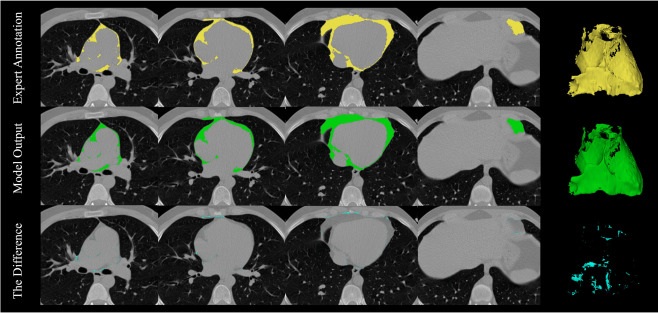
AI Analysis of Pericardial Fat Refines Long-Term Heart Disease Risk
Accurately identifying long-term cardiovascular disease risk in asymptomatic adults remains challenging for clinicians. Missed or underestimated risk delays preventive therapy and increases the chance... Read more
Machine Learning Approach Enhances Liver Cancer Risk Stratification
Hepatocellular carcinoma, the most common form of primary liver cancer, is often detected late despite targeted surveillance programs. Current screening guidelines emphasize patients with known cirrhosis,... Read more

Critical Care
view channel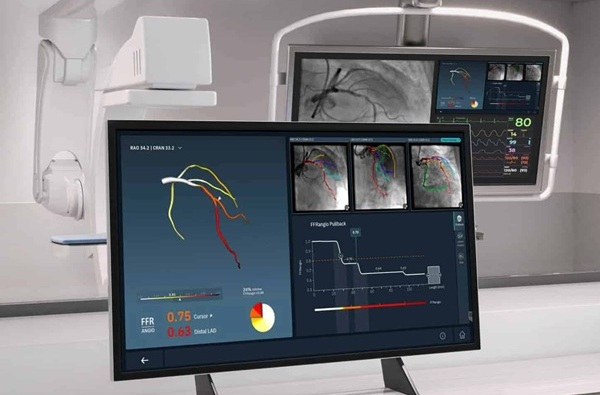
Angiography-Based FFR Approach Matches Gold Standard Results Without Wires
Accurately determining whether a coronary stenosis limits blood flow is essential to guide percutaneous coronary intervention, yet wire-based physiologic testing remains underused due to added procedural... Read more
Eye Imaging AI Identifies Elevated Cardiovascular Risk
Many adults at risk for atherosclerotic cardiovascular disease are not identified until they undergo formal primary care assessment. Delayed risk recognition can postpone initiation of statins and lifestyle... Read more

Surgical Techniques
view channel
Fiber-Form Bone Graft Expands Intraoperative Options for Spinal Fusion
Spinal and orthopedic fusion procedures often require bone graft materials that handle predictably and support bone formation. Surgeons face added complexity in difficult anatomy and challenging fusion environments.... Read more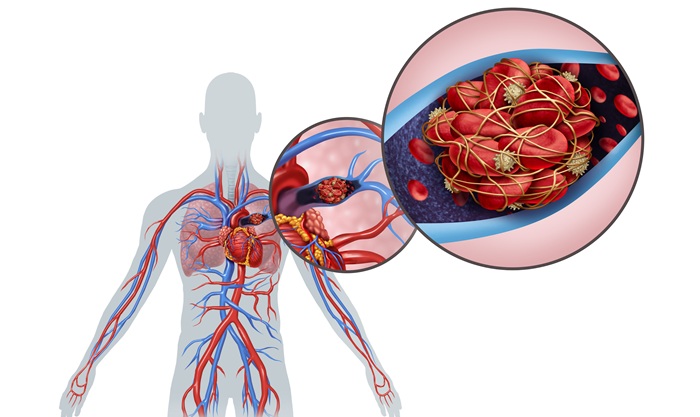
Ultrasound‑Aided Catheter Treatment Cuts Early Collapse in Pulmonary Embolism
Acute pulmonary embolism can cause rapid hemodynamic deterioration and early death in hospitalized and emergency patients. Systemic thrombolysis can dissolve clots but is limited by a high risk of major... Read more
Patient Care
view channel
Wearable Sleep Data Predict Adherence to Pulmonary Rehabilitation
Chronic obstructive pulmonary disease (COPD) is a long-term lung disorder that makes breathing difficult and often disturbs sleep, reducing energy for daily activities. Limited engagement in pulmonary... Read more
Revolutionary Automatic IV-Line Flushing Device to Enhance Infusion Care
More than 80% of in-hospital patients receive intravenous (IV) therapy. Every dose of IV medicine delivered in a small volume (<250 mL) infusion bag should be followed by subsequent flushing to ensure... Read more


Business
view channel
GE HealthCare Leads Major European Initiative to Advance Cardio-Oncology Care
Cardiovascular complications are increasingly recognized among people undergoing or recovering from cancer treatment, driven by pre‑existing disease and the cardiotoxic effects of chemotherapy, radiotherapy,... Read more

