






AI Predicts Risk of Readmission for Heart Failure Patients
|
By HospiMedica International staff writers Posted on 19 Dec 2017 |


|
Hitachi, Ltd. (Tokyo, Japan) and Partners Connected Health (Somerville, MA, USA) have collaborated to develop artificial intelligence (AI) technology, which can very accurately predict the risk of hospital readmissions within 30 days among patients with heart failure. The AI technology helps choose appropriate patients to participate in a readmission prevention program after hospital discharge and provides an explanation as to why the patients have been identified as high risk ones.
Partners Connected Health, at Partners HealthCare, is leveraging information technology – mobile phones, tablets, wearables, sensors and remote health monitoring tools – to deliver quality patient care outside of traditional medical settings. The Connected Health team creates and deploys mobile technologies in a number of patient populations and care settings, and is conducting innovative research studies to test the effectiveness of mobile health technologies in various clinical applications, including medication adherence, care coordination, chronic disease management, prevention and wellness.
Hitachi's new AI technology uses deep learning to construct the risk prediction model. The company’s technology for risk prediction analyzes the results presented by deep learning and extracting the several dozens of actionable factors for each patient from the vast amount of data collected from heart failure patients. Through a standard statistical approach based on this risk prediction model, the extracted factors are used to calculate the risk of hospital readmission, and the relevance of the factors is calculated.
As part of a study, the Partners Connected Health Innovation team simulated the readmission prediction program among heart failure patients participating in the Partners Connected Cardiac Care Program (CCCP), a remote monitoring and education program designed to improve the management of heart failure patients at risk for hospitalization. These results were compared to data from approximately 12,000 heart failure patients hospitalized and discharged from the Partners HealthCare hospital network in 2014 and 2015. The analysis showed the prediction algorithm achieved a high accuracy of approximately AUC 0.71, and can significantly reduce the number of patient readmissions. (AUC, area under the curve, is a measure of prediction model performance with an ideal value range from 0 to 1.) As a result, an additional amount of approximately USD 7,000 savings per patient per year can be expected among the cohort of CCCP patients.
The technology is an example of explainable AI, a new term currently defined as enabling machines to explain their decisions and actions to human users, and enabling them to understand, appropriately trust and effectively manage AI tools, while maintaining a high level of prediction accuracy. Hitachi and the Partners Connected Health Innovation team plan to jointly conduct a prospective study to evaluate the prediction program by clinicians, and study how to integrate this within clinical workflows. By using this new AI technology, Hitachi will provide solutions for the medical field, including solutions for insurance and pharmaceutical companies, emergency services, and other healthcare services where prediction-based on medical data can be utilized.
"Traditional machine learning can help us predict events, but as end-users, we can't tell why the machine is predicting something a certain way," said Kamal Jethwani, MD, MPH, Senior Director, Partners Connected Health Innovation. "With this innovation, doctors and nurses using the algorithm will be able to tell exactly why a certain patient is at high risk for hospital admission, and what they can do about it. We want to enable our providers to act on this information, which is a step beyond the state-of-the-art today, in terms of machine learning algorithms."




Partners Connected Health, at Partners HealthCare, is leveraging information technology – mobile phones, tablets, wearables, sensors and remote health monitoring tools – to deliver quality patient care outside of traditional medical settings. The Connected Health team creates and deploys mobile technologies in a number of patient populations and care settings, and is conducting innovative research studies to test the effectiveness of mobile health technologies in various clinical applications, including medication adherence, care coordination, chronic disease management, prevention and wellness.
Hitachi's new AI technology uses deep learning to construct the risk prediction model. The company’s technology for risk prediction analyzes the results presented by deep learning and extracting the several dozens of actionable factors for each patient from the vast amount of data collected from heart failure patients. Through a standard statistical approach based on this risk prediction model, the extracted factors are used to calculate the risk of hospital readmission, and the relevance of the factors is calculated.
As part of a study, the Partners Connected Health Innovation team simulated the readmission prediction program among heart failure patients participating in the Partners Connected Cardiac Care Program (CCCP), a remote monitoring and education program designed to improve the management of heart failure patients at risk for hospitalization. These results were compared to data from approximately 12,000 heart failure patients hospitalized and discharged from the Partners HealthCare hospital network in 2014 and 2015. The analysis showed the prediction algorithm achieved a high accuracy of approximately AUC 0.71, and can significantly reduce the number of patient readmissions. (AUC, area under the curve, is a measure of prediction model performance with an ideal value range from 0 to 1.) As a result, an additional amount of approximately USD 7,000 savings per patient per year can be expected among the cohort of CCCP patients.
The technology is an example of explainable AI, a new term currently defined as enabling machines to explain their decisions and actions to human users, and enabling them to understand, appropriately trust and effectively manage AI tools, while maintaining a high level of prediction accuracy. Hitachi and the Partners Connected Health Innovation team plan to jointly conduct a prospective study to evaluate the prediction program by clinicians, and study how to integrate this within clinical workflows. By using this new AI technology, Hitachi will provide solutions for the medical field, including solutions for insurance and pharmaceutical companies, emergency services, and other healthcare services where prediction-based on medical data can be utilized.
"Traditional machine learning can help us predict events, but as end-users, we can't tell why the machine is predicting something a certain way," said Kamal Jethwani, MD, MPH, Senior Director, Partners Connected Health Innovation. "With this innovation, doctors and nurses using the algorithm will be able to tell exactly why a certain patient is at high risk for hospital admission, and what they can do about it. We want to enable our providers to act on this information, which is a step beyond the state-of-the-art today, in terms of machine learning algorithms."

Gold Member
12-Channel ECG
CM1200B
New
Hybrid Arch Device
Neo EDE
New
Medical-Grade Display
HL2316SHTB
Latest AI News
- AI Analysis of Pericardial Fat Refines Long-Term Heart Disease Risk
- Machine Learning Approach Enhances Liver Cancer Risk Stratification
- New AI Approach Monitors Brain Health Using Passive Wearable Data
- AI Tool Maps Early Risk Patterns in Bloodstream Infections
- AI Model Identifies Rare Endocrine Disorder from Hand Images
- AI Tool Promises to Reduce Length of Hospital Stays and Free Up Beds
- Machine Learning Model Cuts Canceled Liver Transplants By 60%
Channels
Critical Care
view channel
Noninvasive Monitoring Device Enables Earlier Intervention in Heart Failure
Hospitalizations for heart failure with preserved ejection fraction (HFpEF) remain common because lung congestion often worsens before symptoms prompt treatment changes. Missed early decompensation... Read more
Automated IV Labeling Solution Improves Infusion Safety and Efficiency
Medication administration in high-acuity settings is often complicated by multiple concurrent infusions, making accurate line identification essential. In a 10-hospital intensive care unit study, 60% of... Read more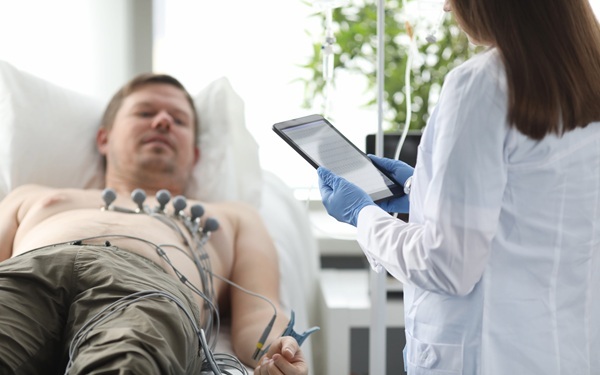

Surgical Techniques
view channel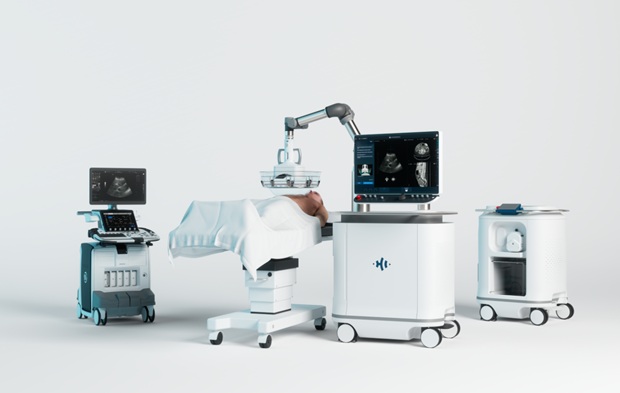
Ultrasound Technology Aims to Replace Invasive BPH Procedures
Benign prostatic hyperplasia (BPH) is a frequent cause of lower urinary tract symptoms in aging men and often requires invasive procedures or prolonged recovery. With prevalence expected to rise as populations... Read more
Continuous Monitoring with Wearables Enhances Postoperative Patient Safety
Postoperative hypoxemia on general surgical wards is common and often missed by intermittent vital sign checks. Undetected low oxygen levels can delay recovery and raise the risk of complications that... Read more

Patient Care
view channel
Wearable Sleep Data Predict Adherence to Pulmonary Rehabilitation
Chronic obstructive pulmonary disease (COPD) is a long-term lung disorder that makes breathing difficult and often disturbs sleep, reducing energy for daily activities. Limited engagement in pulmonary... Read more
Revolutionary Automatic IV-Line Flushing Device to Enhance Infusion Care
More than 80% of in-hospital patients receive intravenous (IV) therapy. Every dose of IV medicine delivered in a small volume (<250 mL) infusion bag should be followed by subsequent flushing to ensure... Read more

Health IT
view channel
EMR-Based Tool Predicts Graft Failure After Kidney Transplant
Kidney transplantation offers patients with end-stage kidney disease longer survival and better quality of life than dialysis, yet graft failure remains a major challenge. Although a successful transplant... Read more
Printable Molecule-Selective Nanoparticles Enable Mass Production of Wearable Biosensors
The future of medicine is likely to focus on the personalization of healthcare—understanding exactly what an individual requires and delivering the appropriate combination of nutrients, metabolites, and... Read more


Business
view channel
GE HealthCare Leads Major European Initiative to Advance Cardio-Oncology Care
Cardiovascular complications are increasingly recognized among people undergoing or recovering from cancer treatment, driven by pre‑existing disease and the cardiotoxic effects of chemotherapy, radiotherapy,... Read more

