






African Surgical Deaths Equal to Double Global Average
|
By HospiMedica International staff writers Posted on 15 Jan 2018 |


|
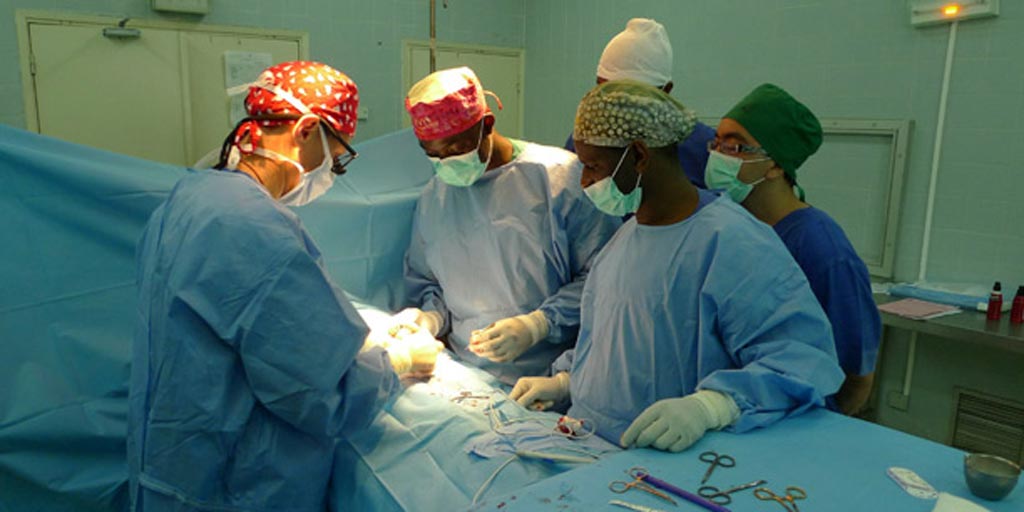
Image: Low-resource hospitals, such as this one in Senegal, contribute to Africa’s higher surgical death rate (Photo courtesy of IvuMed).
A new study reveals that despite a low-risk profile and few postoperative complications, patients in Africa are twice as likely to die compared to the worldwide norm.
Hundreds of researchers participating in the international African Surgical Outcomes Study (ASOS) conducted a prospective, observational cohort study of patients aged 18 years and older undergoing any inpatient surgery in 25 countries in Africa during a seven-day period. The researchers collected data from at least 10 hospitals per country. Each country selected one recruitment week between February and May 2016, with total study cohort including 11,422 patients from 247 hospitals during the national cohort weeks. The primary outcome was in-hospital postoperative complications, which were graded as mild, moderate, or severe.
The hospitals served a median population of 810,000 people, with the combined number of specialist surgeons, obstetricians, and anesthetists totaling 0.7 per 100,000. A median 212 surgical procedures per 10,000 patients were undertaken, with the African patients being younger and with a lower risk profile than in high-income countries. The most common elective surgical procedure was cesarean delivery (33%); postoperative complications occurred in 18.2% of the patients, and 2.1% died, the majority of them the day of surgery. Infection was the most common complication (10.2%), of which 9.7% died.
Comparisons with international data for elective surgery showed that death rates were one percent in Africa, compared with 0.5 percent for the global average. The authors suggested that a lack of crucial equipment and supplies hampered surgical care in Africa; a quarter of hospitals have no reliable oxygen source, a third do not have reliable electricity, and nearly half do not have dedicated postoperative care. The researchers stated that many lives could be saved by improving patient monitoring during and after surgery. The study was published on January 3, 2018, in The Lancet.
“Despite a low-risk profile and few postoperative complications, patients in Africa were twice as likely to die after surgery when compared with the global average for postoperative deaths,” concluded lead author Professor Bruce Biccard, PhD, of the University of Cape Town (UCT; South Africa), and colleagues. “Initiatives to increase access to surgical treatments in Africa therefore should be coupled with improved surveillance for deteriorating physiology in patients who develop postoperative complications, and the resources necessary to achieve this objective.”
Related Links:
University of Cape Town






Hundreds of researchers participating in the international African Surgical Outcomes Study (ASOS) conducted a prospective, observational cohort study of patients aged 18 years and older undergoing any inpatient surgery in 25 countries in Africa during a seven-day period. The researchers collected data from at least 10 hospitals per country. Each country selected one recruitment week between February and May 2016, with total study cohort including 11,422 patients from 247 hospitals during the national cohort weeks. The primary outcome was in-hospital postoperative complications, which were graded as mild, moderate, or severe.
The hospitals served a median population of 810,000 people, with the combined number of specialist surgeons, obstetricians, and anesthetists totaling 0.7 per 100,000. A median 212 surgical procedures per 10,000 patients were undertaken, with the African patients being younger and with a lower risk profile than in high-income countries. The most common elective surgical procedure was cesarean delivery (33%); postoperative complications occurred in 18.2% of the patients, and 2.1% died, the majority of them the day of surgery. Infection was the most common complication (10.2%), of which 9.7% died.
Comparisons with international data for elective surgery showed that death rates were one percent in Africa, compared with 0.5 percent for the global average. The authors suggested that a lack of crucial equipment and supplies hampered surgical care in Africa; a quarter of hospitals have no reliable oxygen source, a third do not have reliable electricity, and nearly half do not have dedicated postoperative care. The researchers stated that many lives could be saved by improving patient monitoring during and after surgery. The study was published on January 3, 2018, in The Lancet.
“Despite a low-risk profile and few postoperative complications, patients in Africa were twice as likely to die after surgery when compared with the global average for postoperative deaths,” concluded lead author Professor Bruce Biccard, PhD, of the University of Cape Town (UCT; South Africa), and colleagues. “Initiatives to increase access to surgical treatments in Africa therefore should be coupled with improved surveillance for deteriorating physiology in patients who develop postoperative complications, and the resources necessary to achieve this objective.”
Related Links:
University of Cape Town

Gold Member
STI Test
Vivalytic Sexually Transmitted Infection (STI) Array
New
X-Ray Generator
Advantage Plus Generators
New
Pediatric Mask
Respire SOFT
Latest Surgical Techniques News
- Ultrasound Technology Aims to Replace Invasive BPH Procedures
- Continuous Monitoring with Wearables Enhances Postoperative Patient Safety
- New Approach Enables Customized Muscle Tissue Without Biomaterial Scaffolds
- Robot-Assisted Brain Angiography Improves Procedural Outcomes
- Brain Mapping Technology Enhances Precision in Brain Tumor Resection
- Handheld Robotic System Expands Options for Total Knee Surgery
- VR Experience Reduces Patient Anxiety Before Kidney Stone Procedure
- Injectable Mini Livers Offer Hope for Patients Awaiting Transplant
- Pulsed Field Ablation Technology Cleared in Europe for Persistent AFib
- AI-Powered Imaging Brings Real-Time Margin Clarity to Breast Cancer Surgery
- Minimally Invasive Device Safely Treats Challenging Brain Aneurysms
- Surgical Robot Makes Complex Liver Tumor Surgery Safer and Less Invasive
- Neurostimulation Implant Reduces Seizure Burden in Drug-Resistant Epilepsy
- Minimally Invasive Procedure Effectively Treats Small Kidney Cancers
- Fluorescence Probe Paired with Engineered Enzymes Lights Up Tumors for Easier Surgical Removal
- Novel Hydrogel Could Become Bone Implant of the Future
Channels
Artificial Intelligence
view channel
AI Analysis of Pericardial Fat Refines Long-Term Heart Disease Risk
Accurately identifying long-term cardiovascular disease risk in asymptomatic adults remains challenging for clinicians. Missed or underestimated risk delays preventive therapy and increases the chance... Read more
Machine Learning Approach Enhances Liver Cancer Risk Stratification
Hepatocellular carcinoma, the most common form of primary liver cancer, is often detected late despite targeted surveillance programs. Current screening guidelines emphasize patients with known cirrhosis,... Read more

Critical Care
view channel
Noninvasive Monitoring Device Enables Earlier Intervention in Heart Failure
Hospitalizations for heart failure with preserved ejection fraction (HFpEF) remain common because lung congestion often worsens before symptoms prompt treatment changes. Missed early decompensation... Read more
Automated IV Labeling Solution Improves Infusion Safety and Efficiency
Medication administration in high-acuity settings is often complicated by multiple concurrent infusions, making accurate line identification essential. In a 10-hospital intensive care unit study, 60% of... Read more

Patient Care
view channel
Wearable Sleep Data Predict Adherence to Pulmonary Rehabilitation
Chronic obstructive pulmonary disease (COPD) is a long-term lung disorder that makes breathing difficult and often disturbs sleep, reducing energy for daily activities. Limited engagement in pulmonary... Read more
Revolutionary Automatic IV-Line Flushing Device to Enhance Infusion Care
More than 80% of in-hospital patients receive intravenous (IV) therapy. Every dose of IV medicine delivered in a small volume (<250 mL) infusion bag should be followed by subsequent flushing to ensure... Read more

Health IT
view channel
EMR-Based Tool Predicts Graft Failure After Kidney Transplant
Kidney transplantation offers patients with end-stage kidney disease longer survival and better quality of life than dialysis, yet graft failure remains a major challenge. Although a successful transplant... Read more
Printable Molecule-Selective Nanoparticles Enable Mass Production of Wearable Biosensors
The future of medicine is likely to focus on the personalization of healthcare—understanding exactly what an individual requires and delivering the appropriate combination of nutrients, metabolites, and... Read more


Business
view channel
GE HealthCare Leads Major European Initiative to Advance Cardio-Oncology Care
Cardiovascular complications are increasingly recognized among people undergoing or recovering from cancer treatment, driven by pre‑existing disease and the cardiotoxic effects of chemotherapy, radiotherapy,... Read more

