






Augmented Reality System Allows Doctors to See under Skin
|
By HospiMedica International staff writers Posted on 07 Feb 2018 |


|
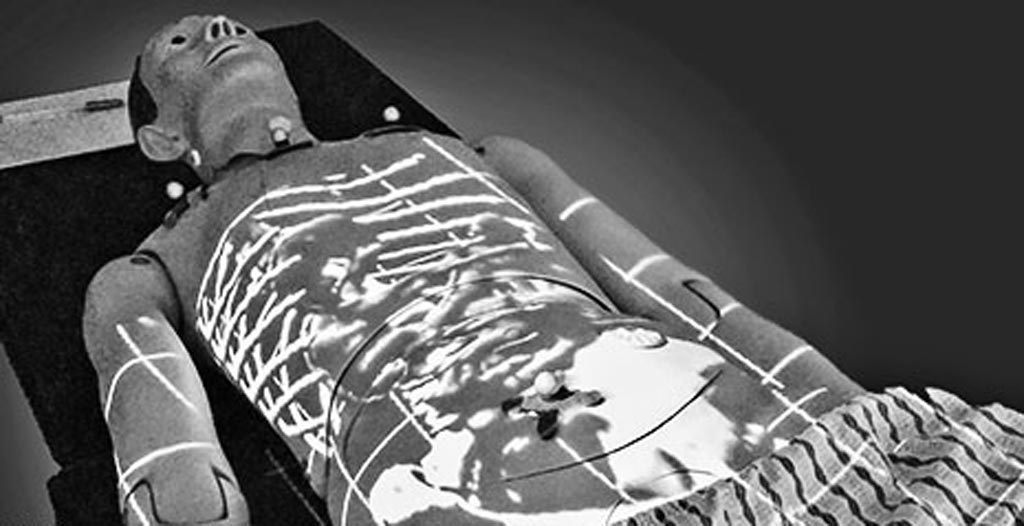
Image: The ProjectDR allows medical images to be displayed directly on a patient’s body in a way that moves as the patient does (Photo courtesy of Ampronix).
A new system, called ProjectDR, allows medical images such as CT scans and MRI data to be displayed directly on a patient’s body in a way that moves as the patient does. ProjectDR also has the capacity to present segmented images, for instance, only the lungs or only the blood vessels, depending upon what a clinician is interested in seeing.
The technology features a motion-tracking system that uses infrared cameras and markers on the patient’s body, as well as a projector to display the images. The software that allows the image to track properly on the patient’s body even as they shift and move was written by Ian Watts, a computing science graduate student at the University of Alberta (Alberta, Canada) who developed the technology with fellow graduate student Michael Fiest.
“We wanted to create a system that would show clinicians a patient’s internal anatomy within the context of the body,” said Watts. “There are lots of applications for this technology, including in teaching, physiotherapy, laparoscopic surgery and even surgical planning.”
Watts is now working on refining ProjectDR to improve the system’s automatic calibration and add components, such as depth sensors. The next step will be to test the program’s viability in a clinical setting.
“Soon, we’ll deploy ProjectDR in an operating room in a surgical simulation laboratory to test the pros and cons in real-life surgical applications,” said Pierre Boulanger, professor in the Department of Computing Science.
“We are also doing pilot studies to test the usability of the system for teaching chiropractic and physical therapy procedures,” added Greg Kawchuk, a co-supervisor on the project from the Faculty of Rehabilitation Medicine. The research team expects the system to be deployed quickly in real surgical pilot studies as soon as the pilot studies are complete. ProjectDR was presented last November at the Virtual Reality Software and Technology Symposium in Gothenburg, Sweden.
Related Links:
University of Alberta





The technology features a motion-tracking system that uses infrared cameras and markers on the patient’s body, as well as a projector to display the images. The software that allows the image to track properly on the patient’s body even as they shift and move was written by Ian Watts, a computing science graduate student at the University of Alberta (Alberta, Canada) who developed the technology with fellow graduate student Michael Fiest.
“We wanted to create a system that would show clinicians a patient’s internal anatomy within the context of the body,” said Watts. “There are lots of applications for this technology, including in teaching, physiotherapy, laparoscopic surgery and even surgical planning.”
Watts is now working on refining ProjectDR to improve the system’s automatic calibration and add components, such as depth sensors. The next step will be to test the program’s viability in a clinical setting.
“Soon, we’ll deploy ProjectDR in an operating room in a surgical simulation laboratory to test the pros and cons in real-life surgical applications,” said Pierre Boulanger, professor in the Department of Computing Science.
“We are also doing pilot studies to test the usability of the system for teaching chiropractic and physical therapy procedures,” added Greg Kawchuk, a co-supervisor on the project from the Faculty of Rehabilitation Medicine. The research team expects the system to be deployed quickly in real surgical pilot studies as soon as the pilot studies are complete. ProjectDR was presented last November at the Virtual Reality Software and Technology Symposium in Gothenburg, Sweden.
Related Links:
University of Alberta

Gold Member
SARS‑CoV‑2/Flu A/Flu B/RSV Sample-To-Answer Test
SARS‑CoV‑2/Flu A/Flu B/RSV Cartridge (CE-IVD)
New
Surgical Dressing
ALLEVYN Ag+ SURGICAL
New
Glucose Meter
StatStrip®
Latest AI News
- AI Analysis of Pericardial Fat Refines Long-Term Heart Disease Risk
- Machine Learning Approach Enhances Liver Cancer Risk Stratification
- New AI Approach Monitors Brain Health Using Passive Wearable Data
- AI Tool Maps Early Risk Patterns in Bloodstream Infections
- AI Model Identifies Rare Endocrine Disorder from Hand Images
- AI Tool Promises to Reduce Length of Hospital Stays and Free Up Beds
- Machine Learning Model Cuts Canceled Liver Transplants By 60%
Channels
Critical Care
view channel
Noninvasive Monitoring Device Enables Earlier Intervention in Heart Failure
Hospitalizations for heart failure with preserved ejection fraction (HFpEF) remain common because lung congestion often worsens before symptoms prompt treatment changes. Missed early decompensation... Read more
Automated IV Labeling Solution Improves Infusion Safety and Efficiency
Medication administration in high-acuity settings is often complicated by multiple concurrent infusions, making accurate line identification essential. In a 10-hospital intensive care unit study, 60% of... Read more
Surgical Techniques
view channel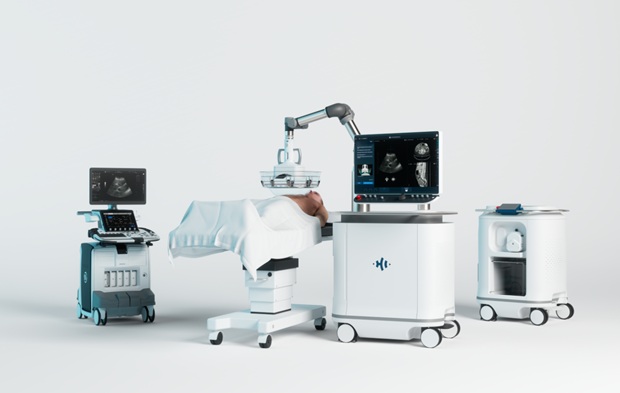
Ultrasound Technology Aims to Replace Invasive BPH Procedures
Benign prostatic hyperplasia (BPH) is a frequent cause of lower urinary tract symptoms in aging men and often requires invasive procedures or prolonged recovery. With prevalence expected to rise as populations... Read more
Continuous Monitoring with Wearables Enhances Postoperative Patient Safety
Postoperative hypoxemia on general surgical wards is common and often missed by intermittent vital sign checks. Undetected low oxygen levels can delay recovery and raise the risk of complications that... Read more
Patient Care
view channel
Wearable Sleep Data Predict Adherence to Pulmonary Rehabilitation
Chronic obstructive pulmonary disease (COPD) is a long-term lung disorder that makes breathing difficult and often disturbs sleep, reducing energy for daily activities. Limited engagement in pulmonary... Read more
Revolutionary Automatic IV-Line Flushing Device to Enhance Infusion Care
More than 80% of in-hospital patients receive intravenous (IV) therapy. Every dose of IV medicine delivered in a small volume (<250 mL) infusion bag should be followed by subsequent flushing to ensure... Read more

Health IT
view channel
EMR-Based Tool Predicts Graft Failure After Kidney Transplant
Kidney transplantation offers patients with end-stage kidney disease longer survival and better quality of life than dialysis, yet graft failure remains a major challenge. Although a successful transplant... Read more
Printable Molecule-Selective Nanoparticles Enable Mass Production of Wearable Biosensors
The future of medicine is likely to focus on the personalization of healthcare—understanding exactly what an individual requires and delivering the appropriate combination of nutrients, metabolites, and... Read more


Business
view channel
GE HealthCare Leads Major European Initiative to Advance Cardio-Oncology Care
Cardiovascular complications are increasingly recognized among people undergoing or recovering from cancer treatment, driven by pre‑existing disease and the cardiotoxic effects of chemotherapy, radiotherapy,... Read more

