






New Fiberoptic Sensors Dissolve in Body
|
By HospiMedica International staff writers Posted on 13 Feb 2018 |


|
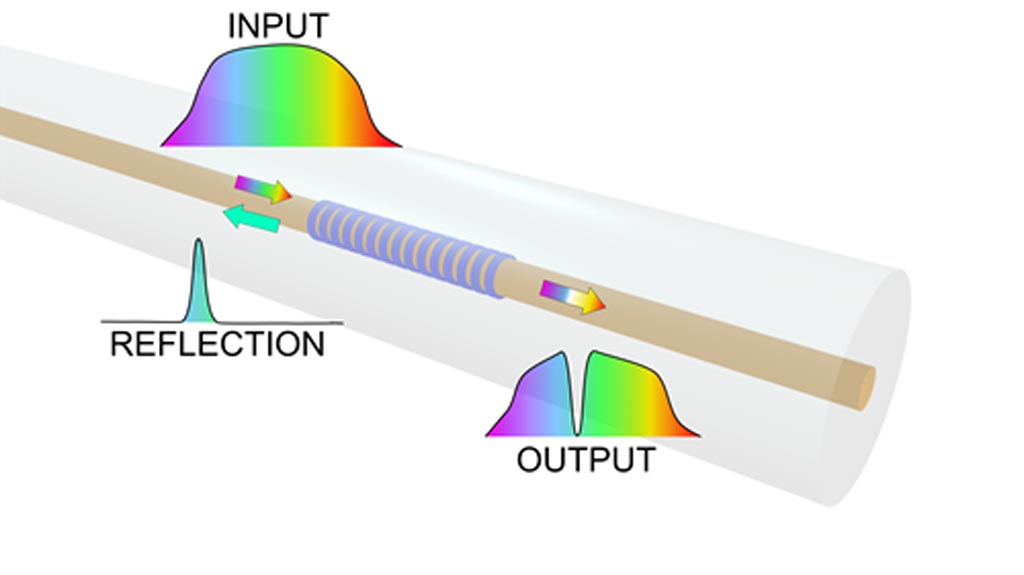
Image: FBGs turn an optical fiber into a sensing element by reflecting a specific wavelength (Photo courtesy of Maria Konstantaki).
A new study describes how bioresorbable sensors could be used for in-body monitoring of bone fracture healing and for safer exploration of sensitive organs such as the brain.
Developed at the Polytechnic University of Turin (Italy), Consiglio Nazionale delle Ricerche (CNR; Trento, Italy), and other institutions, the new sensing element is a modified fiber Bragg grating (FBG) inscribed into a bioresorbable calcium-phosphate glass optical fiber using a 193 nm excimer laser. The laser inscription creates a pattern that causes the fiber to reflect a specific wavelength back in the direction from which it came. A modification that tilts the FBG allows some of the reflected light to escape from the fiber core to the cylindrical surface; the back-reflected light can then be monitored.
The researchers created both tilted and standard optical FBGs to understand how the parameters used for inscription affect the grating sensing characteristics. They found that exposing the bioresorbable fiber to ultraviolet (UV) laser light with a given spatial intensity distribution created a corresponding surface relief pattern in the optical fiber volume after dissolution. According to the researchers, the phosphate glass FBG could be used in soluble photonic sensing probes for efficient in-vivo monitoring of vital mechanical or chemical parameters.
The researchers are now performing systematic experiments to better understand how the fiber composition and UV laser irradiation conditions affect the speed at which the fiber Bragg grating dissolves. This information could be used to create fiber Bragg gratings that dissolve within a specific time period; before being used in people, the dissolving and sensing properties of the FBG will need to be studied in animals. The study was published on February 15, 2018, in Optics Letters.
“This glass combines excellent optical properties with biocompatibility and water solubility, thus providing a reliable platform from which to make optical fibers that dissolve in water or biological fluids,” said study co-author Daniel Milanese, PhD, of the Polytechnic University of Turin. “The glass is made of phosphorous oxide combined with oxides of calcium, magnesium, sodium, and silicon. The properties of the optical fibers can be tuned by properly changing the glass composition.”
A FBG is an invisible reflector inside the core of an optical fiber that is set to a specific wavelength of light. When the fiber where the FBG is located is exposed to strain or temperature, the FBG’s “center wavelength” shifts to a higher or lower wavelength. The direction and magnitude of the shift is proportional to the change in strain or temperature. Using different wavelengths allows multiplexing of dozens of FBGs on a single fiber. FBGs are commonly used for applications such as real-time monitoring of the structural health of bridges or tracking the integrity of airplane wings.
Related Links:
Polytechnic University of Turin
Consiglio Nazionale delle Ricerche





Developed at the Polytechnic University of Turin (Italy), Consiglio Nazionale delle Ricerche (CNR; Trento, Italy), and other institutions, the new sensing element is a modified fiber Bragg grating (FBG) inscribed into a bioresorbable calcium-phosphate glass optical fiber using a 193 nm excimer laser. The laser inscription creates a pattern that causes the fiber to reflect a specific wavelength back in the direction from which it came. A modification that tilts the FBG allows some of the reflected light to escape from the fiber core to the cylindrical surface; the back-reflected light can then be monitored.
The researchers created both tilted and standard optical FBGs to understand how the parameters used for inscription affect the grating sensing characteristics. They found that exposing the bioresorbable fiber to ultraviolet (UV) laser light with a given spatial intensity distribution created a corresponding surface relief pattern in the optical fiber volume after dissolution. According to the researchers, the phosphate glass FBG could be used in soluble photonic sensing probes for efficient in-vivo monitoring of vital mechanical or chemical parameters.
The researchers are now performing systematic experiments to better understand how the fiber composition and UV laser irradiation conditions affect the speed at which the fiber Bragg grating dissolves. This information could be used to create fiber Bragg gratings that dissolve within a specific time period; before being used in people, the dissolving and sensing properties of the FBG will need to be studied in animals. The study was published on February 15, 2018, in Optics Letters.
“This glass combines excellent optical properties with biocompatibility and water solubility, thus providing a reliable platform from which to make optical fibers that dissolve in water or biological fluids,” said study co-author Daniel Milanese, PhD, of the Polytechnic University of Turin. “The glass is made of phosphorous oxide combined with oxides of calcium, magnesium, sodium, and silicon. The properties of the optical fibers can be tuned by properly changing the glass composition.”
A FBG is an invisible reflector inside the core of an optical fiber that is set to a specific wavelength of light. When the fiber where the FBG is located is exposed to strain or temperature, the FBG’s “center wavelength” shifts to a higher or lower wavelength. The direction and magnitude of the shift is proportional to the change in strain or temperature. Using different wavelengths allows multiplexing of dozens of FBGs on a single fiber. FBGs are commonly used for applications such as real-time monitoring of the structural health of bridges or tracking the integrity of airplane wings.
Related Links:
Polytechnic University of Turin
Consiglio Nazionale delle Ricerche

New
Gold Member
Neonatal Heel Incision Device
Tenderfoot
New
Hybrid Arch Device
Neo EDE
New
Monitor/Defibrillator
Zenix
Channels
Artificial Intelligence
view channel
Machine Learning Approach Enhances Liver Cancer Risk Stratification
Hepatocellular carcinoma, the most common form of primary liver cancer, is often detected late despite targeted surveillance programs. Current screening guidelines emphasize patients with known cirrhosis,... Read more
New AI Approach Monitors Brain Health Using Passive Wearable Data
Brain health spans cognitive and emotional functions and can fluctuate even in adults without diagnosed disease. Detecting early changes remains difficult in routine care and burdens specialty services... Read more
Critical Care
view channel
Automated IV Labeling Solution Improves Infusion Safety and Efficiency
Medication administration in high-acuity settings is often complicated by multiple concurrent infusions, making accurate line identification essential. In a 10-hospital intensive care unit study, 60% of... Read more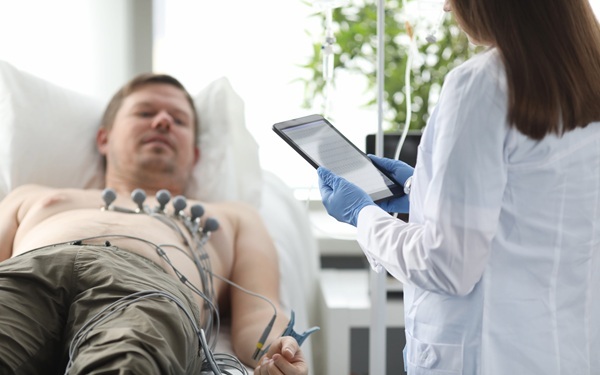
First-Of-Its-Kind AI Tool Detects Pulmonary Hypertension from Standard ECGs
Pulmonary hypertension is a progressive, life‑threatening disease that is frequently missed early because symptoms such as dyspnea are nonspecific and diagnostic delays can exceed two years.... Read more
Surgical Techniques
view channel
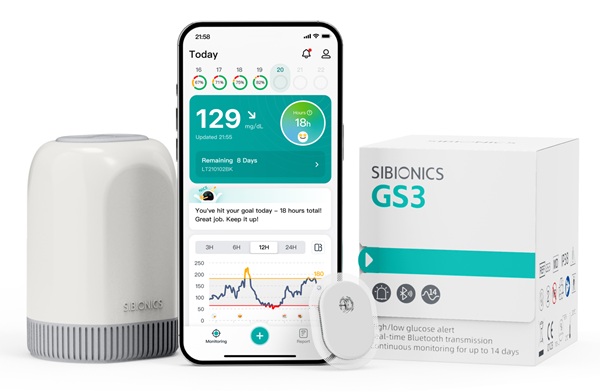
Continuous Monitoring with Wearables Enhances Postoperative Patient Safety
Postoperative hypoxemia on general surgical wards is common and often missed by intermittent vital sign checks. Undetected low oxygen levels can delay recovery and raise the risk of complications that... Read more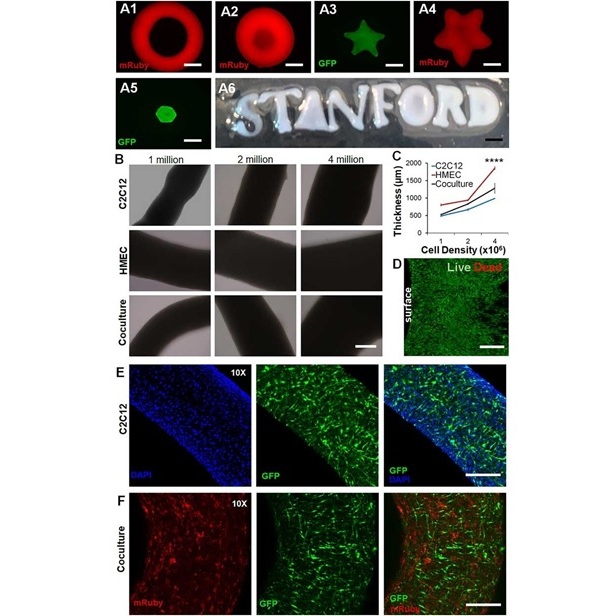
New Approach Enables Customized Muscle Tissue Without Biomaterial Scaffolds
Volumetric muscle loss is a traumatic loss of skeletal muscle that often leads to permanent functional impairment and limited reconstructive options. Current experimental strategies struggle to deliver... Read more
Patient Care
view channel
Wearable Sleep Data Predict Adherence to Pulmonary Rehabilitation
Chronic obstructive pulmonary disease (COPD) is a long-term lung disorder that makes breathing difficult and often disturbs sleep, reducing energy for daily activities. Limited engagement in pulmonary... Read more
Revolutionary Automatic IV-Line Flushing Device to Enhance Infusion Care
More than 80% of in-hospital patients receive intravenous (IV) therapy. Every dose of IV medicine delivered in a small volume (<250 mL) infusion bag should be followed by subsequent flushing to ensure... Read more


Business
view channel
GE HealthCare Leads Major European Initiative to Advance Cardio-Oncology Care
Cardiovascular complications are increasingly recognized among people undergoing or recovering from cancer treatment, driven by pre‑existing disease and the cardiotoxic effects of chemotherapy, radiotherapy,... Read more

