






Philips Launches Artificial Intelligence Platform for Healthcare
|
By HospiMedica International staff writers Posted on 12 Mar 2018 |


|

Image: The HealthSuite Insights platform is designed to give data scientists, software developers, clinicians and healthcare providers access to advanced analytic capabilities to curate and analyze healthcare data, and offers them tools and technologies to build, maintain, deploy and scale AI-based solutions (Photo courtesy of Philips Healthcare).
Royal Philips (Amsterdam, the Netherlands) has launched HealthSuite Insights, including the Insights Marketplace, to support the advancing adoption of analytics and artificial intelligence (AI) in key healthcare domains. HealthSuite Insights, which made its debut at the 2018 HIMSS Conference & Exhibition (HIMSS18), gives data scientists, software developers, clinicians and healthcare providers access to advanced analytic capabilities to curate and analyze healthcare data, and offers them tools and technologies to build, maintain, deploy and scale AI-based solutions. Insights Marketplace will provide the healthcare industry's first ecosystem where curated AI assets from Philips and others are readily available for license.
The tools and technologies available through HealthSuite Insights already enable machine learning and deep learning applications in Philips' diagnostic imaging solutions, patient monitoring solutions, and oncology and genomics offerings. The platform allows Philips to leverage AI across these innovations by combining it with other technologies and gain a deep understanding of the clinical, operational and personal context for care professionals and patients/consumers.
The Insights Marketplace will initially offer assets supplied by Philips, while medically validated Philips assets will be added later this year. It will be further expanded in late 2018 to include assets submitted by third parties. AI assets built using the Insights Platform are designed to be secure irrespective of the execution environment, with sophisticated Identity and Access Management, integrated Blockchain services, and data collection and management services built in. The Insights platform can be deployed on a healthcare cloud infrastructure such as the Philips HealthSuite Digital Platform, or on premise at a provider site.
"The quality of your AI is only as good as the quality of the data you feed into it," said Jeroen Tas, Chief Innovation & Strategy Officer Philips. "We have designed HealthSuite Insights to be used by the people who work with patient data on a daily basis and have the contextual understanding; including doctors, clinicians and hospital managers. With the HealthSuite Insights platform, we give them the ability to bring all the relevant patient information together, curate the data and use the power of AI to support precision diagnosis, personalized therapy, early intervention and greater hospital efficiency."







The tools and technologies available through HealthSuite Insights already enable machine learning and deep learning applications in Philips' diagnostic imaging solutions, patient monitoring solutions, and oncology and genomics offerings. The platform allows Philips to leverage AI across these innovations by combining it with other technologies and gain a deep understanding of the clinical, operational and personal context for care professionals and patients/consumers.
The Insights Marketplace will initially offer assets supplied by Philips, while medically validated Philips assets will be added later this year. It will be further expanded in late 2018 to include assets submitted by third parties. AI assets built using the Insights Platform are designed to be secure irrespective of the execution environment, with sophisticated Identity and Access Management, integrated Blockchain services, and data collection and management services built in. The Insights platform can be deployed on a healthcare cloud infrastructure such as the Philips HealthSuite Digital Platform, or on premise at a provider site.
"The quality of your AI is only as good as the quality of the data you feed into it," said Jeroen Tas, Chief Innovation & Strategy Officer Philips. "We have designed HealthSuite Insights to be used by the people who work with patient data on a daily basis and have the contextual understanding; including doctors, clinicians and hospital managers. With the HealthSuite Insights platform, we give them the ability to bring all the relevant patient information together, curate the data and use the power of AI to support precision diagnosis, personalized therapy, early intervention and greater hospital efficiency."

New
Gold Member
Handheld Blood Glucose Analyzer
STAT-Site
New
Patient Preoperative Skin Preparation
BD ChloraPrep
New
X-Ray Generator
Advantage Plus Generators
Latest AI News
- AI Analysis of Pericardial Fat Refines Long-Term Heart Disease Risk
- Machine Learning Approach Enhances Liver Cancer Risk Stratification
- New AI Approach Monitors Brain Health Using Passive Wearable Data
- AI Tool Maps Early Risk Patterns in Bloodstream Infections
- AI Model Identifies Rare Endocrine Disorder from Hand Images
- AI Tool Promises to Reduce Length of Hospital Stays and Free Up Beds
Channels
Artificial Intelligence
view channel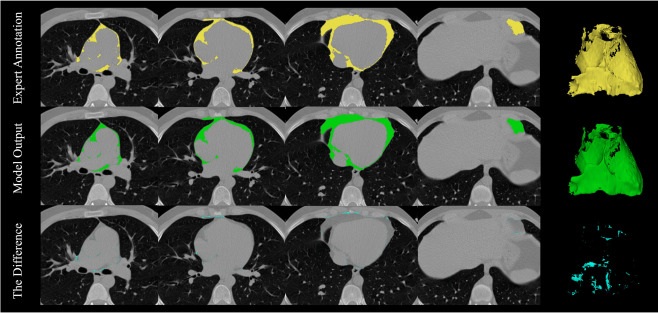
AI Analysis of Pericardial Fat Refines Long-Term Heart Disease Risk
Accurately identifying long-term cardiovascular disease risk in asymptomatic adults remains challenging for clinicians. Missed or underestimated risk delays preventive therapy and increases the chance... Read more
Machine Learning Approach Enhances Liver Cancer Risk Stratification
Hepatocellular carcinoma, the most common form of primary liver cancer, is often detected late despite targeted surveillance programs. Current screening guidelines emphasize patients with known cirrhosis,... Read more

Critical Care
view channel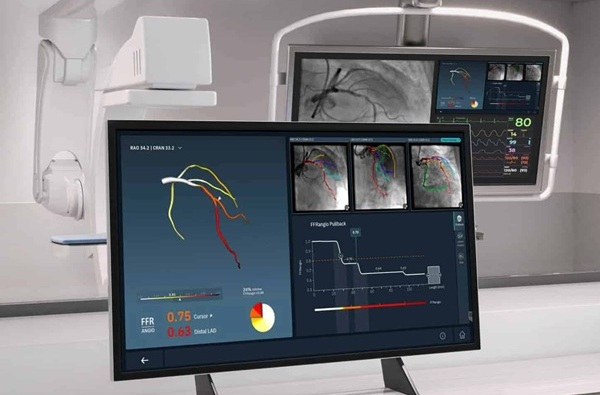
Angiography-Based FFR Approach Matches Gold Standard Results Without Wires
Accurately determining whether a coronary stenosis limits blood flow is essential to guide percutaneous coronary intervention, yet wire-based physiologic testing remains underused due to added procedural... Read more
Eye Imaging AI Identifies Elevated Cardiovascular Risk
Many adults at risk for atherosclerotic cardiovascular disease are not identified until they undergo formal primary care assessment. Delayed risk recognition can postpone initiation of statins and lifestyle... Read more

Surgical Techniques
view channel
Fiber-Form Bone Graft Expands Intraoperative Options for Spinal Fusion
Spinal and orthopedic fusion procedures often require bone graft materials that handle predictably and support bone formation. Surgeons face added complexity in difficult anatomy and challenging fusion environments.... Read more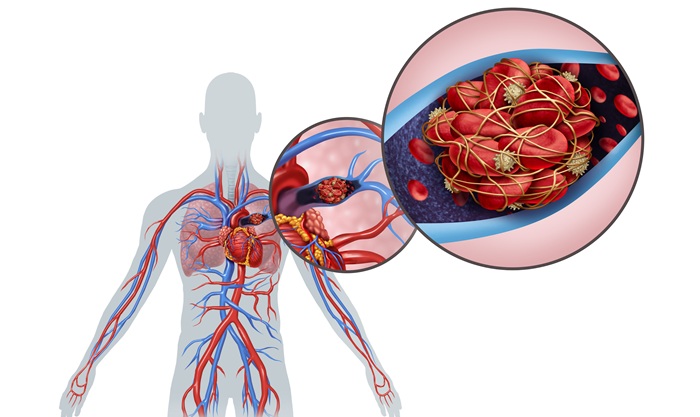
Ultrasound‑Aided Catheter Treatment Cuts Early Collapse in Pulmonary Embolism
Acute pulmonary embolism can cause rapid hemodynamic deterioration and early death in hospitalized and emergency patients. Systemic thrombolysis can dissolve clots but is limited by a high risk of major... Read more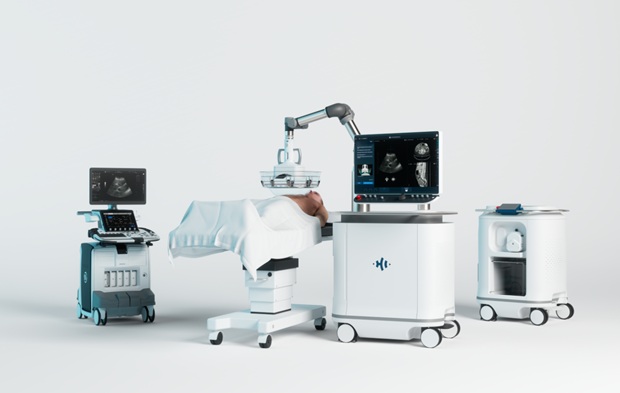

Patient Care
view channel
Wearable Sleep Data Predict Adherence to Pulmonary Rehabilitation
Chronic obstructive pulmonary disease (COPD) is a long-term lung disorder that makes breathing difficult and often disturbs sleep, reducing energy for daily activities. Limited engagement in pulmonary... Read more
Revolutionary Automatic IV-Line Flushing Device to Enhance Infusion Care
More than 80% of in-hospital patients receive intravenous (IV) therapy. Every dose of IV medicine delivered in a small volume (<250 mL) infusion bag should be followed by subsequent flushing to ensure... Read more

Health IT
view channel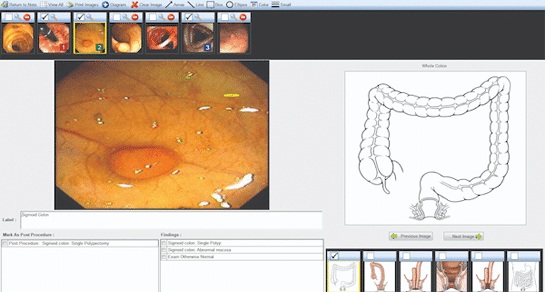
Voice-Driven AI System Enables Structured GI Procedure Documentation
Documentation during gastrointestinal (GI) procedures often competes with real-time clinical decision-making and imposes a significant cognitive burden on physicians. Manual data entry and post-procedure... Read more
EMR-Based Tool Predicts Graft Failure After Kidney Transplant
Kidney transplantation offers patients with end-stage kidney disease longer survival and better quality of life than dialysis, yet graft failure remains a major challenge. Although a successful transplant... Read more

