






Software Platform Tracks Endoscope Usage and Reprocessing
|
By HospiMedica International staff writers Posted on 24 Apr 2018 |


|
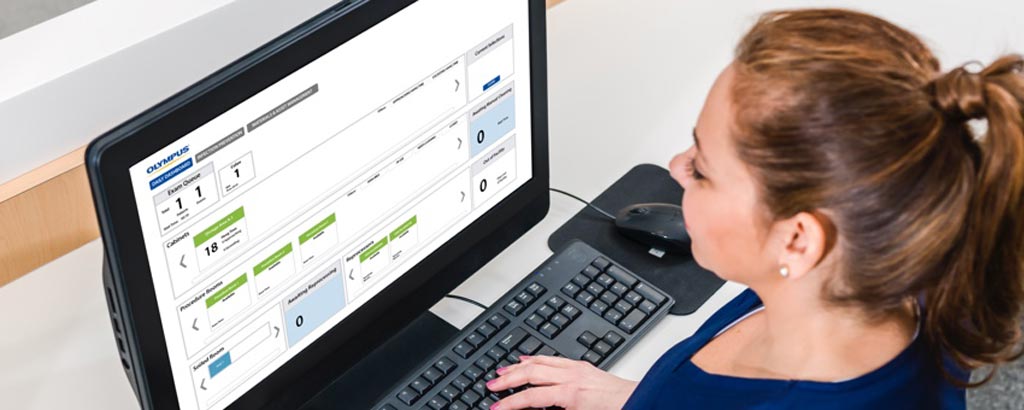
Image: The Unifia inventory management solution is designed to simplify the endoscopic workflow (Photo courtesy of Olympus).
An innovative workflow and supply chain management solution provides optimum efficiency and safety in the management of endoscopes.
The Olympus Medical Systems (Tokyo, Japan) Unifia reprocessing documentation, workflow, and asset management system is designed to provide supervisors, infection prevention staff, and hospital supply chain managers with greater visibility into the utilization, cleaning, reprocessing, and storage of flexible endoscopes. Unifia utilizes radiofrequency identification (RFID) technology to track and visualize an endoscope’s movement, from the front desk to storage room and all stops in between, in order to better understand trends, conduct analysis, and act accordingly.
The system uses wireless scanner technology to capture data from virtually all automated endoscope reprocessors, storage cabinets, leak testers, and bio burden test kits. A consolidated real time Daily Dashboard view provides insight into critical operational, reprocessing, and storage steps, including procedure room turnover, delayed reprocessing requirements, manual cleaning times, and endoscope hang times. Onscreen alerts warn users when scanning steps are missed, allowing for a repeatable and compliant process, while making sure all required data is collected.
In the procedure room, Unifia can track the endoscope serial number, link the patient to the device, note which doctor is performing the procedure, and how much time has elapsed. When the procedure is over, the Unifia Daily Dashboard is updated, alerting users the procedure room needs to be turned over. In the soiled room, manual cleaning time is tracked to reduce the need for delayed steps, while in the reprocessing room, users are able to easily log minimum recommended concentration (MRC) testing results.
Nurse Managers or Infection Prevention champions can use the Unifia Analysis module to audit staff workloads, endoscope reprocessing compliance, and reprocessing breach analysis in a simple interface. In addition, they can identify peak and low demand periods so as to optimize staffing demands, identify which staff members necessitate remedial competency training, and benchmark staff performance by looking at how long the endoscope is located in specific areas so as to streamline workflows.
“Unifia is an example of Olympus' strategy of transformation to a solutions company, by which we make it easy to bring our gastrointestinal customers more than clinical data, but now also operations data that will drive compliance, safety, and utilization initiatives,” said Kurt Heine, group VP of the endoscopy division at Olympus. “Whether we're talking about a nurse manager gaining visibility into the entire department, a technician improving his own performance, an administrator making decisions about acquisitions or a CEO instating system-wide performance initiatives, Unifia provides value through automated tracking and easy data navigation.”




The Olympus Medical Systems (Tokyo, Japan) Unifia reprocessing documentation, workflow, and asset management system is designed to provide supervisors, infection prevention staff, and hospital supply chain managers with greater visibility into the utilization, cleaning, reprocessing, and storage of flexible endoscopes. Unifia utilizes radiofrequency identification (RFID) technology to track and visualize an endoscope’s movement, from the front desk to storage room and all stops in between, in order to better understand trends, conduct analysis, and act accordingly.
The system uses wireless scanner technology to capture data from virtually all automated endoscope reprocessors, storage cabinets, leak testers, and bio burden test kits. A consolidated real time Daily Dashboard view provides insight into critical operational, reprocessing, and storage steps, including procedure room turnover, delayed reprocessing requirements, manual cleaning times, and endoscope hang times. Onscreen alerts warn users when scanning steps are missed, allowing for a repeatable and compliant process, while making sure all required data is collected.
In the procedure room, Unifia can track the endoscope serial number, link the patient to the device, note which doctor is performing the procedure, and how much time has elapsed. When the procedure is over, the Unifia Daily Dashboard is updated, alerting users the procedure room needs to be turned over. In the soiled room, manual cleaning time is tracked to reduce the need for delayed steps, while in the reprocessing room, users are able to easily log minimum recommended concentration (MRC) testing results.
Nurse Managers or Infection Prevention champions can use the Unifia Analysis module to audit staff workloads, endoscope reprocessing compliance, and reprocessing breach analysis in a simple interface. In addition, they can identify peak and low demand periods so as to optimize staffing demands, identify which staff members necessitate remedial competency training, and benchmark staff performance by looking at how long the endoscope is located in specific areas so as to streamline workflows.
“Unifia is an example of Olympus' strategy of transformation to a solutions company, by which we make it easy to bring our gastrointestinal customers more than clinical data, but now also operations data that will drive compliance, safety, and utilization initiatives,” said Kurt Heine, group VP of the endoscopy division at Olympus. “Whether we're talking about a nurse manager gaining visibility into the entire department, a technician improving his own performance, an administrator making decisions about acquisitions or a CEO instating system-wide performance initiatives, Unifia provides value through automated tracking and easy data navigation.”

New
Gold Member
Neonatal Heel Incision Device
Tenderfoot
New
Medical Examination & Procedure Light
Vega 80
New
Immobilization System
Cranial 4Pi Immobilization
Channels
Artificial Intelligence
view channel
Machine Learning Approach Enhances Liver Cancer Risk Stratification
Hepatocellular carcinoma, the most common form of primary liver cancer, is often detected late despite targeted surveillance programs. Current screening guidelines emphasize patients with known cirrhosis,... Read more
New AI Approach Monitors Brain Health Using Passive Wearable Data
Brain health spans cognitive and emotional functions and can fluctuate even in adults without diagnosed disease. Detecting early changes remains difficult in routine care and burdens specialty services... Read more
Critical Care
view channel
Automated IV Labeling Solution Improves Infusion Safety and Efficiency
Medication administration in high-acuity settings is often complicated by multiple concurrent infusions, making accurate line identification essential. In a 10-hospital intensive care unit study, 60% of... Read more
First-Of-Its-Kind AI Tool Detects Pulmonary Hypertension from Standard ECGs
Pulmonary hypertension is a progressive, life‑threatening disease that is frequently missed early because symptoms such as dyspnea are nonspecific and diagnostic delays can exceed two years.... Read more
Surgical Techniques
view channel
Continuous Monitoring with Wearables Enhances Postoperative Patient Safety
Postoperative hypoxemia on general surgical wards is common and often missed by intermittent vital sign checks. Undetected low oxygen levels can delay recovery and raise the risk of complications that... Read more
New Approach Enables Customized Muscle Tissue Without Biomaterial Scaffolds
Volumetric muscle loss is a traumatic loss of skeletal muscle that often leads to permanent functional impairment and limited reconstructive options. Current experimental strategies struggle to deliver... Read more
Patient Care
view channel
Wearable Sleep Data Predict Adherence to Pulmonary Rehabilitation
Chronic obstructive pulmonary disease (COPD) is a long-term lung disorder that makes breathing difficult and often disturbs sleep, reducing energy for daily activities. Limited engagement in pulmonary... Read more
Revolutionary Automatic IV-Line Flushing Device to Enhance Infusion Care
More than 80% of in-hospital patients receive intravenous (IV) therapy. Every dose of IV medicine delivered in a small volume (<250 mL) infusion bag should be followed by subsequent flushing to ensure... Read more


Business
view channel
GE HealthCare Leads Major European Initiative to Advance Cardio-Oncology Care
Cardiovascular complications are increasingly recognized among people undergoing or recovering from cancer treatment, driven by pre‑existing disease and the cardiotoxic effects of chemotherapy, radiotherapy,... Read more

