






Home Spirometer Helps Monitor Serious Lung Conditions
|
By HospiMedica International staff writers Posted on 30 Apr 2018 |


|
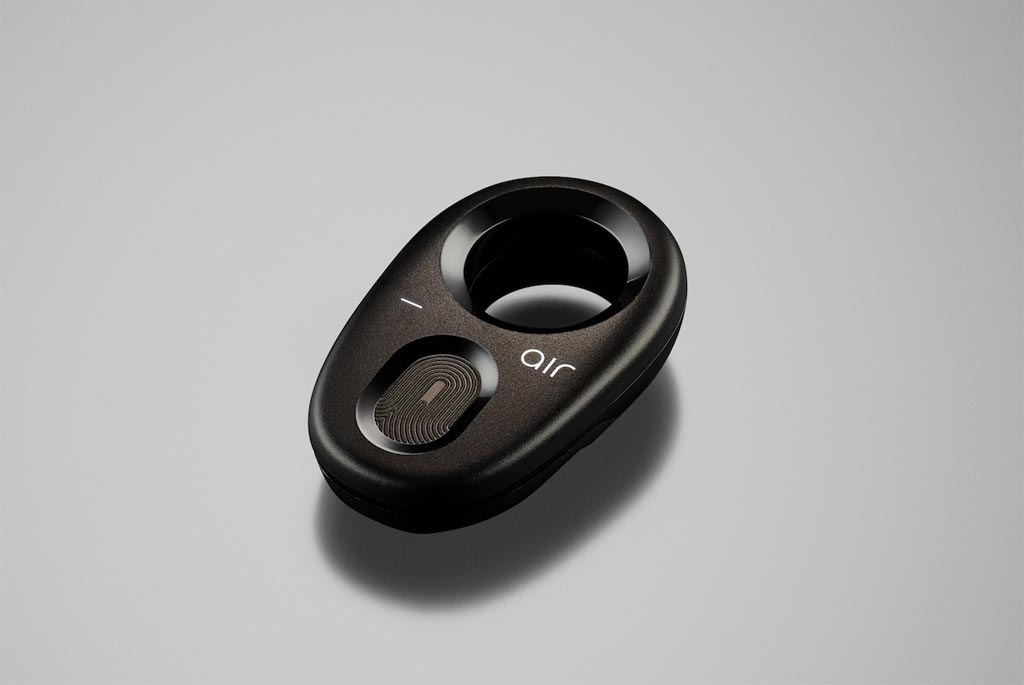
Image: A compact spirometer measures lung function at home (Photo courtesy of NuvoAir).
A novel hand-held spirometer can help improve self-management of ongoing lung conditions such as asthma, chronic obstructive pulmonary disease (COPD), and cystic fibrosis (CF).
The NuvoAir (Stockholm, Sweden) Air Next Spirometer is a sleek, hand held device that measures a host of respiration parameters, including forced expiratory volume (FEV1), the volume of air exhaled during the first second of forced expiration, starting from a full inspiration; forced vital capacity (FVC), the volume of air exhaled during forceful complete expiration, when starting from a full inspiration; FEV1/FVC ratio; and peak expiratory flow (PEF), the maximum speed of expiration, starting from a full inspiration.
To operate the Air Next, the user simply blows into the mouthpiece for a few seconds as guided by the accompanying app, which is connected wirelessly to the device via Bluetooth Low Energy (BLE), a more efficient and cost-effective form of wireless technology. Spirometry results are then instantly forwarded to the smartphone or tablet, where they are displayed in the form of graphs and animations. Air Next is also connected to a secure and compliant cloud that allows the patient to access their data and share it with their health care team.
“NuvoAir has demystified spirometry by bringing it directly into the hands of patients and physicians across the world. It reduces the communication gap between their doctors and health care teams, so improving the quality of care,” said Lorenzo Consoli, CEO of NuvoAir. “In this device we have distilled two years of experience of working with patients to design a device that works easily for them. We believe this will improve the management of many serious lung conditions for the patient, their families and their health care professionals too.”
Spirometry is the most common pulmonary function test. It measures lung function, specifically the volume and/or flow of air that can be inhaled and exhaled. Generally, the patient is asked to take the deepest breath they can, and then exhale into the sensor as hard as possible, for as long as possible, preferably at least six seconds. It is sometimes directly followed by a rapid inhalation (inspiration), in particular when assessing possible upper airway obstruction.
Related Links:
NuvoAir




The NuvoAir (Stockholm, Sweden) Air Next Spirometer is a sleek, hand held device that measures a host of respiration parameters, including forced expiratory volume (FEV1), the volume of air exhaled during the first second of forced expiration, starting from a full inspiration; forced vital capacity (FVC), the volume of air exhaled during forceful complete expiration, when starting from a full inspiration; FEV1/FVC ratio; and peak expiratory flow (PEF), the maximum speed of expiration, starting from a full inspiration.
To operate the Air Next, the user simply blows into the mouthpiece for a few seconds as guided by the accompanying app, which is connected wirelessly to the device via Bluetooth Low Energy (BLE), a more efficient and cost-effective form of wireless technology. Spirometry results are then instantly forwarded to the smartphone or tablet, where they are displayed in the form of graphs and animations. Air Next is also connected to a secure and compliant cloud that allows the patient to access their data and share it with their health care team.
“NuvoAir has demystified spirometry by bringing it directly into the hands of patients and physicians across the world. It reduces the communication gap between their doctors and health care teams, so improving the quality of care,” said Lorenzo Consoli, CEO of NuvoAir. “In this device we have distilled two years of experience of working with patients to design a device that works easily for them. We believe this will improve the management of many serious lung conditions for the patient, their families and their health care professionals too.”
Spirometry is the most common pulmonary function test. It measures lung function, specifically the volume and/or flow of air that can be inhaled and exhaled. Generally, the patient is asked to take the deepest breath they can, and then exhale into the sensor as hard as possible, for as long as possible, preferably at least six seconds. It is sometimes directly followed by a rapid inhalation (inspiration), in particular when assessing possible upper airway obstruction.
Related Links:
NuvoAir

Gold Member
STI Test
Vivalytic Sexually Transmitted Infection (STI) Array
New
Hypodermic Syringe
SurTract™ Safety Syringe
New
Medical Adhesive
MED 5570U
Latest Critical Care News
- Automated IV Labeling Solution Improves Infusion Safety and Efficiency
- First-Of-Its-Kind AI Tool Detects Pulmonary Hypertension from Standard ECGs
- 4D Digital Twin Heart Model Improves CRT Outcomes
- AI Turns Glucose Data Into Actionable Insights for Diabetes Care
- Microscale Wireless Implant Tracks Brain Activity Over Time
- Smart Mask Delivers Continuous, Battery-Free Breath Monitoring
- Routine Blood Pressure Readings May Identify Risk of Future Cognitive Decline
- CGM-Based Algorithm Enhances Insulin Dose Adjustment in Type 2 Diabetes
- Fish Scale–Based Implants Offer New Approach to Corneal Repair
- Dual-Function Wound Patch Combines Infection Sensing and Treatment
- Smartwatch Signals and Blood Tests Team Up for Early Warning on Insulin Resistance
- Smart Fabric Technology Aims to Prevent Pressure Injuries in Hospital Care
- Standardized Treatment Algorithm Improves Blood Pressure Control
- Combined Infection Control Strategy Limits Drug-Resistant Outbreak in NICU
- AI Helps Predict Which Heart-Failure Patients Will Worsen Within a Year
- Algorithm Allows Paramedics to Predict Brain Damage Risk After Cardiac Arrest
Channels
Artificial Intelligence
view channel
Machine Learning Approach Enhances Liver Cancer Risk Stratification
Hepatocellular carcinoma, the most common form of primary liver cancer, is often detected late despite targeted surveillance programs. Current screening guidelines emphasize patients with known cirrhosis,... Read more
New AI Approach Monitors Brain Health Using Passive Wearable Data
Brain health spans cognitive and emotional functions and can fluctuate even in adults without diagnosed disease. Detecting early changes remains difficult in routine care and burdens specialty services... Read more
Surgical Techniques
view channel
Continuous Monitoring with Wearables Enhances Postoperative Patient Safety
Postoperative hypoxemia on general surgical wards is common and often missed by intermittent vital sign checks. Undetected low oxygen levels can delay recovery and raise the risk of complications that... Read more
New Approach Enables Customized Muscle Tissue Without Biomaterial Scaffolds
Volumetric muscle loss is a traumatic loss of skeletal muscle that often leads to permanent functional impairment and limited reconstructive options. Current experimental strategies struggle to deliver... Read more
Patient Care
view channel
Wearable Sleep Data Predict Adherence to Pulmonary Rehabilitation
Chronic obstructive pulmonary disease (COPD) is a long-term lung disorder that makes breathing difficult and often disturbs sleep, reducing energy for daily activities. Limited engagement in pulmonary... Read more
Revolutionary Automatic IV-Line Flushing Device to Enhance Infusion Care
More than 80% of in-hospital patients receive intravenous (IV) therapy. Every dose of IV medicine delivered in a small volume (<250 mL) infusion bag should be followed by subsequent flushing to ensure... Read more

Health IT
view channel
EMR-Based Tool Predicts Graft Failure After Kidney Transplant
Kidney transplantation offers patients with end-stage kidney disease longer survival and better quality of life than dialysis, yet graft failure remains a major challenge. Although a successful transplant... Read more
Printable Molecule-Selective Nanoparticles Enable Mass Production of Wearable Biosensors
The future of medicine is likely to focus on the personalization of healthcare—understanding exactly what an individual requires and delivering the appropriate combination of nutrients, metabolites, and... Read more


Business
view channel
GE HealthCare Leads Major European Initiative to Advance Cardio-Oncology Care
Cardiovascular complications are increasingly recognized among people undergoing or recovering from cancer treatment, driven by pre‑existing disease and the cardiotoxic effects of chemotherapy, radiotherapy,... Read more

