Biomedical Tattoo Detects Cancer-Associated Hypercalcemia
|
By HospiMedica International staff writers Posted on 01 May 2018 |


|
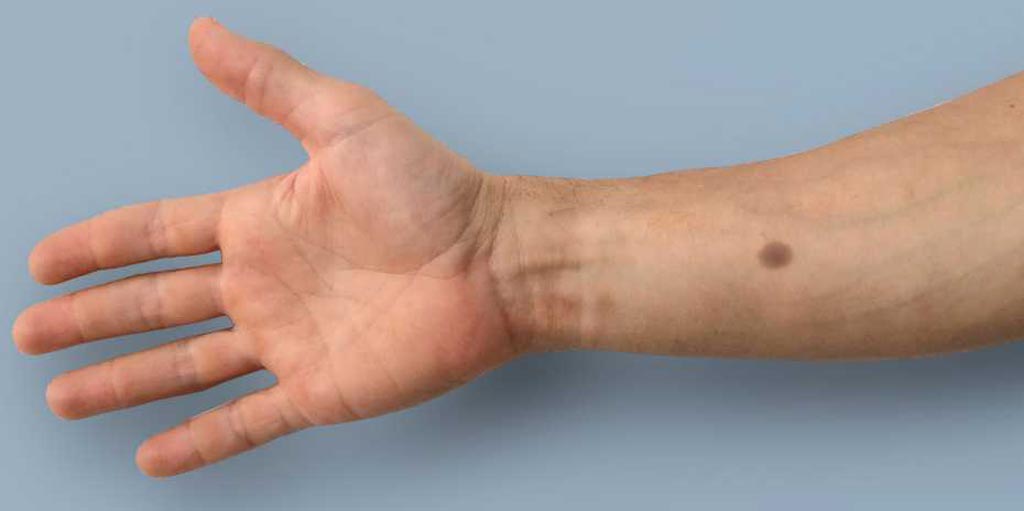
Image: A new study explains how increased calcium levels trigger the production of melanin, causing a mole to form (Photo courtesy of ETH Zurich).
A new study describes how a mole-like synthetic implant recognizes the elevated levels of calcium in the blood associated with incipient prostate, lung, colon, and breast cancer tumors.
Developed by researchers at ETH Zurich (Switzerland) and the University of Basel (Switzerland), the so-called early warning system is comprised of an encapsulated gene network integrated into human body cells implanted under the skin, where it constantly monitors blood calcium levels. When calcium levels exceed a pre-determined threshold, a synthetic signaling cascade expresses transgenic tyrosinase, which triggers the production of melanin in the genetically modified cells. The skin then forms a brown mole that is visible to the naked eye.
The researchers validated the design in wild-type mice inoculated with hypercalcemic breast and colon adenocarcinoma cells. The mice, which were implanted with the subcutaneous encapsulated engineered cells, all developed tattoos, whereas no tattoos were seen in animals inoculated with normo-calcemic tumor cells. The study also confirmed that the synthetic biomedical mole could not only be detected with the naked eye, but could also optically quantified. All animals remained asymptomatic throughout the 38-day experimental period. The study was published on April 18, 2018, in Science Translational Medicine.
“It recognizes the four most common types of cancer--prostate, lung, colon, and breast cancer--at a very early stage, namely when the level of calcium in the blood is elevated due to the developing tumor,” said senior author Professor Martin Fussenegger, PhD, of the ETH department of biosystems science and engineering. “An implant carrier should then see a doctor for further evaluation after the mole appears. It is no reason to panic; the mole does not mean that the person is likely to die soon.”
“It is intended primarily for self-monitoring, making it very cost effective. However, for those who would prefer not to deal with the constant stress, an implant can also be used that develops a mark visible only under a red light,” concluded Professor Fussenegger. “The disadvantage is that the service life of such an implant is limited. Encapsulated living cells last for about a year, according to other studies. After that, they must be inactivated and replaced.”
Calcium is an essential element vital to the health of the muscular, circulatory, and digestive systems; is indispensable to the building of bone; and supports synthesis and function of blood cells. For example, it regulates the contraction of muscles, nerve conduction, and the clotting of blood. As a result, intra- and extracellular calcium levels are tightly regulated by the body. Cancer can cause hypercalcemia by bone degradation, releasing excess calcium into the blood; some tumors can produce proteins that mimic parathyroid hormone; and others can affect the ability of the kidneys to remove excess calcium.
Related Links:
ETH Zurich
University of Basel





Developed by researchers at ETH Zurich (Switzerland) and the University of Basel (Switzerland), the so-called early warning system is comprised of an encapsulated gene network integrated into human body cells implanted under the skin, where it constantly monitors blood calcium levels. When calcium levels exceed a pre-determined threshold, a synthetic signaling cascade expresses transgenic tyrosinase, which triggers the production of melanin in the genetically modified cells. The skin then forms a brown mole that is visible to the naked eye.
The researchers validated the design in wild-type mice inoculated with hypercalcemic breast and colon adenocarcinoma cells. The mice, which were implanted with the subcutaneous encapsulated engineered cells, all developed tattoos, whereas no tattoos were seen in animals inoculated with normo-calcemic tumor cells. The study also confirmed that the synthetic biomedical mole could not only be detected with the naked eye, but could also optically quantified. All animals remained asymptomatic throughout the 38-day experimental period. The study was published on April 18, 2018, in Science Translational Medicine.
“It recognizes the four most common types of cancer--prostate, lung, colon, and breast cancer--at a very early stage, namely when the level of calcium in the blood is elevated due to the developing tumor,” said senior author Professor Martin Fussenegger, PhD, of the ETH department of biosystems science and engineering. “An implant carrier should then see a doctor for further evaluation after the mole appears. It is no reason to panic; the mole does not mean that the person is likely to die soon.”
“It is intended primarily for self-monitoring, making it very cost effective. However, for those who would prefer not to deal with the constant stress, an implant can also be used that develops a mark visible only under a red light,” concluded Professor Fussenegger. “The disadvantage is that the service life of such an implant is limited. Encapsulated living cells last for about a year, according to other studies. After that, they must be inactivated and replaced.”
Calcium is an essential element vital to the health of the muscular, circulatory, and digestive systems; is indispensable to the building of bone; and supports synthesis and function of blood cells. For example, it regulates the contraction of muscles, nerve conduction, and the clotting of blood. As a result, intra- and extracellular calcium levels are tightly regulated by the body. Cancer can cause hypercalcemia by bone degradation, releasing excess calcium into the blood; some tumors can produce proteins that mimic parathyroid hormone; and others can affect the ability of the kidneys to remove excess calcium.
Related Links:
ETH Zurich
University of Basel

Gold Member
STI Test
Vivalytic Sexually Transmitted Infection (STI) Array
MRI System
nanoScan MRI 3T/7T
Pressure Guidewire
SavvyWire
Channels

Critical Care
view channel
Nanogel Technology Almost 100% Effective in Destroying Drug-Resistant Bacteria Within Hours
Antibiotic resistance is one of the most serious global health threats, driven by bacteria that evade treatment and form protective biofilms that shield them from drugs. Pathogens such as Pseudomonas aeruginosa,... Read more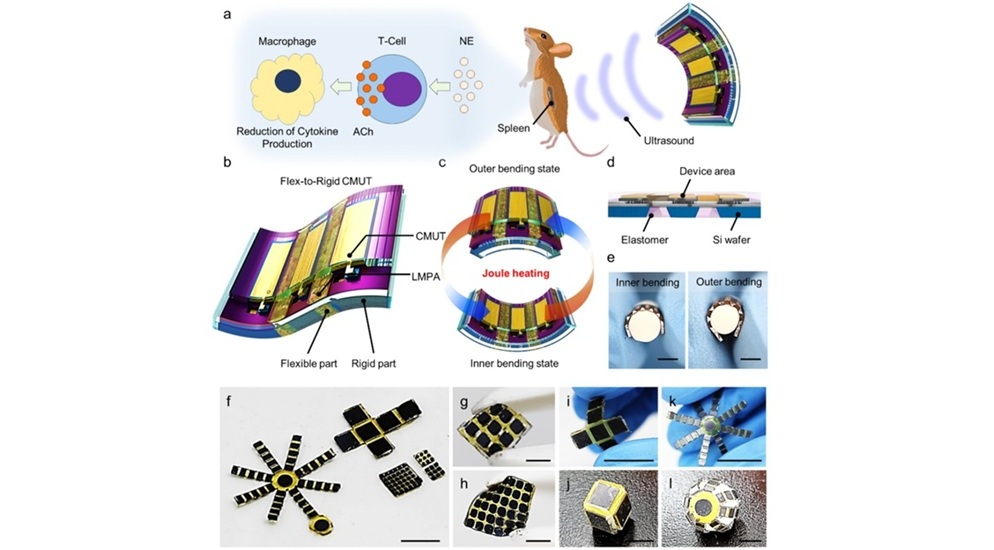
Wearable Ultrasound Sensor Delivers Noninvasive Treatment Without Surgery
Wearable ultrasound devices have long struggled with low acoustic power and poor structural stability, limiting their use in high-resolution imaging and therapeutic applications. Conventional flexible... Read more
Surgical Techniques
view channel
Novel Endoscopy Technique Provides Access to Deep Lung Tumors
Detecting lung cancer early can save lives, but diagnosing small tumors deep in the outer regions of the lungs remains a major clinical challenge. Although CT scans frequently identify tiny suspicious... Read more
New Study Findings Could Halve Number of Stent Procedures
When a coronary artery becomes acutely blocked during a heart attack, opening it immediately is essential to prevent irreversible damage. However, many patients also have other narrowed vessels that appear... Read more
Patient Care
view channel
Revolutionary Automatic IV-Line Flushing Device to Enhance Infusion Care
More than 80% of in-hospital patients receive intravenous (IV) therapy. Every dose of IV medicine delivered in a small volume (<250 mL) infusion bag should be followed by subsequent flushing to ensure... Read more
VR Training Tool Combats Contamination of Portable Medical Equipment
Healthcare-associated infections (HAIs) impact one in every 31 patients, cause nearly 100,000 deaths each year, and cost USD 28.4 billion in direct medical expenses. Notably, up to 75% of these infections... Read more
Portable Biosensor Platform to Reduce Hospital-Acquired Infections
Approximately 4 million patients in the European Union acquire healthcare-associated infections (HAIs) or nosocomial infections each year, with around 37,000 deaths directly resulting from these infections,... Read more
First-Of-Its-Kind Portable Germicidal Light Technology Disinfects High-Touch Clinical Surfaces in Seconds
Reducing healthcare-acquired infections (HAIs) remains a pressing issue within global healthcare systems. In the United States alone, 1.7 million patients contract HAIs annually, leading to approximately... Read moreBusiness
view channel
Philips and Masimo Partner to Advance Patient Monitoring Measurement Technologies
Royal Philips (Amsterdam, Netherlands) and Masimo (Irvine, California, USA) have renewed their multi-year strategic collaboration, combining Philips’ expertise in patient monitoring with Masimo’s noninvasive... Read more
B. Braun Acquires Digital Microsurgery Company True Digital Surgery
The high-end microsurgery market in neurosurgery, spine, and ENT is undergoing a significant transformation. Traditional analog microscopes are giving way to digital exoscopes, which provide improved visualization,... Read more
CMEF 2025 to Promote Holistic and High-Quality Development of Medical and Health Industry
The 92nd China International Medical Equipment Fair (CMEF 2025) Autumn Exhibition is scheduled to be held from September 26 to 29 at the China Import and Export Fair Complex (Canton Fair Complex) in Guangzhou.... Read more