






Dissatisfaction with EHRs Drives Physician Burnout
|
By HospiMedica International staff writers Posted on 22 May 2018 |


|

Image: Studies show cumbersome EHRs are driving doctors to despair (Photo courtesy of 123rf.com).
Regulatory requirements are likely to be an important aspect of physician dissatisfaction with electronic health records (EHRs), according to a new editorial.
An opinion piece by researchers at Stanford University School of Medicine (Stanford; CA, USA), the University of California, San Diego (UCSD, USA), and other institutions discusses a growing sense within the medical community in the United States that the EHR is driving professional dissatisfaction, emotional fatigue, and burnout to crisis proportions. One of the reasons is that clinical notes are nearly four times longer in the United States than in other countries, even across the same EHR. As a result, U.S. physicians spend as much time interacting with a computer as they do face to face with patients.
In comparison, the EHR tends to be much briefer in other countries, containing only essential clinical information and omitting much of the compliance and reimbursement documentation. Physicians in the United States are required to document an increasing amount of low-value administrative data; these documentation requirements are the remnant of the fee-for-service system. However, meaningful use incentives have created even more requirements for low-value documentation, and value-based models have their own documentation requirements. The opinion piece was published on May 8, 2018, in Annals of Internal Medicine.
“One study suggested that more than half of physicians in some disciplines are burned out, and that this proportion is increasing. The number of clinicians leaving the workforce represents a major concern to health care professionals and to the health of the nation,” concluded lead author N. Lance Downing, MD, of Stanford. “We believe that platform improvements are essential, but will be insufficient to address a key cause of physician burnout: our outdated regulatory requirements. Simplifying the regulations around documentation and billing would likely benefit the health care system and patients.”
The 2009 American Reinvestment & Recovery Act (ARRA) included many measures to modernize infrastructure, one of which is the Health Information Technology for Economic and Clinical Health (HITECH) Act. ARRA set aside nearly USD 20 billion in incentives for hospitals and physicians who adopt qualified, certified EHRs with the ability to exchange information with other sources, which is defined conceptually as meaningful use (MU).
Related Links:
Stanford University School of Medicine
University of California, San Diego



An opinion piece by researchers at Stanford University School of Medicine (Stanford; CA, USA), the University of California, San Diego (UCSD, USA), and other institutions discusses a growing sense within the medical community in the United States that the EHR is driving professional dissatisfaction, emotional fatigue, and burnout to crisis proportions. One of the reasons is that clinical notes are nearly four times longer in the United States than in other countries, even across the same EHR. As a result, U.S. physicians spend as much time interacting with a computer as they do face to face with patients.
In comparison, the EHR tends to be much briefer in other countries, containing only essential clinical information and omitting much of the compliance and reimbursement documentation. Physicians in the United States are required to document an increasing amount of low-value administrative data; these documentation requirements are the remnant of the fee-for-service system. However, meaningful use incentives have created even more requirements for low-value documentation, and value-based models have their own documentation requirements. The opinion piece was published on May 8, 2018, in Annals of Internal Medicine.
“One study suggested that more than half of physicians in some disciplines are burned out, and that this proportion is increasing. The number of clinicians leaving the workforce represents a major concern to health care professionals and to the health of the nation,” concluded lead author N. Lance Downing, MD, of Stanford. “We believe that platform improvements are essential, but will be insufficient to address a key cause of physician burnout: our outdated regulatory requirements. Simplifying the regulations around documentation and billing would likely benefit the health care system and patients.”
The 2009 American Reinvestment & Recovery Act (ARRA) included many measures to modernize infrastructure, one of which is the Health Information Technology for Economic and Clinical Health (HITECH) Act. ARRA set aside nearly USD 20 billion in incentives for hospitals and physicians who adopt qualified, certified EHRs with the ability to exchange information with other sources, which is defined conceptually as meaningful use (MU).
Related Links:
Stanford University School of Medicine
University of California, San Diego

Gold Member
SARS‑CoV‑2/Flu A/Flu B/RSV Sample-To-Answer Test
SARS‑CoV‑2/Flu A/Flu B/RSV Cartridge (CE-IVD)
New
Surgical System
Stealth AXiS
New
Rapid Sepsis Test
SeptiCyte RAPID
Channels
Artificial Intelligence
view channel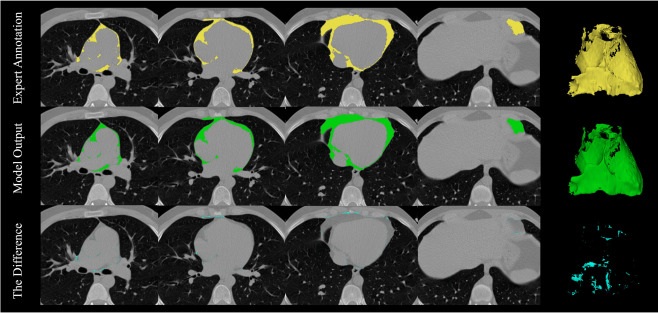
AI Analysis of Pericardial Fat Refines Long-Term Heart Disease Risk
Accurately identifying long-term cardiovascular disease risk in asymptomatic adults remains challenging for clinicians. Missed or underestimated risk delays preventive therapy and increases the chance... Read more
Machine Learning Approach Enhances Liver Cancer Risk Stratification
Hepatocellular carcinoma, the most common form of primary liver cancer, is often detected late despite targeted surveillance programs. Current screening guidelines emphasize patients with known cirrhosis,... Read more

Critical Care
view channel
Noninvasive Monitoring Device Enables Earlier Intervention in Heart Failure
Hospitalizations for heart failure with preserved ejection fraction (HFpEF) remain common because lung congestion often worsens before symptoms prompt treatment changes. Missed early decompensation... Read more
Automated IV Labeling Solution Improves Infusion Safety and Efficiency
Medication administration in high-acuity settings is often complicated by multiple concurrent infusions, making accurate line identification essential. In a 10-hospital intensive care unit study, 60% of... Read more

Surgical Techniques
view channel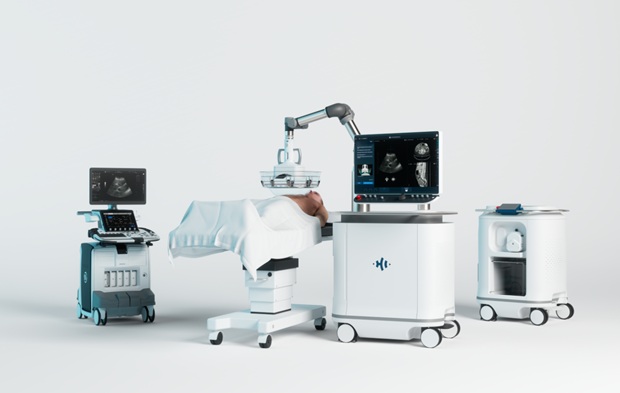
Ultrasound Technology Aims to Replace Invasive BPH Procedures
Benign prostatic hyperplasia (BPH) is a frequent cause of lower urinary tract symptoms in aging men and often requires invasive procedures or prolonged recovery. With prevalence expected to rise as populations... Read more
Continuous Monitoring with Wearables Enhances Postoperative Patient Safety
Postoperative hypoxemia on general surgical wards is common and often missed by intermittent vital sign checks. Undetected low oxygen levels can delay recovery and raise the risk of complications that... Read more

Patient Care
view channel
Wearable Sleep Data Predict Adherence to Pulmonary Rehabilitation
Chronic obstructive pulmonary disease (COPD) is a long-term lung disorder that makes breathing difficult and often disturbs sleep, reducing energy for daily activities. Limited engagement in pulmonary... Read more
Revolutionary Automatic IV-Line Flushing Device to Enhance Infusion Care
More than 80% of in-hospital patients receive intravenous (IV) therapy. Every dose of IV medicine delivered in a small volume (<250 mL) infusion bag should be followed by subsequent flushing to ensure... Read more


Business
view channel
GE HealthCare Leads Major European Initiative to Advance Cardio-Oncology Care
Cardiovascular complications are increasingly recognized among people undergoing or recovering from cancer treatment, driven by pre‑existing disease and the cardiotoxic effects of chemotherapy, radiotherapy,... Read more

