






Smartphone Technology Advances Implanted Hearing Aid Performance
|
By HospiMedica International staff writers Posted on 10 Jul 2018 |


|
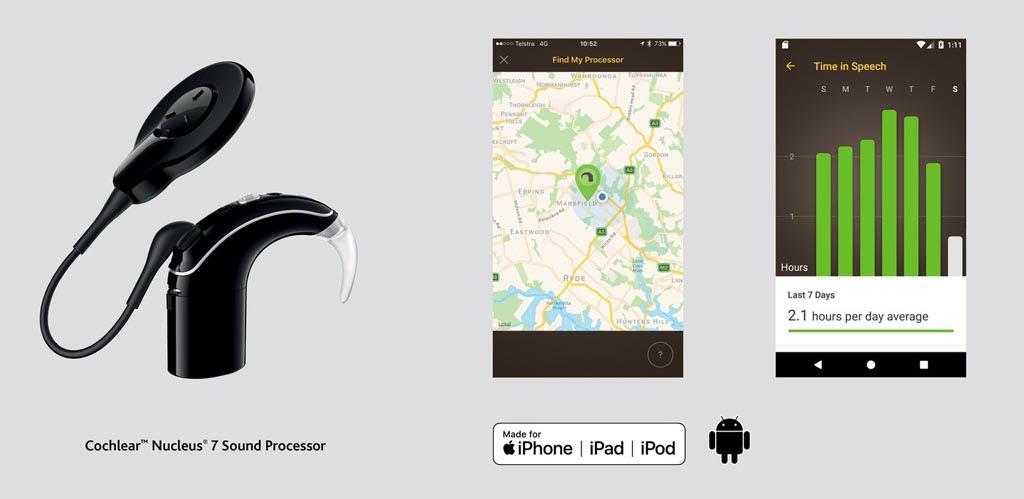
Image: Cochlear implant recipients can now control their hearing with the Nucleus Smart App (Photo courtesy of Cochlear).
Innovative cochlear implant technology allows people with hearing loss to directly control and monitor their hearing on any compatible iOS or Android smartphone.
People with hearing deficits that have received a Cochlear (Centennial, CO, USA) implant that features the Nucleus 7 Sound Processor can now control their hearing with the Nucleus Smart App from a compatible Android or iOS device. Recipients can now stream sound directly from a compatible device directly to their Nucleus 7 Sound Processor, and can also control, monitor, and customize their hearing settings, view personalized hearing information, and even locate a missing sound processor, all from the convenience of their smartphone.
Unique features include Hearing Tracker, which records coil-offs time (when the sound processor coil does not detect the implant coil) and time in speech (the amount of time spent in speech environments, including FM radio and streaming audio); the Find My Processor feature, which helps locate a lost sound processor by using location services to determine the last place it was connected to the paired device (such as in the playground or in the car); and Forward Focus, a user-activated algorithm that reduces distracting noise coming from behind a person so they can more easily enjoy a face-to-face conversation in a challenging listening environment, such as a noisy restaurant.
“With the launch of the Nucleus 7 Sound Processor last year, we were the first in our industry to introduce a ‘Made for iPhone’ cochlear implant sound processor, still the only one to offer direct streaming to a compatible Apple device,” said Tony Manna, President of Cochlear Americas. “Now we are pleased to offer Android users the ability to use the Nucleus Smart App to track their hearing and access new features. We are committed to giving people who are living with disabling hearing loss greater choices when it comes to controlling their hearing experience.”
“We live in a world where consumers expect to be easily connected to technology, and consumers should expect to get innovative, accessible technology out of their medical devices too,” said Patricia Trautwein, AuD, VP of marketing and product management at Cochlear Americas. “We want our recipients to be able to take control of their hearing performance, like they may do already with their fitness and health, and how they are accustomed to connecting with their other consumer electronics.”
In a normal ear, sound vibrations in the air lead to resonant vibrations of the basilar membrane inside the cochlea. The movement of hair cells, located all along the basilar membrane, creates an electrical disturbance that can be picked up by the surrounding nerve cells, allowing the brain to interpret the nerve activity and determine what sound frequency is being heard. The cochlear implant bypasses the hair cells and stimulates the cochlear nerves directly using electrical impulses. This allows the brain to interpret the frequency of sound as it would if the hair cells of the basilar membrane were functioning properly.
Related Links:
Cochlear




People with hearing deficits that have received a Cochlear (Centennial, CO, USA) implant that features the Nucleus 7 Sound Processor can now control their hearing with the Nucleus Smart App from a compatible Android or iOS device. Recipients can now stream sound directly from a compatible device directly to their Nucleus 7 Sound Processor, and can also control, monitor, and customize their hearing settings, view personalized hearing information, and even locate a missing sound processor, all from the convenience of their smartphone.
Unique features include Hearing Tracker, which records coil-offs time (when the sound processor coil does not detect the implant coil) and time in speech (the amount of time spent in speech environments, including FM radio and streaming audio); the Find My Processor feature, which helps locate a lost sound processor by using location services to determine the last place it was connected to the paired device (such as in the playground or in the car); and Forward Focus, a user-activated algorithm that reduces distracting noise coming from behind a person so they can more easily enjoy a face-to-face conversation in a challenging listening environment, such as a noisy restaurant.
“With the launch of the Nucleus 7 Sound Processor last year, we were the first in our industry to introduce a ‘Made for iPhone’ cochlear implant sound processor, still the only one to offer direct streaming to a compatible Apple device,” said Tony Manna, President of Cochlear Americas. “Now we are pleased to offer Android users the ability to use the Nucleus Smart App to track their hearing and access new features. We are committed to giving people who are living with disabling hearing loss greater choices when it comes to controlling their hearing experience.”
“We live in a world where consumers expect to be easily connected to technology, and consumers should expect to get innovative, accessible technology out of their medical devices too,” said Patricia Trautwein, AuD, VP of marketing and product management at Cochlear Americas. “We want our recipients to be able to take control of their hearing performance, like they may do already with their fitness and health, and how they are accustomed to connecting with their other consumer electronics.”
In a normal ear, sound vibrations in the air lead to resonant vibrations of the basilar membrane inside the cochlea. The movement of hair cells, located all along the basilar membrane, creates an electrical disturbance that can be picked up by the surrounding nerve cells, allowing the brain to interpret the nerve activity and determine what sound frequency is being heard. The cochlear implant bypasses the hair cells and stimulates the cochlear nerves directly using electrical impulses. This allows the brain to interpret the frequency of sound as it would if the hair cells of the basilar membrane were functioning properly.
Related Links:
Cochlear

Gold Member
12-Channel ECG
CM1200B
New
Blood Pressure Monitor
Cuff Blood Pressure Monitor
New
X-Ray Generator
Advantage Plus Generators
Channels
Artificial Intelligence
view channel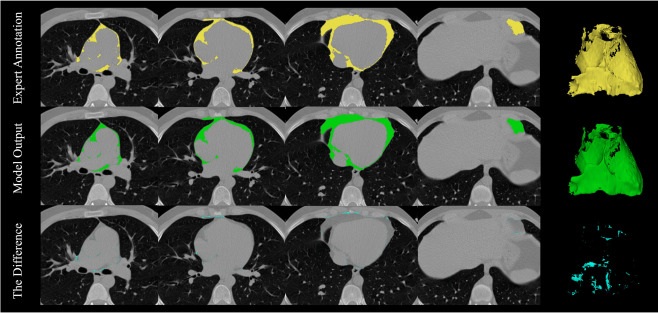
AI Analysis of Pericardial Fat Refines Long-Term Heart Disease Risk
Accurately identifying long-term cardiovascular disease risk in asymptomatic adults remains challenging for clinicians. Missed or underestimated risk delays preventive therapy and increases the chance... Read more
Machine Learning Approach Enhances Liver Cancer Risk Stratification
Hepatocellular carcinoma, the most common form of primary liver cancer, is often detected late despite targeted surveillance programs. Current screening guidelines emphasize patients with known cirrhosis,... Read more

Critical Care
view channel
Noninvasive Monitoring Device Enables Earlier Intervention in Heart Failure
Hospitalizations for heart failure with preserved ejection fraction (HFpEF) remain common because lung congestion often worsens before symptoms prompt treatment changes. Missed early decompensation... Read more
Automated IV Labeling Solution Improves Infusion Safety and Efficiency
Medication administration in high-acuity settings is often complicated by multiple concurrent infusions, making accurate line identification essential. In a 10-hospital intensive care unit study, 60% of... Read more

Surgical Techniques
view channel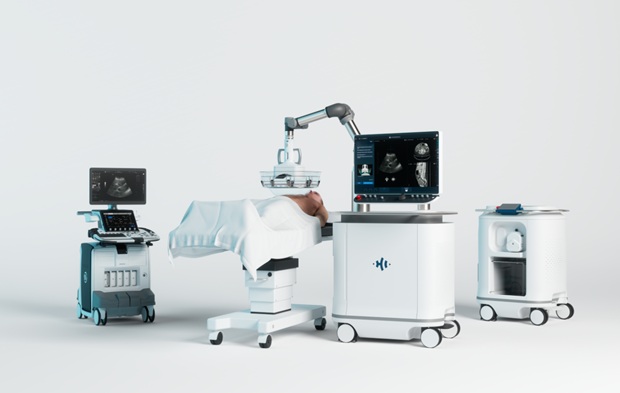
Ultrasound Technology Aims to Replace Invasive BPH Procedures
Benign prostatic hyperplasia (BPH) is a frequent cause of lower urinary tract symptoms in aging men and often requires invasive procedures or prolonged recovery. With prevalence expected to rise as populations... Read more
Continuous Monitoring with Wearables Enhances Postoperative Patient Safety
Postoperative hypoxemia on general surgical wards is common and often missed by intermittent vital sign checks. Undetected low oxygen levels can delay recovery and raise the risk of complications that... Read more

Patient Care
view channel
Wearable Sleep Data Predict Adherence to Pulmonary Rehabilitation
Chronic obstructive pulmonary disease (COPD) is a long-term lung disorder that makes breathing difficult and often disturbs sleep, reducing energy for daily activities. Limited engagement in pulmonary... Read more
Revolutionary Automatic IV-Line Flushing Device to Enhance Infusion Care
More than 80% of in-hospital patients receive intravenous (IV) therapy. Every dose of IV medicine delivered in a small volume (<250 mL) infusion bag should be followed by subsequent flushing to ensure... Read more


Business
view channel
GE HealthCare Leads Major European Initiative to Advance Cardio-Oncology Care
Cardiovascular complications are increasingly recognized among people undergoing or recovering from cancer treatment, driven by pre‑existing disease and the cardiotoxic effects of chemotherapy, radiotherapy,... Read more

