






Mobile App Allows Instant Access to Medical Images
|
By HospiMedica International staff writers Posted on 31 Oct 2018 |


|
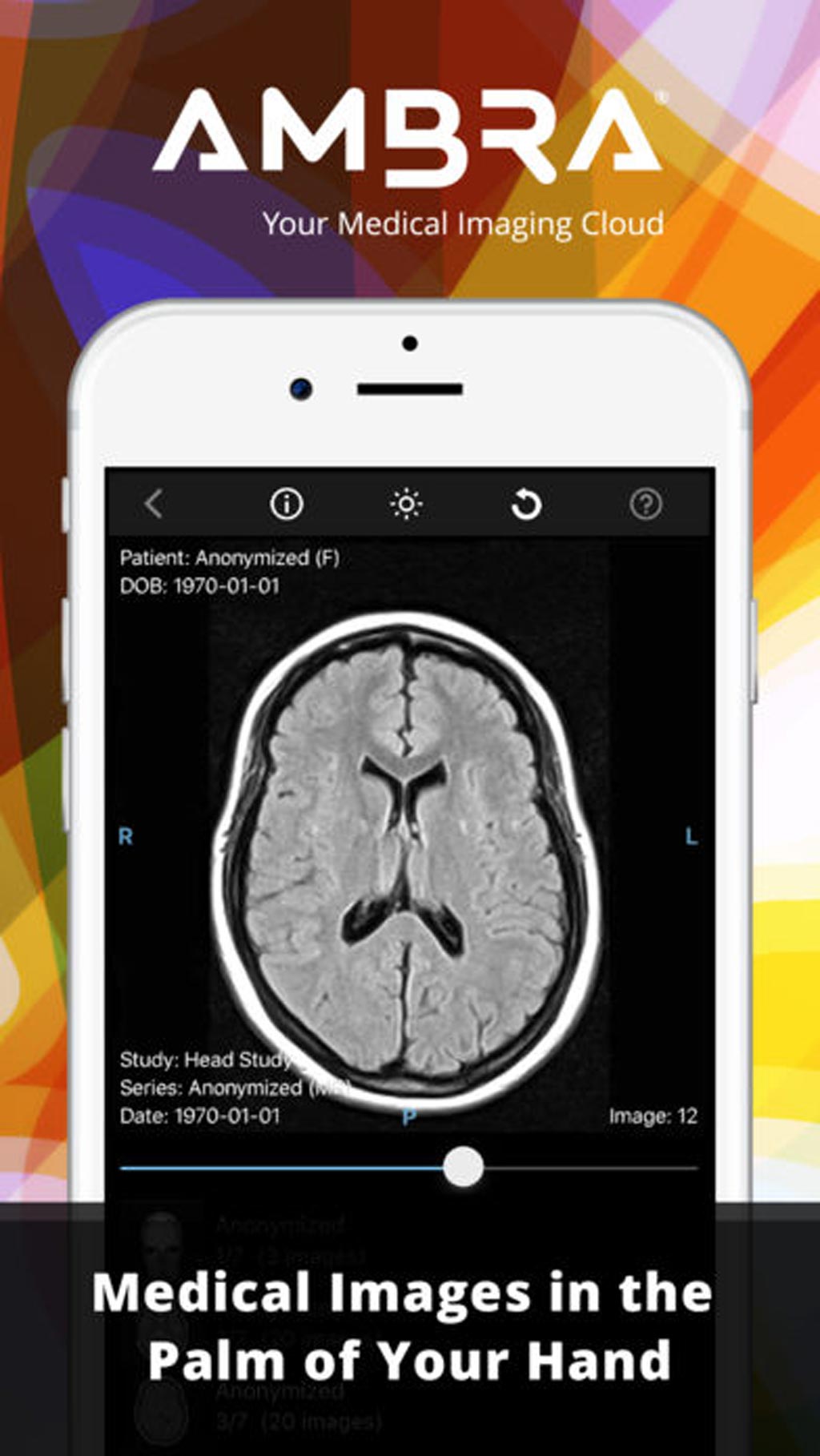
Image: A new app allows medical images to be viewed on an iPhone (Photo courtesy of Ambra Health).
A new iOS app offers patients and healthcare providers an intuitive image viewing experience designed for mobile viewing.
The Ambra Health (New York, NY, USA) app offers healthcare providers a secure, intuitive image viewing experience, fully optimized for mobile viewing. Users can effortlessly view medical images from anywhere, scroll through a series, and utilize radiology tools such as zooming, pinching, and rotating, all from the palm of their hand. While not intended for diagnostic use, imaging can be securely shared directly from within the app to other physicians, administrators, and patients, providing enhanced communication and collaboration.
Users benefit from instantaneous access to current and prior images in study lists with zero loading time. The Ambra Health app supports all imaging types from any connected picture archiving and communication systems (PACS), including magnetic resonance imaging (MRI), computerized tomography (CT), positron emission tomography (PET), computed radiography (CR), and ultrasound. More than 1,500 organizations currently use the Ambra Health image exchange network, and more than four billion images are managed through the platform. The Ambra Health app is available on the iTunes store (https://itunes.apple.com/us/app/ambra/id1437945158?mt=8).
“Patient medical records are complex documents, and medical imaging is a particularly critical piece of the puzzle. The cloud has been a key technological innovation for the storage of large imaging sets and easy access for patients and providers alike,” said Morris Panner, CEO of Ambra Health. “The Ambra app offers a quick and intuitive way for physicians to access medical images anytime, anywhere, and also enables providers to image enable patient and referring physician digital health apps.”
“With the Ambra app, I'm able to view a patient's imaging and scroll through priors instantaneously. The app is really intuitive and as easy as viewing images in my office. I've also gained the capability to share imaging with other providers in a secure manner,” said Todd Lempert, MD, chief of interventional radiology and diagnostic neuroradiology at Mission Hospital (Laguna Beach, CA, USA). “I can provide context immediately without having to wait for the images to load on my computer or run back to the office.”
Related Links:
Ambra Health




The Ambra Health (New York, NY, USA) app offers healthcare providers a secure, intuitive image viewing experience, fully optimized for mobile viewing. Users can effortlessly view medical images from anywhere, scroll through a series, and utilize radiology tools such as zooming, pinching, and rotating, all from the palm of their hand. While not intended for diagnostic use, imaging can be securely shared directly from within the app to other physicians, administrators, and patients, providing enhanced communication and collaboration.
Users benefit from instantaneous access to current and prior images in study lists with zero loading time. The Ambra Health app supports all imaging types from any connected picture archiving and communication systems (PACS), including magnetic resonance imaging (MRI), computerized tomography (CT), positron emission tomography (PET), computed radiography (CR), and ultrasound. More than 1,500 organizations currently use the Ambra Health image exchange network, and more than four billion images are managed through the platform. The Ambra Health app is available on the iTunes store (https://itunes.apple.com/us/app/ambra/id1437945158?mt=8).
“Patient medical records are complex documents, and medical imaging is a particularly critical piece of the puzzle. The cloud has been a key technological innovation for the storage of large imaging sets and easy access for patients and providers alike,” said Morris Panner, CEO of Ambra Health. “The Ambra app offers a quick and intuitive way for physicians to access medical images anytime, anywhere, and also enables providers to image enable patient and referring physician digital health apps.”
“With the Ambra app, I'm able to view a patient's imaging and scroll through priors instantaneously. The app is really intuitive and as easy as viewing images in my office. I've also gained the capability to share imaging with other providers in a secure manner,” said Todd Lempert, MD, chief of interventional radiology and diagnostic neuroradiology at Mission Hospital (Laguna Beach, CA, USA). “I can provide context immediately without having to wait for the images to load on my computer or run back to the office.”
Related Links:
Ambra Health

Gold Member
SARS‑CoV‑2/Flu A/Flu B/RSV Sample-To-Answer Test
SARS‑CoV‑2/Flu A/Flu B/RSV Cartridge (CE-IVD)
New
Glucose Meter
StatStrip®
New
Digital Radiography System (Ceiling Free)
Digix CF Series
Channels
Artificial Intelligence
view channel
AI Analysis of Pericardial Fat Refines Long-Term Heart Disease Risk
Accurately identifying long-term cardiovascular disease risk in asymptomatic adults remains challenging for clinicians. Missed or underestimated risk delays preventive therapy and increases the chance... Read more
Machine Learning Approach Enhances Liver Cancer Risk Stratification
Hepatocellular carcinoma, the most common form of primary liver cancer, is often detected late despite targeted surveillance programs. Current screening guidelines emphasize patients with known cirrhosis,... Read more

Critical Care
view channel
Noninvasive Monitoring Device Enables Earlier Intervention in Heart Failure
Hospitalizations for heart failure with preserved ejection fraction (HFpEF) remain common because lung congestion often worsens before symptoms prompt treatment changes. Missed early decompensation... Read more
Automated IV Labeling Solution Improves Infusion Safety and Efficiency
Medication administration in high-acuity settings is often complicated by multiple concurrent infusions, making accurate line identification essential. In a 10-hospital intensive care unit study, 60% of... Read more

Surgical Techniques
view channel
Ultrasound Technology Aims to Replace Invasive BPH Procedures
Benign prostatic hyperplasia (BPH) is a frequent cause of lower urinary tract symptoms in aging men and often requires invasive procedures or prolonged recovery. With prevalence expected to rise as populations... Read more
Continuous Monitoring with Wearables Enhances Postoperative Patient Safety
Postoperative hypoxemia on general surgical wards is common and often missed by intermittent vital sign checks. Undetected low oxygen levels can delay recovery and raise the risk of complications that... Read more
Patient Care
view channel
Wearable Sleep Data Predict Adherence to Pulmonary Rehabilitation
Chronic obstructive pulmonary disease (COPD) is a long-term lung disorder that makes breathing difficult and often disturbs sleep, reducing energy for daily activities. Limited engagement in pulmonary... Read more
Revolutionary Automatic IV-Line Flushing Device to Enhance Infusion Care
More than 80% of in-hospital patients receive intravenous (IV) therapy. Every dose of IV medicine delivered in a small volume (<250 mL) infusion bag should be followed by subsequent flushing to ensure... Read more

Health IT
view channel
EMR-Based Tool Predicts Graft Failure After Kidney Transplant
Kidney transplantation offers patients with end-stage kidney disease longer survival and better quality of life than dialysis, yet graft failure remains a major challenge. Although a successful transplant... Read more
Printable Molecule-Selective Nanoparticles Enable Mass Production of Wearable Biosensors
The future of medicine is likely to focus on the personalization of healthcare—understanding exactly what an individual requires and delivering the appropriate combination of nutrients, metabolites, and... Read more


Business
view channel
GE HealthCare Leads Major European Initiative to Advance Cardio-Oncology Care
Cardiovascular complications are increasingly recognized among people undergoing or recovering from cancer treatment, driven by pre‑existing disease and the cardiotoxic effects of chemotherapy, radiotherapy,... Read more

