






Ingestible Shape-Shifting Capsule Prompts Weight Loss
|
By HospiMedica International staff writers Posted on 05 Nov 2018 |


|
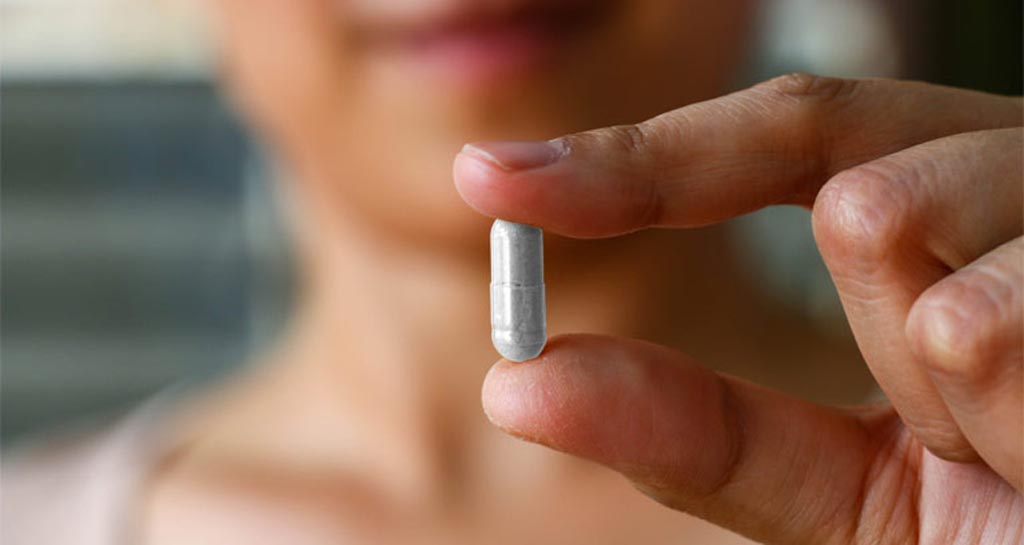
Image: An ingestible capsule can cause a false sense of fullness to help dieting (Photo courtesy of Epitomee Medical).
A novel self-administered device induces weight loss and improves glycemic control in overweight and obese patients.
The Epitomee Medical (Caesarea; Israel) Epitomee capsule is a drug-free, ingestible capsule that contains a biodegradable shape-shifting gel scaffold, which mechanically resists peristaltic waves as they progress through the stomach wall after eating. Triggered by stomach pH level, the mechanical resistance stimulates mechanoreceptors that create a sense of satiety, stalling gastric emptying. The gel scaffold acts on the stomach tissue for a period of several hours before it dissolves, thus avoiding stomach adaptation.
The treatment, which is administered twice daily, is intended for overweight or slightly obese persons with a body mass index (BMI) of 25-35 kg/m2 who seeks effective and safe assistance in weight loss. In a recent phase 2 study involving 52 patients, the average excess body weight loss was -21.8%, average BMI declined from 33 to 31, and waist circumference was reduced by 4.41 cm. Moreover, 80% of those patients who were hypertensive became normalized at week 12, and in 53% of pre-diabetic patients, fasting glucose was reduced from 104 to 92 and HbA1C% was reduced from 6.03 to 5.6.
“This self-use concept of the Epitomee capsule could represent a new direction in the way we treat overweight and obesity and could be very encouraging to many of my patients,” said Professor Haim Shirin, MD, director of the Institute of Gastroenterology, Liver Diseases, and Nutrition at Assaf Harofeh Medical Center (Beer Yaakov; Israel), who presented the study at the IsraeLIVE Endoscopy International conference, held during October 2018 in Haifa (Israel). “We were happy to see that there were no serious treatment-related adverse events and that the treatment was well tolerated.”
“Our solution is unique, and the only one that can actually be scaled up to treat billions of people who can benefit from it. Our device can deliver a range of benefits that impact health, wellness and quality of life, from weight loss and glycemic control to body shaping and circumference reduction. We are now working on making it available to the relevant patients in the market,” said Dan Hashimshony, MD, CEO of Epitomee. “Thanks to this work we can now go further in our investigations and complete our advanced phase 2. This will bring the Capsule closer to people who seek a safe and simple clinical weight loss solution.”
Peristalsis is a radially symmetrical contraction and relaxation of muscles that propagate in a wave down a muscular tube, in an anterograde fashion. In much of the gastrointestinal (GI) tract, smooth muscle contracts in sequence to produce a peristaltic wave, which forces a bolus of food along it. Peristaltic movement is initiated by circular smooth muscles contracting behind the chewed material to prevent it from moving back into the mouth, followed by a contraction of longitudinal smooth muscles, which pushes the digested food forward.
Related Links:
Epitomee Medical




The Epitomee Medical (Caesarea; Israel) Epitomee capsule is a drug-free, ingestible capsule that contains a biodegradable shape-shifting gel scaffold, which mechanically resists peristaltic waves as they progress through the stomach wall after eating. Triggered by stomach pH level, the mechanical resistance stimulates mechanoreceptors that create a sense of satiety, stalling gastric emptying. The gel scaffold acts on the stomach tissue for a period of several hours before it dissolves, thus avoiding stomach adaptation.
The treatment, which is administered twice daily, is intended for overweight or slightly obese persons with a body mass index (BMI) of 25-35 kg/m2 who seeks effective and safe assistance in weight loss. In a recent phase 2 study involving 52 patients, the average excess body weight loss was -21.8%, average BMI declined from 33 to 31, and waist circumference was reduced by 4.41 cm. Moreover, 80% of those patients who were hypertensive became normalized at week 12, and in 53% of pre-diabetic patients, fasting glucose was reduced from 104 to 92 and HbA1C% was reduced from 6.03 to 5.6.
“This self-use concept of the Epitomee capsule could represent a new direction in the way we treat overweight and obesity and could be very encouraging to many of my patients,” said Professor Haim Shirin, MD, director of the Institute of Gastroenterology, Liver Diseases, and Nutrition at Assaf Harofeh Medical Center (Beer Yaakov; Israel), who presented the study at the IsraeLIVE Endoscopy International conference, held during October 2018 in Haifa (Israel). “We were happy to see that there were no serious treatment-related adverse events and that the treatment was well tolerated.”
“Our solution is unique, and the only one that can actually be scaled up to treat billions of people who can benefit from it. Our device can deliver a range of benefits that impact health, wellness and quality of life, from weight loss and glycemic control to body shaping and circumference reduction. We are now working on making it available to the relevant patients in the market,” said Dan Hashimshony, MD, CEO of Epitomee. “Thanks to this work we can now go further in our investigations and complete our advanced phase 2. This will bring the Capsule closer to people who seek a safe and simple clinical weight loss solution.”
Peristalsis is a radially symmetrical contraction and relaxation of muscles that propagate in a wave down a muscular tube, in an anterograde fashion. In much of the gastrointestinal (GI) tract, smooth muscle contracts in sequence to produce a peristaltic wave, which forces a bolus of food along it. Peristaltic movement is initiated by circular smooth muscles contracting behind the chewed material to prevent it from moving back into the mouth, followed by a contraction of longitudinal smooth muscles, which pushes the digested food forward.
Related Links:
Epitomee Medical

Gold Member
12-Channel ECG
CM1200B
New
Medical-Grade Display
HL2316SHTB
New
Medical Examination & Procedure Light
Vega 80
Latest Surgical Techniques News
- Continuous Monitoring with Wearables Enhances Postoperative Patient Safety
- New Approach Enables Customized Muscle Tissue Without Biomaterial Scaffolds
- Robot-Assisted Brain Angiography Improves Procedural Outcomes
- Brain Mapping Technology Enhances Precision in Brain Tumor Resection
- Handheld Robotic System Expands Options for Total Knee Surgery
- VR Experience Reduces Patient Anxiety Before Kidney Stone Procedure
- Injectable Mini Livers Offer Hope for Patients Awaiting Transplant
- Pulsed Field Ablation Technology Cleared in Europe for Persistent AFib
- AI-Powered Imaging Brings Real-Time Margin Clarity to Breast Cancer Surgery
- Minimally Invasive Device Safely Treats Challenging Brain Aneurysms
- Surgical Robot Makes Complex Liver Tumor Surgery Safer and Less Invasive
- Neurostimulation Implant Reduces Seizure Burden in Drug-Resistant Epilepsy
- Minimally Invasive Procedure Effectively Treats Small Kidney Cancers
- Fluorescence Probe Paired with Engineered Enzymes Lights Up Tumors for Easier Surgical Removal
- Novel Hydrogel Could Become Bone Implant of the Future
- Skull Implant Design Could Shape Surgical Outcomes
Channels
Artificial Intelligence
view channel
Machine Learning Approach Enhances Liver Cancer Risk Stratification
Hepatocellular carcinoma, the most common form of primary liver cancer, is often detected late despite targeted surveillance programs. Current screening guidelines emphasize patients with known cirrhosis,... Read more
New AI Approach Monitors Brain Health Using Passive Wearable Data
Brain health spans cognitive and emotional functions and can fluctuate even in adults without diagnosed disease. Detecting early changes remains difficult in routine care and burdens specialty services... Read more
Critical Care
view channel
Automated IV Labeling Solution Improves Infusion Safety and Efficiency
Medication administration in high-acuity settings is often complicated by multiple concurrent infusions, making accurate line identification essential. In a 10-hospital intensive care unit study, 60% of... Read more
First-Of-Its-Kind AI Tool Detects Pulmonary Hypertension from Standard ECGs
Pulmonary hypertension is a progressive, life‑threatening disease that is frequently missed early because symptoms such as dyspnea are nonspecific and diagnostic delays can exceed two years.... Read more
Patient Care
view channel
Wearable Sleep Data Predict Adherence to Pulmonary Rehabilitation
Chronic obstructive pulmonary disease (COPD) is a long-term lung disorder that makes breathing difficult and often disturbs sleep, reducing energy for daily activities. Limited engagement in pulmonary... Read more
Revolutionary Automatic IV-Line Flushing Device to Enhance Infusion Care
More than 80% of in-hospital patients receive intravenous (IV) therapy. Every dose of IV medicine delivered in a small volume (<250 mL) infusion bag should be followed by subsequent flushing to ensure... Read more

Health IT
view channel
EMR-Based Tool Predicts Graft Failure After Kidney Transplant
Kidney transplantation offers patients with end-stage kidney disease longer survival and better quality of life than dialysis, yet graft failure remains a major challenge. Although a successful transplant... Read more
Printable Molecule-Selective Nanoparticles Enable Mass Production of Wearable Biosensors
The future of medicine is likely to focus on the personalization of healthcare—understanding exactly what an individual requires and delivering the appropriate combination of nutrients, metabolites, and... Read more


Business
view channel
GE HealthCare Leads Major European Initiative to Advance Cardio-Oncology Care
Cardiovascular complications are increasingly recognized among people undergoing or recovering from cancer treatment, driven by pre‑existing disease and the cardiotoxic effects of chemotherapy, radiotherapy,... Read more

