Research Finds Vast Majority of Tonsillectomies Are Unnecessary
|
By HospiMedica International staff writers Posted on 06 Dec 2018 |


|
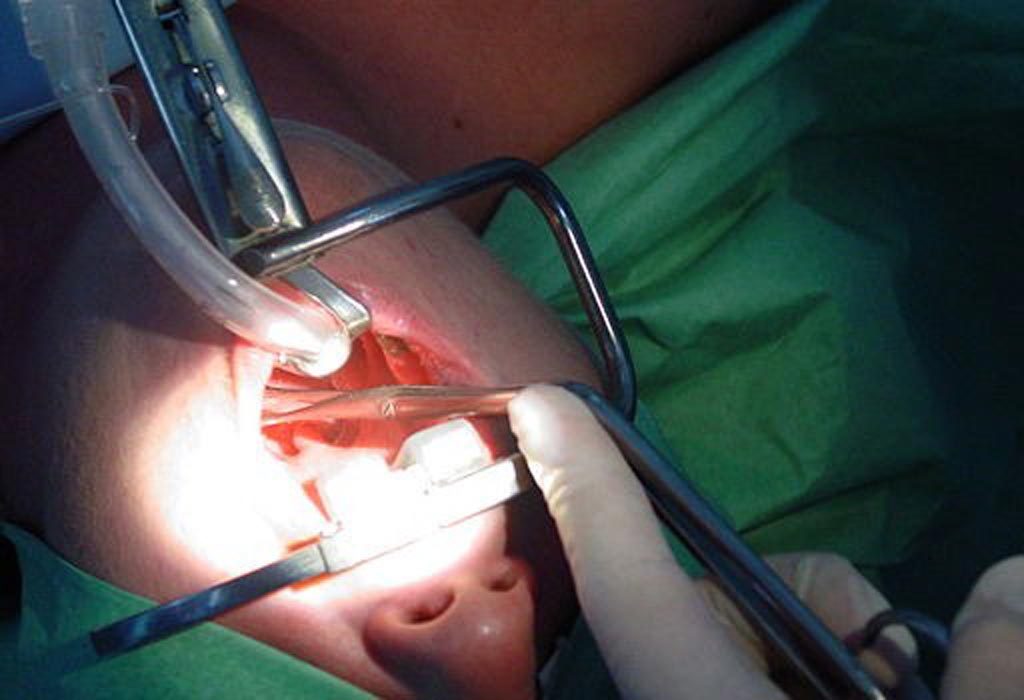
Image: New research suggests tonsillectomies may be superfluous procedures (Photo courtesy of 123rf).
A new study reveals that seven of every eight children who have their tonsils removed are unlikely to benefit from the procedure.
Researchers at the University of Birmingham (UB; United Kingdom) conducted a retrospective cohort study of the electronic medical records of 1,630,807 children (0–15 years of age) in order determine indications for tonsillectomy and the proportion of those meeting evidence-based criteria. These included sore throats of sufficient frequency and severity, periodic fever, aphthous stomatitis, pharyngitis, cervical adenitis syndrome (PFAPA) or tonsillar tumor; other indications were considered non-evidence-based. The number of children subsequently undergoing tonsillectomy was then identified.
The results revealed that only 11.7% of children in the United Kingdom had evidence-based indications, and that the proportion of evidence-based tonsillectomies was unchanged over a 12 year period. Most childhood tonsillectomies followed non-evidence-based indications, including five to six sore throats during one year (12.4%), two to four sore throats during one year (44.6%), sleep disordered breathing (12.3%), or obstructive sleep apnea (3.9%). Of the 15,764 children who had sufficient sore throats to undergo a tonsillectomy, only 13.6% actually had one. The study was published on November 5, 2018, in the British Journal of General Practice.
“Our research showed that most children who had their tonsils removed weren't severely enough affected to justify treatment, while on the other hand, most children who were severely enough affected with frequent sore throats did not have their tonsils removed,” said senior author Professor Tom Marshall, MSc, PhD. “Children may be more harmed than helped by a tonsillectomy. We found that even among severely affected children only a minority ever have their tonsils out. It makes you wonder if tonsillectomy ever really essential in any child.”
Tonsillectomy is a 3,000-year-old surgical procedure in which the tonsils are removed from either side of the throat. The procedure is performed in response to cases of repeated occurrence of acute tonsillitis or adenoiditis, obstructive sleep apnea (OSA), nasal airway obstruction, snoring, or peritonsillar abscess. Tonsillectomy is often performed together with adenoidectomy, the surgical removal of the adenoids; this may be done for several reasons, including impaired breathing and chronic infections or earaches.
Related Links:
University of Birmingham






Researchers at the University of Birmingham (UB; United Kingdom) conducted a retrospective cohort study of the electronic medical records of 1,630,807 children (0–15 years of age) in order determine indications for tonsillectomy and the proportion of those meeting evidence-based criteria. These included sore throats of sufficient frequency and severity, periodic fever, aphthous stomatitis, pharyngitis, cervical adenitis syndrome (PFAPA) or tonsillar tumor; other indications were considered non-evidence-based. The number of children subsequently undergoing tonsillectomy was then identified.
The results revealed that only 11.7% of children in the United Kingdom had evidence-based indications, and that the proportion of evidence-based tonsillectomies was unchanged over a 12 year period. Most childhood tonsillectomies followed non-evidence-based indications, including five to six sore throats during one year (12.4%), two to four sore throats during one year (44.6%), sleep disordered breathing (12.3%), or obstructive sleep apnea (3.9%). Of the 15,764 children who had sufficient sore throats to undergo a tonsillectomy, only 13.6% actually had one. The study was published on November 5, 2018, in the British Journal of General Practice.
“Our research showed that most children who had their tonsils removed weren't severely enough affected to justify treatment, while on the other hand, most children who were severely enough affected with frequent sore throats did not have their tonsils removed,” said senior author Professor Tom Marshall, MSc, PhD. “Children may be more harmed than helped by a tonsillectomy. We found that even among severely affected children only a minority ever have their tonsils out. It makes you wonder if tonsillectomy ever really essential in any child.”
Tonsillectomy is a 3,000-year-old surgical procedure in which the tonsils are removed from either side of the throat. The procedure is performed in response to cases of repeated occurrence of acute tonsillitis or adenoiditis, obstructive sleep apnea (OSA), nasal airway obstruction, snoring, or peritonsillar abscess. Tonsillectomy is often performed together with adenoidectomy, the surgical removal of the adenoids; this may be done for several reasons, including impaired breathing and chronic infections or earaches.
Related Links:
University of Birmingham

Gold Member
Real-Time Diagnostics Onscreen Viewer
GEMweb Live
Absorbable Monofilament Mesh
Phasix Mesh
Head Rest
Medifa 61114_3
Latest Surgical Techniques News
- New Study Findings Could Halve Number of Stent Procedures
- Breakthrough Surgical Device Redefines Hip Arthroscopy
- Automated System Enables Real-Time "Molecular Pathology" During Cancer Surgery
- Groundbreaking Procedure Combines New Treatments for Liver Tumors
- Ablation Reduces Stroke Risk Associated with Atrial Fibrillation
- Optical Tracking Method Identifies Target Areas in Robot-Assisted Neurosurgery
- General Anesthesia Improves Post-Surgery Outcomes for Acute Stroke Patients
- Drug-Coated Balloons Can Replace Stents Even in Larger Coronary Arteries
- Magnetic Kidney Stone Retrieval Device Outperforms Ureteroscopic Laser Lithotripsy
- Absorbable Skull Device Could Replace Traditional Metal Implants Used After Brain Surgery
- Magic Silicone Liquid Powered Robots Perform MIS in Narrow Cavities
- 'Lab-on-a-Scalpel' Provides Real-Time Surgical Insights for POC Diagnostics in OR
- Biodegradable Brain Implant Prevents Glioblastoma Recurrence
- Tiny 3D Printer Reconstructs Tissues During Vocal Cord Surgery
- Minimally Invasive Procedure for Aortic Valve Disease Has Similar Outcomes as Surgery
- Safer Hip Implant Design Prevents Early Femoral Fractures
Channels

Critical Care
view channel
Magnetically Guided Microrobots to Enable Targeted Drug Delivery
Stroke affects 12 million people globally each year, often causing death or lasting disability. Current treatment relies on systemic administration of clot-dissolving drugs, which circulate throughout... Read more
Smart Nanomaterials Detect and Treat Traumatic Brain Injuries Simultaneously
Traumatic brain injury (TBI) continues to leave millions with long-term disabilities every year. After a sudden impact from a fall, collision, or accident, the brain undergoes inflammation, oxidative stress,... Read more
Earlier Blood Transfusion Could Reduce Heart Failure and Arrhythmia in Heart Disease Patients
Blood loss during or after surgery can place significant stress on people with heart disease, increasing the risk of dangerous complications. Transfusions are often delayed until hemoglobin levels fall... Read more
Patient Care
view channel
Revolutionary Automatic IV-Line Flushing Device to Enhance Infusion Care
More than 80% of in-hospital patients receive intravenous (IV) therapy. Every dose of IV medicine delivered in a small volume (<250 mL) infusion bag should be followed by subsequent flushing to ensure... Read more
VR Training Tool Combats Contamination of Portable Medical Equipment
Healthcare-associated infections (HAIs) impact one in every 31 patients, cause nearly 100,000 deaths each year, and cost USD 28.4 billion in direct medical expenses. Notably, up to 75% of these infections... Read more
Portable Biosensor Platform to Reduce Hospital-Acquired Infections
Approximately 4 million patients in the European Union acquire healthcare-associated infections (HAIs) or nosocomial infections each year, with around 37,000 deaths directly resulting from these infections,... Read more
First-Of-Its-Kind Portable Germicidal Light Technology Disinfects High-Touch Clinical Surfaces in Seconds
Reducing healthcare-acquired infections (HAIs) remains a pressing issue within global healthcare systems. In the United States alone, 1.7 million patients contract HAIs annually, leading to approximately... Read moreHealth IT
view channel
EMR-Based Tool Predicts Graft Failure After Kidney Transplant
Kidney transplantation offers patients with end-stage kidney disease longer survival and better quality of life than dialysis, yet graft failure remains a major challenge. Although a successful transplant... Read more
Printable Molecule-Selective Nanoparticles Enable Mass Production of Wearable Biosensors
The future of medicine is likely to focus on the personalization of healthcare—understanding exactly what an individual requires and delivering the appropriate combination of nutrients, metabolites, and... Read more

Business
view channel
Philips and Masimo Partner to Advance Patient Monitoring Measurement Technologies
Royal Philips (Amsterdam, Netherlands) and Masimo (Irvine, California, USA) have renewed their multi-year strategic collaboration, combining Philips’ expertise in patient monitoring with Masimo’s noninvasive... Read more
B. Braun Acquires Digital Microsurgery Company True Digital Surgery
The high-end microsurgery market in neurosurgery, spine, and ENT is undergoing a significant transformation. Traditional analog microscopes are giving way to digital exoscopes, which provide improved visualization,... Read more
CMEF 2025 to Promote Holistic and High-Quality Development of Medical and Health Industry
The 92nd China International Medical Equipment Fair (CMEF 2025) Autumn Exhibition is scheduled to be held from September 26 to 29 at the China Import and Export Fair Complex (Canton Fair Complex) in Guangzhou.... Read more