






Automated Supply Chain Management Simplifies OR Procedures
|
By HospiMedica International staff writers Posted on 12 Dec 2018 |


|
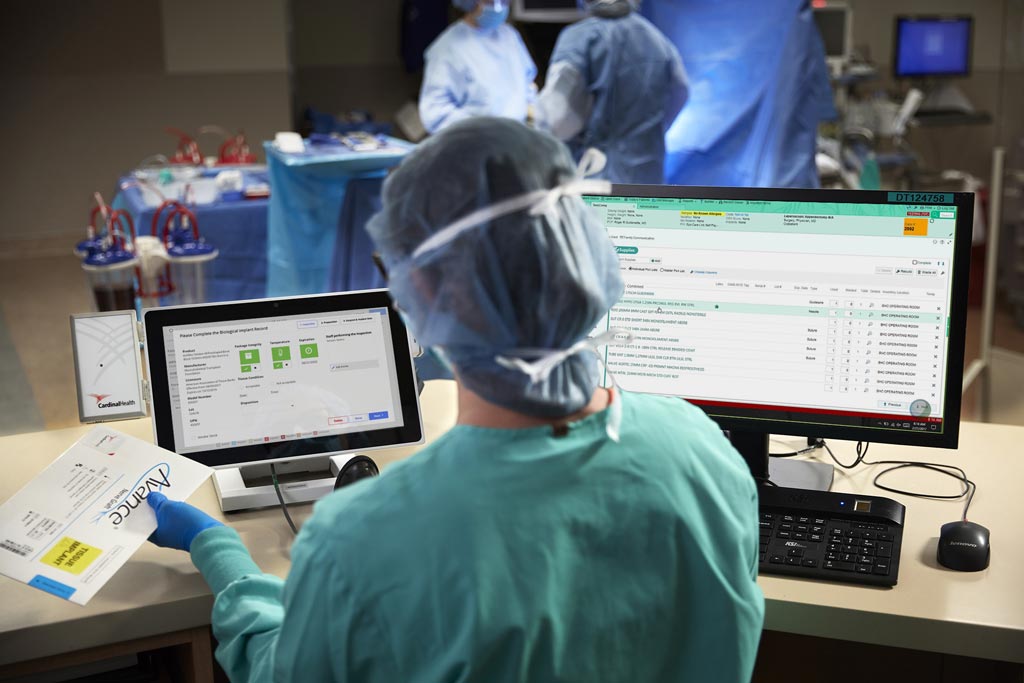
Image: A novel software platform helps maintain OR efficiencies (Photo courtesy of Cardinal Health).
A novel platform allows hospitals to streamline their operating room (OR) processes, reduce costs, and improve efficiency through real-time inventory visibility and prescriptive analytics.
The Cardinal Health (Dublin, OH, USA) WaveMark inventory management solution brings diverse data and workflows together seamlessly to save time, cut costs, and provide "peace of mind" for clinical staff and supply chain administrators. A single intuitive dashboard provides alerts for issues that need immediate attention (short-dated, slow-moving, recalled, or missing items), while an analytics suite pulls together multiple streams of supply data and case cost information to ensure complete visibility, from receipt to usage to order.
The WaveMark interface ensures interoperability with existing hospital systems, including materials management system (MMIS), electronic medical records (EMRs), and clinical information systems, which leverage easy-to-use data collection technologies and processes, such as handheld smart wands, radio frequency identification (RFID) smart cabinets, point-of-use stations, barcode systems, and the Kanban scheduling system. The improved visibility ensured clinicians always have the right product in the right place at the right time, guaranteeing that expired or recalled supplies never reach the patient.
Additional features include prescriptive analytics, which not only predict future needs, but also provide a course of action to manage supply related challenges proactively; flexible reports that reveal the impact of supplies on OR operations including cost-per-encounter, physician level utilization, expired, missing or recalled products, and usage (charge capture). Hospitals are provided with a comprehensive, integrated approach that aligns operational and financial planning, and leverages analytics for informed decisions that are focused on supporting broader strategic objectives.
“We recognized that the OR supply chain is not only one of the most expensive areas in a hospital, it's also one of the most challenging. By ensuring that resources are in the right place and available when needed, we help our customers maintain their focus on improving on improving patient care,” said John Roy, vice president and general manager of WaveMark at Cardinal Health. “The sheer scale, complexity and unique requirements of the OR call for a supply chain solution developed specifically for the OR, which considers aspects of people, process, and technology.”
OR expenses make up 40–60% of total hospital supply costs, and the inventory for an average 15-room OR includes an estimated 3,000–4,000 products in multiple locations. These supplies must flow through varied processes continously, and some might have specific requirements for tracking, documentation, and compliance.
Related Links:
Cardinal Health




The Cardinal Health (Dublin, OH, USA) WaveMark inventory management solution brings diverse data and workflows together seamlessly to save time, cut costs, and provide "peace of mind" for clinical staff and supply chain administrators. A single intuitive dashboard provides alerts for issues that need immediate attention (short-dated, slow-moving, recalled, or missing items), while an analytics suite pulls together multiple streams of supply data and case cost information to ensure complete visibility, from receipt to usage to order.
The WaveMark interface ensures interoperability with existing hospital systems, including materials management system (MMIS), electronic medical records (EMRs), and clinical information systems, which leverage easy-to-use data collection technologies and processes, such as handheld smart wands, radio frequency identification (RFID) smart cabinets, point-of-use stations, barcode systems, and the Kanban scheduling system. The improved visibility ensured clinicians always have the right product in the right place at the right time, guaranteeing that expired or recalled supplies never reach the patient.
Additional features include prescriptive analytics, which not only predict future needs, but also provide a course of action to manage supply related challenges proactively; flexible reports that reveal the impact of supplies on OR operations including cost-per-encounter, physician level utilization, expired, missing or recalled products, and usage (charge capture). Hospitals are provided with a comprehensive, integrated approach that aligns operational and financial planning, and leverages analytics for informed decisions that are focused on supporting broader strategic objectives.
“We recognized that the OR supply chain is not only one of the most expensive areas in a hospital, it's also one of the most challenging. By ensuring that resources are in the right place and available when needed, we help our customers maintain their focus on improving on improving patient care,” said John Roy, vice president and general manager of WaveMark at Cardinal Health. “The sheer scale, complexity and unique requirements of the OR call for a supply chain solution developed specifically for the OR, which considers aspects of people, process, and technology.”
OR expenses make up 40–60% of total hospital supply costs, and the inventory for an average 15-room OR includes an estimated 3,000–4,000 products in multiple locations. These supplies must flow through varied processes continously, and some might have specific requirements for tracking, documentation, and compliance.
Related Links:
Cardinal Health

Gold Member
SARS‑CoV‑2/Flu A/Flu B/RSV Sample-To-Answer Test
SARS‑CoV‑2/Flu A/Flu B/RSV Cartridge (CE-IVD)
New
Blood Gas Analyzer
i-Check200
New
Digital Radiography System (Ceiling Free)
Digix CF Series
Channels
Artificial Intelligence
view channel
Machine Learning Approach Enhances Liver Cancer Risk Stratification
Hepatocellular carcinoma, the most common form of primary liver cancer, is often detected late despite targeted surveillance programs. Current screening guidelines emphasize patients with known cirrhosis,... Read more
New AI Approach Monitors Brain Health Using Passive Wearable Data
Brain health spans cognitive and emotional functions and can fluctuate even in adults without diagnosed disease. Detecting early changes remains difficult in routine care and burdens specialty services... Read more

Critical Care
view channel
Automated IV Labeling Solution Improves Infusion Safety and Efficiency
Medication administration in high-acuity settings is often complicated by multiple concurrent infusions, making accurate line identification essential. In a 10-hospital intensive care unit study, 60% of... Read more
First-Of-Its-Kind AI Tool Detects Pulmonary Hypertension from Standard ECGs
Pulmonary hypertension is a progressive, life‑threatening disease that is frequently missed early because symptoms such as dyspnea are nonspecific and diagnostic delays can exceed two years.... Read more
Surgical Techniques
view channel
Continuous Monitoring with Wearables Enhances Postoperative Patient Safety
Postoperative hypoxemia on general surgical wards is common and often missed by intermittent vital sign checks. Undetected low oxygen levels can delay recovery and raise the risk of complications that... Read more
New Approach Enables Customized Muscle Tissue Without Biomaterial Scaffolds
Volumetric muscle loss is a traumatic loss of skeletal muscle that often leads to permanent functional impairment and limited reconstructive options. Current experimental strategies struggle to deliver... Read more
Patient Care
view channel
Wearable Sleep Data Predict Adherence to Pulmonary Rehabilitation
Chronic obstructive pulmonary disease (COPD) is a long-term lung disorder that makes breathing difficult and often disturbs sleep, reducing energy for daily activities. Limited engagement in pulmonary... Read more
Revolutionary Automatic IV-Line Flushing Device to Enhance Infusion Care
More than 80% of in-hospital patients receive intravenous (IV) therapy. Every dose of IV medicine delivered in a small volume (<250 mL) infusion bag should be followed by subsequent flushing to ensure... Read more


Business
view channel
GE HealthCare Leads Major European Initiative to Advance Cardio-Oncology Care
Cardiovascular complications are increasingly recognized among people undergoing or recovering from cancer treatment, driven by pre‑existing disease and the cardiotoxic effects of chemotherapy, radiotherapy,... Read more

