






AI Software Pinpoints Biopsies to Detect Prostate Cancer
|
By HospiMedica International staff writers Posted on 25 Dec 2018 |


|
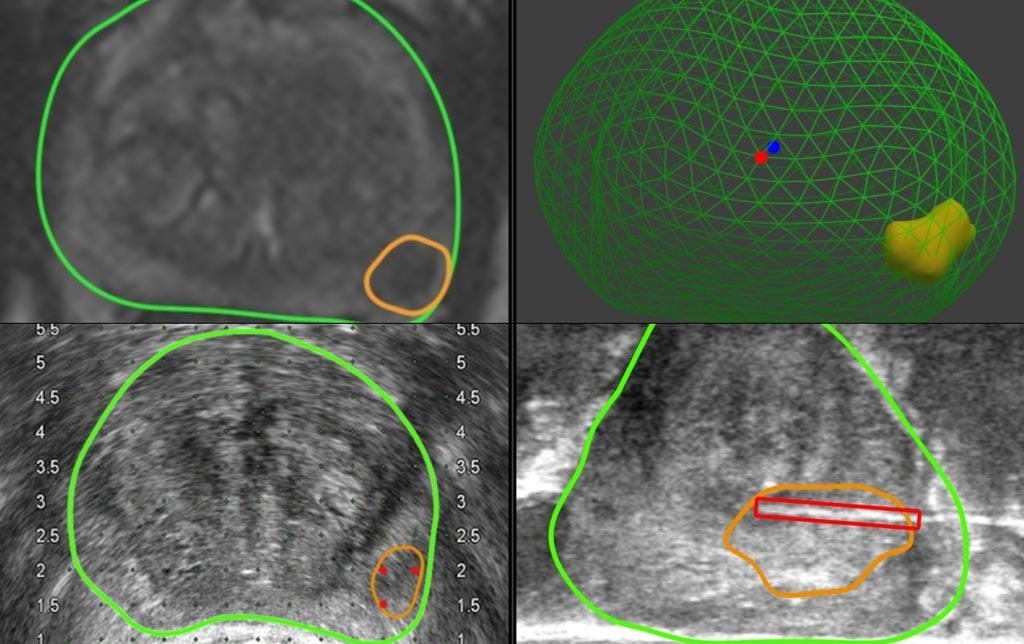
Image: Software that overlays tumor information from MRI scans onto ultrasound images can help guide surgeons conducting biopsies and improve prostate cancer detection (Photo courtesy of UCL).
A team of engineers and medical researchers at the University College London {(UCL) London, UK} have developed a medical software that overlays tumor information from MRI scans onto ultrasound images to help guide surgeons conducting biopsies (tissue sample) and improve prostate cancer detection. The software is deployed via a system called SmartTarget and enables surgeons to pick up clinically relevant cancers that were missed when using current visual detection methods.
MRI-targeted biopsies, where MRI scans are used to inform surgeons where a tumor lies before they conduct a biopsy, have improved detection rates to nearly 90% from 50% in the last five years. The SmartTarget system further enhances this technique by allowing a 3D model of the prostate and cancer to be created for each patient from their MRI scans using advanced image processing and machine learning algorithms. During a biopsy, this model is fused with ultrasound images to highlight the area of concern, which otherwise does not appear in the ultrasound images, helping to guide the surgeon while conducting the procedure.
In a study, 129 people with suspected prostate cancer underwent two biopsies – one using the SmartTarget system, and one where surgeons could only visually review the MRI scans. The two strategies combined detected 93 clinically significant prostate cancers, with each of them picking up 80 of these cancers; each missed 13 that the other method picked up. According to the researchers, the surgeons’ visual review of MRI scans should be used in tandem with SmartTarget, as using this technique enables surgeons to learn to make subtle adjustments such as adapting to the movement of the patient and the prostate as the needle is inserted. The researchers say that the new methods could reduce the number of biopsies needed, and reduce the unnecessary surgeries caused by over diagnosis of less harmful cancers.
“There has been much discussion and speculation in the media recently on the degree to which computers and artificial intelligence will be integrated into clinical care. Studies such as this one are extremely important as they provide valuable evidence on the performance of a new technology in the clinical setting,” said co-senior author Professor Mark Emberton (Dean, UCL Medical Sciences). “With this study we now have hard data showing that SmartTarget is as good as a group of experts in targeting tumors in the prostate, and have a glimpse of how clinicians and computers will be working together in the future for the good of the patient.”
Related Links:
University College London





MRI-targeted biopsies, where MRI scans are used to inform surgeons where a tumor lies before they conduct a biopsy, have improved detection rates to nearly 90% from 50% in the last five years. The SmartTarget system further enhances this technique by allowing a 3D model of the prostate and cancer to be created for each patient from their MRI scans using advanced image processing and machine learning algorithms. During a biopsy, this model is fused with ultrasound images to highlight the area of concern, which otherwise does not appear in the ultrasound images, helping to guide the surgeon while conducting the procedure.
In a study, 129 people with suspected prostate cancer underwent two biopsies – one using the SmartTarget system, and one where surgeons could only visually review the MRI scans. The two strategies combined detected 93 clinically significant prostate cancers, with each of them picking up 80 of these cancers; each missed 13 that the other method picked up. According to the researchers, the surgeons’ visual review of MRI scans should be used in tandem with SmartTarget, as using this technique enables surgeons to learn to make subtle adjustments such as adapting to the movement of the patient and the prostate as the needle is inserted. The researchers say that the new methods could reduce the number of biopsies needed, and reduce the unnecessary surgeries caused by over diagnosis of less harmful cancers.
“There has been much discussion and speculation in the media recently on the degree to which computers and artificial intelligence will be integrated into clinical care. Studies such as this one are extremely important as they provide valuable evidence on the performance of a new technology in the clinical setting,” said co-senior author Professor Mark Emberton (Dean, UCL Medical Sciences). “With this study we now have hard data showing that SmartTarget is as good as a group of experts in targeting tumors in the prostate, and have a glimpse of how clinicians and computers will be working together in the future for the good of the patient.”
Related Links:
University College London

Gold Member
STI Test
Vivalytic Sexually Transmitted Infection (STI) Array
New
Tourniquet System
heidi– mein Tourniquet
New
Wound Irrigation Solution
Prontosan®
Latest AI News
- AI Analysis of Pericardial Fat Refines Long-Term Heart Disease Risk
- Machine Learning Approach Enhances Liver Cancer Risk Stratification
- New AI Approach Monitors Brain Health Using Passive Wearable Data
- AI Tool Maps Early Risk Patterns in Bloodstream Infections
- AI Model Identifies Rare Endocrine Disorder from Hand Images
- AI Tool Promises to Reduce Length of Hospital Stays and Free Up Beds
- Machine Learning Model Cuts Canceled Liver Transplants By 60%
Channels
Artificial Intelligence
view channel
AI Analysis of Pericardial Fat Refines Long-Term Heart Disease Risk
Accurately identifying long-term cardiovascular disease risk in asymptomatic adults remains challenging for clinicians. Missed or underestimated risk delays preventive therapy and increases the chance... Read more
Machine Learning Approach Enhances Liver Cancer Risk Stratification
Hepatocellular carcinoma, the most common form of primary liver cancer, is often detected late despite targeted surveillance programs. Current screening guidelines emphasize patients with known cirrhosis,... Read more

Critical Care
view channel
Noninvasive Monitoring Device Enables Earlier Intervention in Heart Failure
Hospitalizations for heart failure with preserved ejection fraction (HFpEF) remain common because lung congestion often worsens before symptoms prompt treatment changes. Missed early decompensation... Read more
Automated IV Labeling Solution Improves Infusion Safety and Efficiency
Medication administration in high-acuity settings is often complicated by multiple concurrent infusions, making accurate line identification essential. In a 10-hospital intensive care unit study, 60% of... Read more

Surgical Techniques
view channel
Ultrasound Technology Aims to Replace Invasive BPH Procedures
Benign prostatic hyperplasia (BPH) is a frequent cause of lower urinary tract symptoms in aging men and often requires invasive procedures or prolonged recovery. With prevalence expected to rise as populations... Read more
Continuous Monitoring with Wearables Enhances Postoperative Patient Safety
Postoperative hypoxemia on general surgical wards is common and often missed by intermittent vital sign checks. Undetected low oxygen levels can delay recovery and raise the risk of complications that... Read more

Patient Care
view channel
Wearable Sleep Data Predict Adherence to Pulmonary Rehabilitation
Chronic obstructive pulmonary disease (COPD) is a long-term lung disorder that makes breathing difficult and often disturbs sleep, reducing energy for daily activities. Limited engagement in pulmonary... Read more
Revolutionary Automatic IV-Line Flushing Device to Enhance Infusion Care
More than 80% of in-hospital patients receive intravenous (IV) therapy. Every dose of IV medicine delivered in a small volume (<250 mL) infusion bag should be followed by subsequent flushing to ensure... Read more

Health IT
view channel
EMR-Based Tool Predicts Graft Failure After Kidney Transplant
Kidney transplantation offers patients with end-stage kidney disease longer survival and better quality of life than dialysis, yet graft failure remains a major challenge. Although a successful transplant... Read more
Printable Molecule-Selective Nanoparticles Enable Mass Production of Wearable Biosensors
The future of medicine is likely to focus on the personalization of healthcare—understanding exactly what an individual requires and delivering the appropriate combination of nutrients, metabolites, and... Read more


Business
view channel
GE HealthCare Leads Major European Initiative to Advance Cardio-Oncology Care
Cardiovascular complications are increasingly recognized among people undergoing or recovering from cancer treatment, driven by pre‑existing disease and the cardiotoxic effects of chemotherapy, radiotherapy,... Read more

