






Largest AI-Powered Medical Research Network Launched
|
By HospiMedica International staff writers Posted on 27 Dec 2018 |


|
The newly launched OWKIN (New York, NY, USA) Loop Network, which includes over 30 leading international hospitals and research institutions across the United States and Europe, has been designed to help researchers train predictive models on real-world data at scale, and transfer the accrued knowledge to a collective intelligence. Members include Cleveland Clinic (OH, USA), Mount Sinai (New York, NY, USA), and Groupe AP-HP, a cluster of 39 hospitals in France, among others.
The Loop Network thus creates an ecosystem that shares the collective knowledge, benefitting research organizations, partner hospitals, and pharmaceutical companies in advancing research and development in oncology, cardiovascular, neurodegenerative, and autoimmune diseases. Projects undertaken by the network include the training of a predictive model identifying new quantitative biomarkers associated with prognosis in a rare cancer, the prediction of brain age from magnetic resonance imaging (MRI), and prediction of gene expression profiles from slide images as a marker of response to immunotherapy.
“Access to patient data is critical for improving medical research, but the current patient data brokerage system hinders knowledge-sharing and risks patient data privacy, resulting in knowledge silos at individual hospitals,” said Thomas Clozel, MD, co-founder and CEO of OWKIN. “If we can transform the world’s clinical data into broadly accessible research knowledge, we believe we can fundamentally advance medical research and have an incredibly powerful impact on solving the most important medical challenges.”
“We are excited to be working with OWKIN to apply AI algorithms to clinical data for mesothelioma research,” said Françoise Galateau-Sallé, MD, principal investigator at Centre Léon Bérard (Lyon, France). “AI models identified a new subgroup of patients that are poor responders to the standard of care and potential good candidates for immunotherapy.”
Related Links:
OWKIN
Centre Léon Bérard






The Loop Network thus creates an ecosystem that shares the collective knowledge, benefitting research organizations, partner hospitals, and pharmaceutical companies in advancing research and development in oncology, cardiovascular, neurodegenerative, and autoimmune diseases. Projects undertaken by the network include the training of a predictive model identifying new quantitative biomarkers associated with prognosis in a rare cancer, the prediction of brain age from magnetic resonance imaging (MRI), and prediction of gene expression profiles from slide images as a marker of response to immunotherapy.
“Access to patient data is critical for improving medical research, but the current patient data brokerage system hinders knowledge-sharing and risks patient data privacy, resulting in knowledge silos at individual hospitals,” said Thomas Clozel, MD, co-founder and CEO of OWKIN. “If we can transform the world’s clinical data into broadly accessible research knowledge, we believe we can fundamentally advance medical research and have an incredibly powerful impact on solving the most important medical challenges.”
“We are excited to be working with OWKIN to apply AI algorithms to clinical data for mesothelioma research,” said Françoise Galateau-Sallé, MD, principal investigator at Centre Léon Bérard (Lyon, France). “AI models identified a new subgroup of patients that are poor responders to the standard of care and potential good candidates for immunotherapy.”
Related Links:
OWKIN
Centre Léon Bérard

New
Gold Member
Neonatal Heel Incision Device
Tenderfoot
New
Syringe Pump
SP50 Series
New
Surgical Dressing
ALLEVYN Ag+ SURGICAL
Latest AI News
- Machine Learning Approach Enhances Liver Cancer Risk Stratification
- New AI Approach Monitors Brain Health Using Passive Wearable Data
- AI Tool Maps Early Risk Patterns in Bloodstream Infections
- AI Model Identifies Rare Endocrine Disorder from Hand Images
- AI Tool Promises to Reduce Length of Hospital Stays and Free Up Beds
- Machine Learning Model Cuts Canceled Liver Transplants By 60%
Channels
Artificial Intelligence
view channel
Machine Learning Approach Enhances Liver Cancer Risk Stratification
Hepatocellular carcinoma, the most common form of primary liver cancer, is often detected late despite targeted surveillance programs. Current screening guidelines emphasize patients with known cirrhosis,... Read more
New AI Approach Monitors Brain Health Using Passive Wearable Data
Brain health spans cognitive and emotional functions and can fluctuate even in adults without diagnosed disease. Detecting early changes remains difficult in routine care and burdens specialty services... Read more

Critical Care
view channel
Noninvasive Monitoring Device Enables Earlier Intervention in Heart Failure
Hospitalizations for heart failure with preserved ejection fraction (HFpEF) remain common because lung congestion often worsens before symptoms prompt treatment changes. Missed early decompensation... Read more
Automated IV Labeling Solution Improves Infusion Safety and Efficiency
Medication administration in high-acuity settings is often complicated by multiple concurrent infusions, making accurate line identification essential. In a 10-hospital intensive care unit study, 60% of... Read more

Surgical Techniques
view channel
Continuous Monitoring with Wearables Enhances Postoperative Patient Safety
Postoperative hypoxemia on general surgical wards is common and often missed by intermittent vital sign checks. Undetected low oxygen levels can delay recovery and raise the risk of complications that... Read more
New Approach Enables Customized Muscle Tissue Without Biomaterial Scaffolds
Volumetric muscle loss is a traumatic loss of skeletal muscle that often leads to permanent functional impairment and limited reconstructive options. Current experimental strategies struggle to deliver... Read more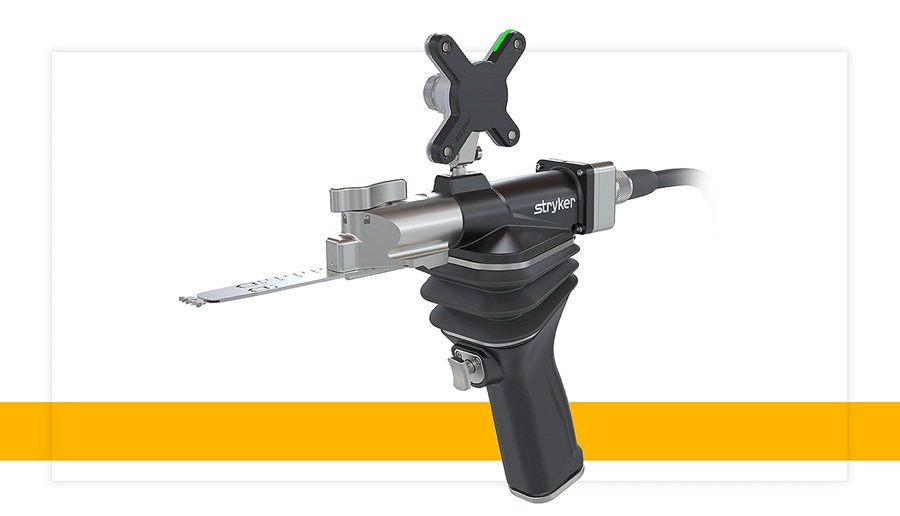
Patient Care
view channel
Wearable Sleep Data Predict Adherence to Pulmonary Rehabilitation
Chronic obstructive pulmonary disease (COPD) is a long-term lung disorder that makes breathing difficult and often disturbs sleep, reducing energy for daily activities. Limited engagement in pulmonary... Read more
Revolutionary Automatic IV-Line Flushing Device to Enhance Infusion Care
More than 80% of in-hospital patients receive intravenous (IV) therapy. Every dose of IV medicine delivered in a small volume (<250 mL) infusion bag should be followed by subsequent flushing to ensure... Read more


Business
view channel
GE HealthCare Leads Major European Initiative to Advance Cardio-Oncology Care
Cardiovascular complications are increasingly recognized among people undergoing or recovering from cancer treatment, driven by pre‑existing disease and the cardiotoxic effects of chemotherapy, radiotherapy,... Read more

