






Mobile App Warns Diabetics of Dangerous Sugar Levels
|
By HospiMedica International staff writers Posted on 14 Jan 2019 |


|
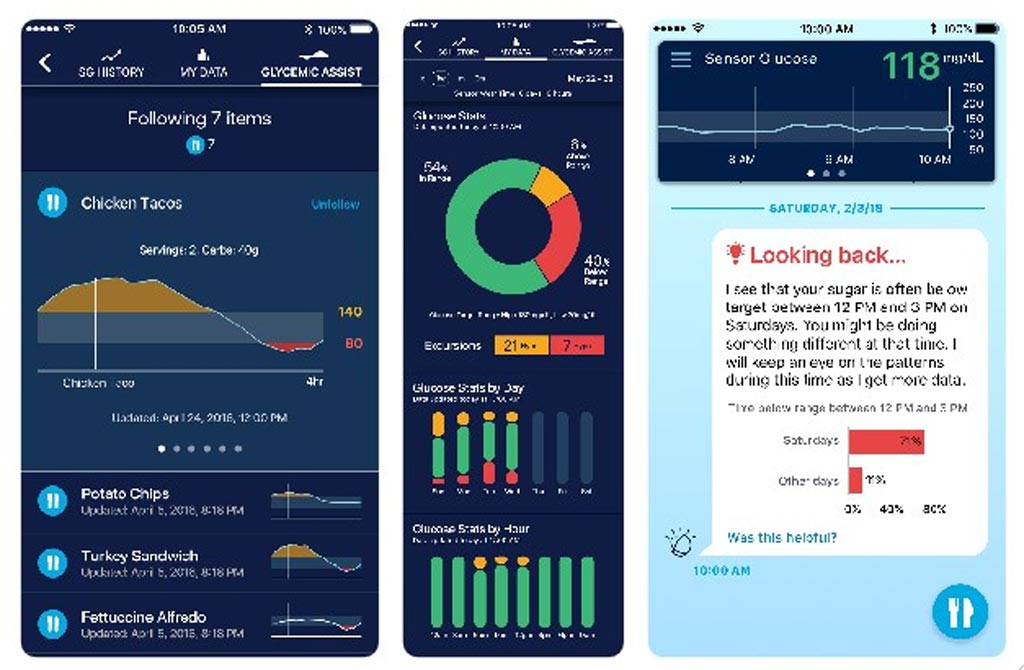
Image: Watson Health helps diabetics keep in a healthy blood glucose range (Photo courtesy of IBM).
A new predictive tool analyzes blood glucose data to determine the likelihood of a hypoglyemic episode within the next several hours.
The Medtronic (Dublin, Ireland) Sugar.IQ app is a personal diabetes assistant with cognitive abilities that uses IBM (Armonk, NY, USA) Watson analytics capabilities to find patterns in diabetes data and offer real-time, personalized diabetes insights by continually analyzing how blood glucose levels respond to food intake, insulin dosages, daily routines, and other factors. Together with the Guardian Connect continuous glucose monitor (CGM), the Sugar.IQ app can turn trend patterns into personalized diabetes care.
Sugar.IQ is powered by the IBM Watson IQcast feature, which uses artificial intelligence (AI) predictive modelling to improve prognostic capabilities over time. A study presented at the last American Diabetes Association Scientific Sessions, which was held in July 2018 in Orlando (FL, USA), showed that Sugar.IQ users are more likely to achieve an extra 36 minutes per day in a healthy glucose range of 70-180 mg/dL, experiencing 30 minutes less time per day in hyperglycemia, and six minutes less daily in hypoglycemia.
“Avoiding complications like hypoglycemia is a tremendous burden, but fortunately it is a problem that can help be alleviated by learning from data, which is where AI comes in,” said Lisa Latts, MD, deputy chief health officer at IBM Watson Health. “Using machine learning models and predictive algorithms, IQcast analyzes multiple signals coming from a user, such as glucose levels, insulin data, food logs, and prior hypoglycemic events to assess whether a user has a low, medium, or high chance of experiencing hypoglycemia within the upcoming four hours.”





The Medtronic (Dublin, Ireland) Sugar.IQ app is a personal diabetes assistant with cognitive abilities that uses IBM (Armonk, NY, USA) Watson analytics capabilities to find patterns in diabetes data and offer real-time, personalized diabetes insights by continually analyzing how blood glucose levels respond to food intake, insulin dosages, daily routines, and other factors. Together with the Guardian Connect continuous glucose monitor (CGM), the Sugar.IQ app can turn trend patterns into personalized diabetes care.
Sugar.IQ is powered by the IBM Watson IQcast feature, which uses artificial intelligence (AI) predictive modelling to improve prognostic capabilities over time. A study presented at the last American Diabetes Association Scientific Sessions, which was held in July 2018 in Orlando (FL, USA), showed that Sugar.IQ users are more likely to achieve an extra 36 minutes per day in a healthy glucose range of 70-180 mg/dL, experiencing 30 minutes less time per day in hyperglycemia, and six minutes less daily in hypoglycemia.
“Avoiding complications like hypoglycemia is a tremendous burden, but fortunately it is a problem that can help be alleviated by learning from data, which is where AI comes in,” said Lisa Latts, MD, deputy chief health officer at IBM Watson Health. “Using machine learning models and predictive algorithms, IQcast analyzes multiple signals coming from a user, such as glucose levels, insulin data, food logs, and prior hypoglycemic events to assess whether a user has a low, medium, or high chance of experiencing hypoglycemia within the upcoming four hours.”

New
Gold Member
Neonatal Heel Incision Device
Tenderfoot
New
Desk Aneroid Sphyg
Diagnostix 750D+
New
Surgical System
Stealth AXiS
Channels
Artificial Intelligence
view channel
Machine Learning Approach Enhances Liver Cancer Risk Stratification
Hepatocellular carcinoma, the most common form of primary liver cancer, is often detected late despite targeted surveillance programs. Current screening guidelines emphasize patients with known cirrhosis,... Read more
New AI Approach Monitors Brain Health Using Passive Wearable Data
Brain health spans cognitive and emotional functions and can fluctuate even in adults without diagnosed disease. Detecting early changes remains difficult in routine care and burdens specialty services... Read more

Critical Care
view channel
Automated IV Labeling Solution Improves Infusion Safety and Efficiency
Medication administration in high-acuity settings is often complicated by multiple concurrent infusions, making accurate line identification essential. In a 10-hospital intensive care unit study, 60% of... Read more
First-Of-Its-Kind AI Tool Detects Pulmonary Hypertension from Standard ECGs
Pulmonary hypertension is a progressive, life‑threatening disease that is frequently missed early because symptoms such as dyspnea are nonspecific and diagnostic delays can exceed two years.... Read more
Surgical Techniques
view channel
Continuous Monitoring with Wearables Enhances Postoperative Patient Safety
Postoperative hypoxemia on general surgical wards is common and often missed by intermittent vital sign checks. Undetected low oxygen levels can delay recovery and raise the risk of complications that... Read more
New Approach Enables Customized Muscle Tissue Without Biomaterial Scaffolds
Volumetric muscle loss is a traumatic loss of skeletal muscle that often leads to permanent functional impairment and limited reconstructive options. Current experimental strategies struggle to deliver... Read more

Patient Care
view channel
Wearable Sleep Data Predict Adherence to Pulmonary Rehabilitation
Chronic obstructive pulmonary disease (COPD) is a long-term lung disorder that makes breathing difficult and often disturbs sleep, reducing energy for daily activities. Limited engagement in pulmonary... Read more
Revolutionary Automatic IV-Line Flushing Device to Enhance Infusion Care
More than 80% of in-hospital patients receive intravenous (IV) therapy. Every dose of IV medicine delivered in a small volume (<250 mL) infusion bag should be followed by subsequent flushing to ensure... Read more


Business
view channel
GE HealthCare Leads Major European Initiative to Advance Cardio-Oncology Care
Cardiovascular complications are increasingly recognized among people undergoing or recovering from cancer treatment, driven by pre‑existing disease and the cardiotoxic effects of chemotherapy, radiotherapy,... Read more

