






ECR 2019 Debuts Artificial Intelligence Exhibition
|
By HospiMedica International staff writers Posted on 20 Feb 2019 |


|
The Artificial Intelligence Exhibition (AIX) made its grand debut at the 2019 European Congress of Radiology (ECR) annual meeting held on Feb. 27-March 3 in Vienna, Austria, bringing AI to the heart of the technical exhibition. For ECR 2019, the European Society of Radiology (Vienna, Vienna) partnered with GE Healthcare, which had a booth devoted exclusively to AI that allowed visitors to experience the AI transformation through interactive tools.
Interactive exhibits, theatres, trainings and a plethora of scientific sessions were devoted to AI at this year's congress. The AIX provided the opportunity to explore how machine learning, deep learning and big data are reshaping medical imaging and find out what the future holds. At the AIX, visitors met the innovative SMEs at the forefront of the field, took sessions on the big issues at the AIX Theatre, and took advantage of the self-paced training provided by NVIDIA's Deep Learning Institute.
A highlight of this year's congress was the AIX Theatre, which was moderated by Dr. Hugh Harvey and Dr. Wim Van Hecke, and featured keynotes from Prof. Charles E Kahn and Dr. Liz O'Riordan, interactive panel discussions, and 8-minute pitches from more than 20 innovative companies. A record number of 44 scientific sessions (317 presentations) focused on AI at ECR 2019.
Additionally, the new ESR AI blog was also launched to bring educational and critical perspectives on AI to readers. The blog will help radiologists at various stages of their career and with different levels of expertise about AI and learn about the technologies being developed in this field.
Related Links:
European Society of Radiology






Interactive exhibits, theatres, trainings and a plethora of scientific sessions were devoted to AI at this year's congress. The AIX provided the opportunity to explore how machine learning, deep learning and big data are reshaping medical imaging and find out what the future holds. At the AIX, visitors met the innovative SMEs at the forefront of the field, took sessions on the big issues at the AIX Theatre, and took advantage of the self-paced training provided by NVIDIA's Deep Learning Institute.
A highlight of this year's congress was the AIX Theatre, which was moderated by Dr. Hugh Harvey and Dr. Wim Van Hecke, and featured keynotes from Prof. Charles E Kahn and Dr. Liz O'Riordan, interactive panel discussions, and 8-minute pitches from more than 20 innovative companies. A record number of 44 scientific sessions (317 presentations) focused on AI at ECR 2019.
Additionally, the new ESR AI blog was also launched to bring educational and critical perspectives on AI to readers. The blog will help radiologists at various stages of their career and with different levels of expertise about AI and learn about the technologies being developed in this field.
Related Links:
European Society of Radiology

Gold Member
SARS‑CoV‑2/Flu A/Flu B/RSV Sample-To-Answer Test
SARS‑CoV‑2/Flu A/Flu B/RSV Cartridge (CE-IVD)
New
Digital Radiography System (Ceiling Free)
Digix CF Series
New
POC Respiratory/Sore Throat Test
BIOFIRE SPOTFIRE (R/ST) Panel
Latest AI News
- Machine Learning Approach Enhances Liver Cancer Risk Stratification
- New AI Approach Monitors Brain Health Using Passive Wearable Data
- AI Tool Maps Early Risk Patterns in Bloodstream Infections
- AI Model Identifies Rare Endocrine Disorder from Hand Images
- AI Tool Promises to Reduce Length of Hospital Stays and Free Up Beds
- Machine Learning Model Cuts Canceled Liver Transplants By 60%
Channels
Artificial Intelligence
view channel
Machine Learning Approach Enhances Liver Cancer Risk Stratification
Hepatocellular carcinoma, the most common form of primary liver cancer, is often detected late despite targeted surveillance programs. Current screening guidelines emphasize patients with known cirrhosis,... Read more
New AI Approach Monitors Brain Health Using Passive Wearable Data
Brain health spans cognitive and emotional functions and can fluctuate even in adults without diagnosed disease. Detecting early changes remains difficult in routine care and burdens specialty services... Read more

Critical Care
view channel
Automated IV Labeling Solution Improves Infusion Safety and Efficiency
Medication administration in high-acuity settings is often complicated by multiple concurrent infusions, making accurate line identification essential. In a 10-hospital intensive care unit study, 60% of... Read more
First-Of-Its-Kind AI Tool Detects Pulmonary Hypertension from Standard ECGs
Pulmonary hypertension is a progressive, life‑threatening disease that is frequently missed early because symptoms such as dyspnea are nonspecific and diagnostic delays can exceed two years.... Read more
Surgical Techniques
view channel
Continuous Monitoring with Wearables Enhances Postoperative Patient Safety
Postoperative hypoxemia on general surgical wards is common and often missed by intermittent vital sign checks. Undetected low oxygen levels can delay recovery and raise the risk of complications that... Read more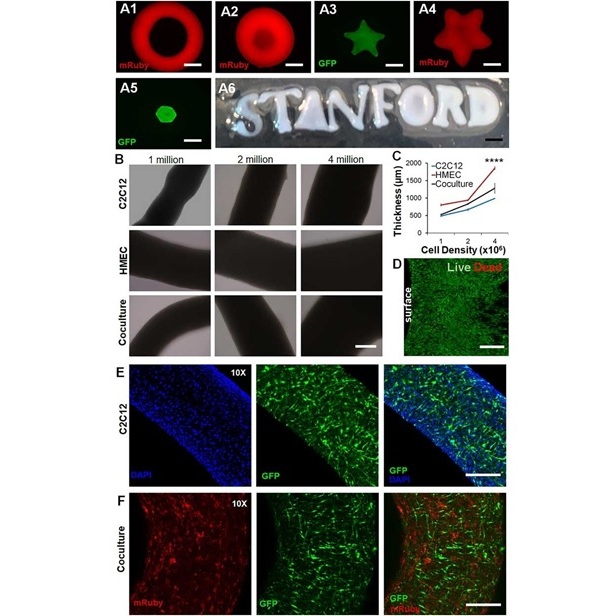
New Approach Enables Customized Muscle Tissue Without Biomaterial Scaffolds
Volumetric muscle loss is a traumatic loss of skeletal muscle that often leads to permanent functional impairment and limited reconstructive options. Current experimental strategies struggle to deliver... Read more
Patient Care
view channel
Wearable Sleep Data Predict Adherence to Pulmonary Rehabilitation
Chronic obstructive pulmonary disease (COPD) is a long-term lung disorder that makes breathing difficult and often disturbs sleep, reducing energy for daily activities. Limited engagement in pulmonary... Read more
Revolutionary Automatic IV-Line Flushing Device to Enhance Infusion Care
More than 80% of in-hospital patients receive intravenous (IV) therapy. Every dose of IV medicine delivered in a small volume (<250 mL) infusion bag should be followed by subsequent flushing to ensure... Read more

Health IT
view channel
EMR-Based Tool Predicts Graft Failure After Kidney Transplant
Kidney transplantation offers patients with end-stage kidney disease longer survival and better quality of life than dialysis, yet graft failure remains a major challenge. Although a successful transplant... Read more
Printable Molecule-Selective Nanoparticles Enable Mass Production of Wearable Biosensors
The future of medicine is likely to focus on the personalization of healthcare—understanding exactly what an individual requires and delivering the appropriate combination of nutrients, metabolites, and... Read more


Business
view channel
GE HealthCare Leads Major European Initiative to Advance Cardio-Oncology Care
Cardiovascular complications are increasingly recognized among people undergoing or recovering from cancer treatment, driven by pre‑existing disease and the cardiotoxic effects of chemotherapy, radiotherapy,... Read more

