






Google Translate Offers Accurate Medical Explanations
|
By HospiMedica International staff writers Posted on 14 Mar 2019 |


|
A new study concludes that using Google Translate (GT) to communicate emergency department (ED) discharge instructions to patients with limited English proficiency is adequate.
Researchers at the University of California, San Francisco (UCSF; USA) and the University of Michigan (U-M; Ann Arbor, USA) conducted a study to assess the proficiency of GT’s new machine learning algorithm, which was rolled out in 2017, for Spanish and Chinese translations of ED discharge instructions. After analyzing 100 sets of translated ED instructions, they concluded that GT was 92% accurate for Spanish and 81% accurate for Chinese.
Only a small minority of the inaccurate translations, 2% in Spanish and 8% in Chinese, had the potential to cause clinically significant harm. These errors were mostly due to grammar or typographical errors in the original written English instructions, which an English speaker would have been able to understand correctly. For example, a colloquial term, such as “hold the kidney medicine” is translated into Spanish as “keep the medication”, and into Chinese as “keep taking” the medication, mistakes that could be life threatening.
Machine translation errors were also linked to medical jargon, and long, complicated sentences, such as, "Please return to the emergency department for worsening abdominal pain, inability to eat or drink due to vomiting, bloody diarrhea, if you pass out or any other concerning symptom”. The Chinese version of the sentence was, "If you pass, vomiting, bloody diarrhea, unable to eat or drink or any other symptoms; come back to the emergency department for treatment”. The study was published on February 25, 2019, in JAMA Internal Medicine.
“Google Translate is more accurate than a lot of clinicians believe, and I think it's definitely more useful than not providing anything at all. We cautiously support its use,” said lead author Elaine Khoong, MD, MS, of UCSF. “It is best used in combination with human interpreters, even if they are not in the room, who can interpret the physician's verbal instructions for the patient, over the phone or via video, while the physician shows the patient the written translation on the computer screen or printout.”
Google Translate is a free multilingual machine translation service developed by Google to translate text in over 100 languages at various levels, serving over 500 million people daily. It offers a website interface, mobile apps for Android and iOS, and an API that helps developers build browser extensions and software applications. In 2016, Google announced that GT would switch to a neural machine translation engine, which translates whole sentences at a time, rather than word by word.
Related Links:
University of California, San Francisco
University of Michigan




Researchers at the University of California, San Francisco (UCSF; USA) and the University of Michigan (U-M; Ann Arbor, USA) conducted a study to assess the proficiency of GT’s new machine learning algorithm, which was rolled out in 2017, for Spanish and Chinese translations of ED discharge instructions. After analyzing 100 sets of translated ED instructions, they concluded that GT was 92% accurate for Spanish and 81% accurate for Chinese.
Only a small minority of the inaccurate translations, 2% in Spanish and 8% in Chinese, had the potential to cause clinically significant harm. These errors were mostly due to grammar or typographical errors in the original written English instructions, which an English speaker would have been able to understand correctly. For example, a colloquial term, such as “hold the kidney medicine” is translated into Spanish as “keep the medication”, and into Chinese as “keep taking” the medication, mistakes that could be life threatening.
Machine translation errors were also linked to medical jargon, and long, complicated sentences, such as, "Please return to the emergency department for worsening abdominal pain, inability to eat or drink due to vomiting, bloody diarrhea, if you pass out or any other concerning symptom”. The Chinese version of the sentence was, "If you pass, vomiting, bloody diarrhea, unable to eat or drink or any other symptoms; come back to the emergency department for treatment”. The study was published on February 25, 2019, in JAMA Internal Medicine.
“Google Translate is more accurate than a lot of clinicians believe, and I think it's definitely more useful than not providing anything at all. We cautiously support its use,” said lead author Elaine Khoong, MD, MS, of UCSF. “It is best used in combination with human interpreters, even if they are not in the room, who can interpret the physician's verbal instructions for the patient, over the phone or via video, while the physician shows the patient the written translation on the computer screen or printout.”
Google Translate is a free multilingual machine translation service developed by Google to translate text in over 100 languages at various levels, serving over 500 million people daily. It offers a website interface, mobile apps for Android and iOS, and an API that helps developers build browser extensions and software applications. In 2016, Google announced that GT would switch to a neural machine translation engine, which translates whole sentences at a time, rather than word by word.
Related Links:
University of California, San Francisco
University of Michigan

Gold Member
STI Test
Vivalytic Sexually Transmitted Infection (STI) Array
New
Syringe Pump
SP50 Series
New
Radiofrequency Generator
GX1
Channels
Artificial Intelligence
view channel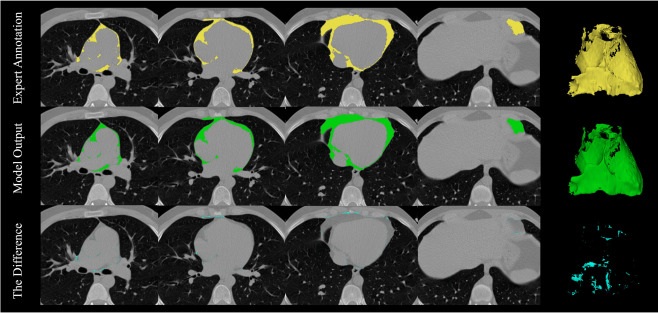
AI Analysis of Pericardial Fat Refines Long-Term Heart Disease Risk
Accurately identifying long-term cardiovascular disease risk in asymptomatic adults remains challenging for clinicians. Missed or underestimated risk delays preventive therapy and increases the chance... Read more
Machine Learning Approach Enhances Liver Cancer Risk Stratification
Hepatocellular carcinoma, the most common form of primary liver cancer, is often detected late despite targeted surveillance programs. Current screening guidelines emphasize patients with known cirrhosis,... Read more

Critical Care
view channel
Noninvasive Monitoring Device Enables Earlier Intervention in Heart Failure
Hospitalizations for heart failure with preserved ejection fraction (HFpEF) remain common because lung congestion often worsens before symptoms prompt treatment changes. Missed early decompensation... Read more
Automated IV Labeling Solution Improves Infusion Safety and Efficiency
Medication administration in high-acuity settings is often complicated by multiple concurrent infusions, making accurate line identification essential. In a 10-hospital intensive care unit study, 60% of... Read more
Surgical Techniques
view channel
Ultrasound Technology Aims to Replace Invasive BPH Procedures
Benign prostatic hyperplasia (BPH) is a frequent cause of lower urinary tract symptoms in aging men and often requires invasive procedures or prolonged recovery. With prevalence expected to rise as populations... Read more
Continuous Monitoring with Wearables Enhances Postoperative Patient Safety
Postoperative hypoxemia on general surgical wards is common and often missed by intermittent vital sign checks. Undetected low oxygen levels can delay recovery and raise the risk of complications that... Read more
Patient Care
view channel
Wearable Sleep Data Predict Adherence to Pulmonary Rehabilitation
Chronic obstructive pulmonary disease (COPD) is a long-term lung disorder that makes breathing difficult and often disturbs sleep, reducing energy for daily activities. Limited engagement in pulmonary... Read more
Revolutionary Automatic IV-Line Flushing Device to Enhance Infusion Care
More than 80% of in-hospital patients receive intravenous (IV) therapy. Every dose of IV medicine delivered in a small volume (<250 mL) infusion bag should be followed by subsequent flushing to ensure... Read more


Business
view channel
GE HealthCare Leads Major European Initiative to Advance Cardio-Oncology Care
Cardiovascular complications are increasingly recognized among people undergoing or recovering from cancer treatment, driven by pre‑existing disease and the cardiotoxic effects of chemotherapy, radiotherapy,... Read more

