






Biometric Toilet Seat Detects Congestive Heart Failure
|
By HospiMedica International staff writers Posted on 01 Apr 2019 |


|
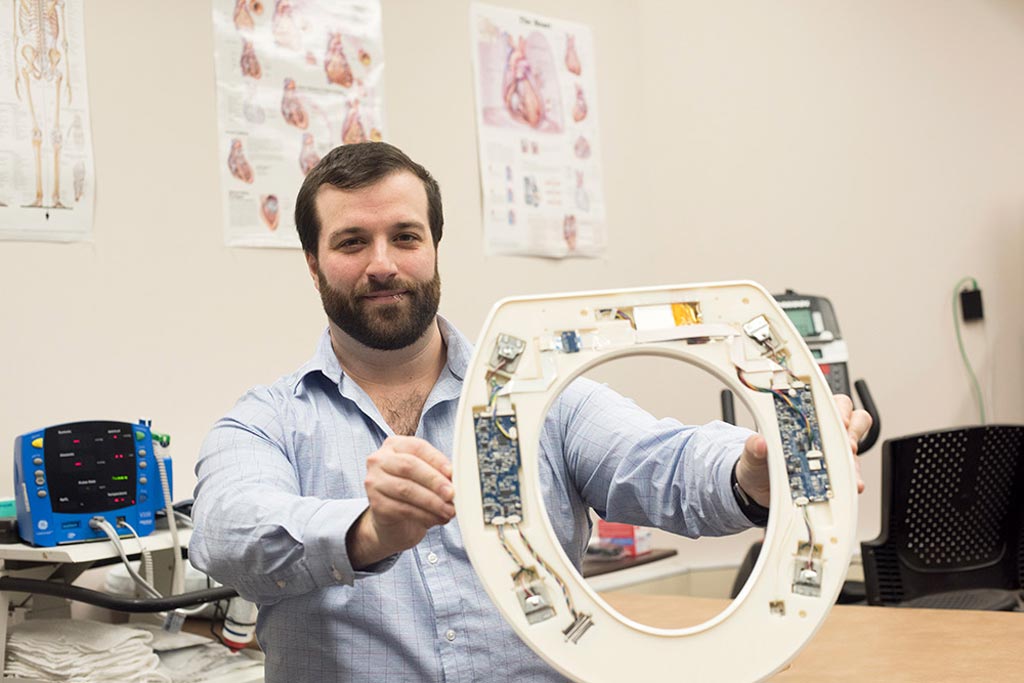
Image: Nicholas Conn presenting the toilet-seat based cardiovascular monitoring system (Photo courtesy of Sue Weisler/ RIT).
A toilet-seat based cardiovascular monitoring system can help lower hospital readmission rates for patients with congestive heart failure (CHF).
A product of Heart Health Intelligence (HHI; Rochester, NY, USA), the system integrates an electrocardiogram (ECG), ballistocardiogram (BCG), and photoplethysmogram (PPG) into a toilet seat capable of clinical-grade measurements of patient weight, pulse rate, systolic and diastolic blood pressure, stroke volume, and peripheral blood oxygenation. Software algorithms then analyze the data, alerting medical providers of a deteriorating condition. A report is also passed to hospital cardiologists, who can then determine if intervention is necessary.
The system installs directly on a standard toilet, is battery powered, wireless, waterproof, and requires no additional connections or user interaction, unobtrusively capturing cardiovascular data automatically whenever the user sits on the toilet. The seat incorporates a single-lead ECG for measuring the electrical activity of the heart and as a reference for ensemble averaging, a BCG for measuring the mechanical forces associated with the cardiac cycle, and a PPG for measuring SpO2 and pulse transit time (PTT). A floating hinge ensures that the weight on the seat is completely captured by the load cells, rather than having a portion of it carried by the hinge.
In a study that compared the toilet seat–based estimates of blood pressure and peripheral blood oxygenation to a hospital-grade vital signs monitor in 18 subjects over an eight-week period, clinical grade accuracy was achieved for all of measurements. Accuracy of diastolic and systolic blood pressure was 1.2 mm and –2.7 mm Hg, respectively. Stroke volume had an accuracy of –2.5 mL, compared to the gold standard, an echocardiogram (ECG). Peripheral blood oxygenation had an error of 2.3%. The study was published in the January 2019 issue of JMIR mHealth and uHealth.
“Typically, within 30 days of hospital discharge, 25% of patients with CHF are readmitted; after 90 days of hospital discharge, 45% of patients are readmitted,” said Nicholas Conn, PhD, founder and CEO of HHI and a researcher at the Rochester Institute of Technology (RIT; NY, USA). “The penalty alone for readmitting 150 patients is approximately USD 500,000 annually. The total cost of providing 150 patients with their own monitored toilet seats from HHI is USD 200,000. Hospital systems will save more than double their initial investment within one year.”
The U.S. Hospital Readmission Reduction Program (HRRP) was introduced by Medicare in order to improve patient care by penalizing hospitals with poor outcomes. One key outcome measure is the readmission rate; in 2013 Medicare levied fines of USD 227 million in fines against 2,225 hospitals that will have their payments reduced by up to 2% for a year. The penalties are based on readmissions of Medicare patients who originally went into the hospital with at least one of three conditions - heart attack, heart failure, and pneumonia.
Related Links:
Heart Health Intelligence
Rochester Institute of Technology




A product of Heart Health Intelligence (HHI; Rochester, NY, USA), the system integrates an electrocardiogram (ECG), ballistocardiogram (BCG), and photoplethysmogram (PPG) into a toilet seat capable of clinical-grade measurements of patient weight, pulse rate, systolic and diastolic blood pressure, stroke volume, and peripheral blood oxygenation. Software algorithms then analyze the data, alerting medical providers of a deteriorating condition. A report is also passed to hospital cardiologists, who can then determine if intervention is necessary.
The system installs directly on a standard toilet, is battery powered, wireless, waterproof, and requires no additional connections or user interaction, unobtrusively capturing cardiovascular data automatically whenever the user sits on the toilet. The seat incorporates a single-lead ECG for measuring the electrical activity of the heart and as a reference for ensemble averaging, a BCG for measuring the mechanical forces associated with the cardiac cycle, and a PPG for measuring SpO2 and pulse transit time (PTT). A floating hinge ensures that the weight on the seat is completely captured by the load cells, rather than having a portion of it carried by the hinge.
In a study that compared the toilet seat–based estimates of blood pressure and peripheral blood oxygenation to a hospital-grade vital signs monitor in 18 subjects over an eight-week period, clinical grade accuracy was achieved for all of measurements. Accuracy of diastolic and systolic blood pressure was 1.2 mm and –2.7 mm Hg, respectively. Stroke volume had an accuracy of –2.5 mL, compared to the gold standard, an echocardiogram (ECG). Peripheral blood oxygenation had an error of 2.3%. The study was published in the January 2019 issue of JMIR mHealth and uHealth.
“Typically, within 30 days of hospital discharge, 25% of patients with CHF are readmitted; after 90 days of hospital discharge, 45% of patients are readmitted,” said Nicholas Conn, PhD, founder and CEO of HHI and a researcher at the Rochester Institute of Technology (RIT; NY, USA). “The penalty alone for readmitting 150 patients is approximately USD 500,000 annually. The total cost of providing 150 patients with their own monitored toilet seats from HHI is USD 200,000. Hospital systems will save more than double their initial investment within one year.”
The U.S. Hospital Readmission Reduction Program (HRRP) was introduced by Medicare in order to improve patient care by penalizing hospitals with poor outcomes. One key outcome measure is the readmission rate; in 2013 Medicare levied fines of USD 227 million in fines against 2,225 hospitals that will have their payments reduced by up to 2% for a year. The penalties are based on readmissions of Medicare patients who originally went into the hospital with at least one of three conditions - heart attack, heart failure, and pneumonia.
Related Links:
Heart Health Intelligence
Rochester Institute of Technology

Gold Member
12-Channel ECG
CM1200B
New
Patient Monitoring System
AlarmSense
New
Surgical System
Stealth AXiS
Latest Health IT News
- Voice-Driven AI System Enables Structured GI Procedure Documentation
- EMR-Based Tool Predicts Graft Failure After Kidney Transplant
- Printable Molecule-Selective Nanoparticles Enable Mass Production of Wearable Biosensors
- Smartwatches Could Detect Congestive Heart Failure
- Versatile Smart Patch Combines Health Monitoring and Drug Delivery
Channels
Artificial Intelligence
view channel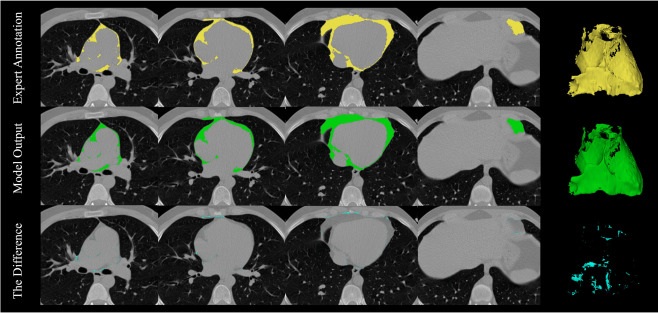
AI Analysis of Pericardial Fat Refines Long-Term Heart Disease Risk
Accurately identifying long-term cardiovascular disease risk in asymptomatic adults remains challenging for clinicians. Missed or underestimated risk delays preventive therapy and increases the chance... Read more
Machine Learning Approach Enhances Liver Cancer Risk Stratification
Hepatocellular carcinoma, the most common form of primary liver cancer, is often detected late despite targeted surveillance programs. Current screening guidelines emphasize patients with known cirrhosis,... Read more

Critical Care
view channel
Eye Imaging AI Identifies Elevated Cardiovascular Risk
Many adults at risk for atherosclerotic cardiovascular disease are not identified until they undergo formal primary care assessment. Delayed risk recognition can postpone initiation of statins and lifestyle... Read more
Noninvasive Monitoring Device Enables Earlier Intervention in Heart Failure
Hospitalizations for heart failure with preserved ejection fraction (HFpEF) remain common because lung congestion often worsens before symptoms prompt treatment changes. Missed early decompensation... Read more
Surgical Techniques
view channel
Fiber-Form Bone Graft Expands Intraoperative Options for Spinal Fusion
Spinal and orthopedic fusion procedures often require bone graft materials that handle predictably and support bone formation. Surgeons face added complexity in difficult anatomy and challenging fusion environments.... Read more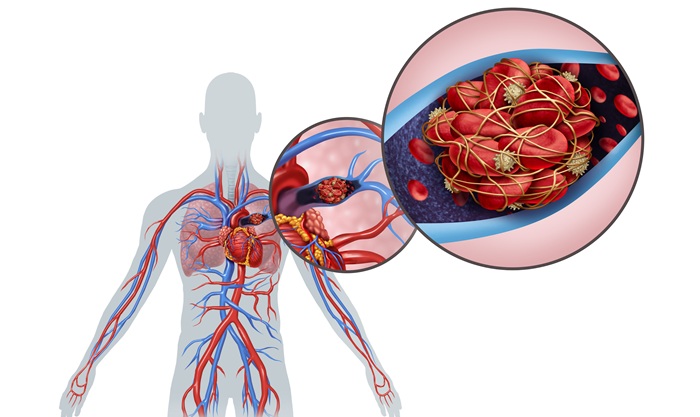
Ultrasound‑Aided Catheter Treatment Cuts Early Collapse in Pulmonary Embolism
Acute pulmonary embolism can cause rapid hemodynamic deterioration and early death in hospitalized and emergency patients. Systemic thrombolysis can dissolve clots but is limited by a high risk of major... Read more

Patient Care
view channel
Wearable Sleep Data Predict Adherence to Pulmonary Rehabilitation
Chronic obstructive pulmonary disease (COPD) is a long-term lung disorder that makes breathing difficult and often disturbs sleep, reducing energy for daily activities. Limited engagement in pulmonary... Read more
Revolutionary Automatic IV-Line Flushing Device to Enhance Infusion Care
More than 80% of in-hospital patients receive intravenous (IV) therapy. Every dose of IV medicine delivered in a small volume (<250 mL) infusion bag should be followed by subsequent flushing to ensure... Read more


Business
view channel
GE HealthCare Leads Major European Initiative to Advance Cardio-Oncology Care
Cardiovascular complications are increasingly recognized among people undergoing or recovering from cancer treatment, driven by pre‑existing disease and the cardiotoxic effects of chemotherapy, radiotherapy,... Read more

