






Cost Containment Pressure Driving Demand for Refurbished Medical Equipment
|
By HospiMedica International staff writers Posted on 03 May 2019 |


|
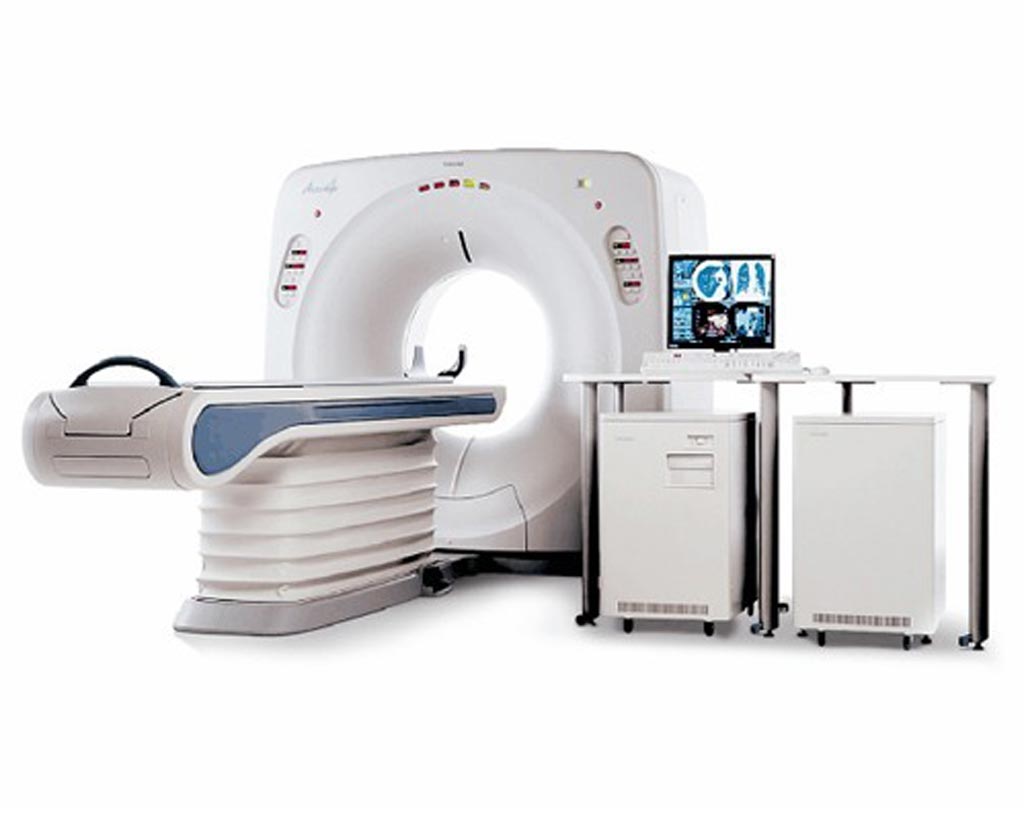
Image: A refurbished Toshiba Asteion 4-slice CT scanner (Photo courtesy of Amber Diagnostics).
The global refurbished medical devices market is expected to register a CAGR of 10.3% during the forecast period 2019-2024, driven mainly by cost containment pressure on healthcare organizations, large inventory of old or used medical devices, rising trend of medical tourism, and increasing rate of private healthcare institutions. These are the latest findings of Research and Markets, (Dublin, Ireland), a global market research company.
Globally, the demand for new equipment is being accompanied by an increasing demand for refurbished medical equipment. A growing number of new hospitals are choosing alternative options to reduce their capital investments. As a result of emerging technologies, the trend of ‘affordable buying’ is on the rise, leading to the emergence of the refurbished devices market. Refurbished equipment allows healthcare facilities, including small and medium ones, to buy the necessary devices at affordable prices without compromising on quality. Most end-users have been found to purchase used or refurbished equipment due to budgetary constraints. For instance, a customer interested in purchasing a 4-slice CT scanner can opt for a refurbished unit instead of a brand new system.
However, the general perception of refurbished devices is hampering market growth as reused or refurbished devices are often doubted for their durability and quality. There is always a perceived risk of the accuracy and quality of output associated with refurbished devices as some medical devices lose their capability to deliver quality output after being used for a certain period. Hence, hospitals often refrain from buying these types of equipment due to their fear of risking a patient's life and their reputation in the healthcare industry.
Moreover, governments impose strict punishments on hospitals if their use of refurbished devices is found to have harmed patients at any level. Additionally, the lack of awareness about the benefits of refurbished equipment is also restraining the growth of the global refurbished medical devices market. Nevertheless, most clinics and hospitals, which have purchased used or refurbished medical equipment, generally have a neutral-to-positive experience with their purchases.
North America dominates the global refurbished medical devices market due to the high incidence of various chronic diseases, such as cardiovascular disease and cancer in the region. Moreover, supportive regulatory policies for the sale and use of refurbished medical equipment are also expected to drive the growth of the North American refurbished medical devices market.
Related Links:
Research and Markets




Globally, the demand for new equipment is being accompanied by an increasing demand for refurbished medical equipment. A growing number of new hospitals are choosing alternative options to reduce their capital investments. As a result of emerging technologies, the trend of ‘affordable buying’ is on the rise, leading to the emergence of the refurbished devices market. Refurbished equipment allows healthcare facilities, including small and medium ones, to buy the necessary devices at affordable prices without compromising on quality. Most end-users have been found to purchase used or refurbished equipment due to budgetary constraints. For instance, a customer interested in purchasing a 4-slice CT scanner can opt for a refurbished unit instead of a brand new system.
However, the general perception of refurbished devices is hampering market growth as reused or refurbished devices are often doubted for their durability and quality. There is always a perceived risk of the accuracy and quality of output associated with refurbished devices as some medical devices lose their capability to deliver quality output after being used for a certain period. Hence, hospitals often refrain from buying these types of equipment due to their fear of risking a patient's life and their reputation in the healthcare industry.
Moreover, governments impose strict punishments on hospitals if their use of refurbished devices is found to have harmed patients at any level. Additionally, the lack of awareness about the benefits of refurbished equipment is also restraining the growth of the global refurbished medical devices market. Nevertheless, most clinics and hospitals, which have purchased used or refurbished medical equipment, generally have a neutral-to-positive experience with their purchases.
North America dominates the global refurbished medical devices market due to the high incidence of various chronic diseases, such as cardiovascular disease and cancer in the region. Moreover, supportive regulatory policies for the sale and use of refurbished medical equipment are also expected to drive the growth of the North American refurbished medical devices market.
Related Links:
Research and Markets

New
Gold Member
Neonatal Heel Incision Device
Tenderfoot
New
Immobilization System
Cranial 4Pi Immobilization
New
Desk Aneroid Sphyg
Diagnostix 750D+
Latest Business News
- GE HealthCare Leads Major European Initiative to Advance Cardio-Oncology Care
- Medtronic and GE HealthCare Broaden Alliance Across Monitoring and Care Solutions
- Quantum Surgical Acquires NeuWave from Johnson & Johnson
- Medtronic to Acquire Coronary Artery Medtech Company CathWorks
- Medtronic and Mindray Expand Strategic Partnership to Ambulatory Surgery Centers in the U.S.
- FDA Clearance Expands Robotic Options for Minimally Invasive Heart Surgery
- WHX in Dubai (formerly Arab Health) to debut specialised Biotech & Life Sciences Zone as sector growth accelerates globally
- WHX in Dubai (formerly Arab Health) to bring together key UAE government entities during the groundbreaking 2026 edition
- Interoperability Push Fuels Surge in Healthcare IT Market
- Philips and Masimo Partner to Advance Patient Monitoring Measurement Technologies
- B. Braun Acquires Digital Microsurgery Company True Digital Surgery
- CMEF 2025 to Promote Holistic and High-Quality Development of Medical and Health Industry
- Bayer and Broad Institute Extend Research Collaboration to Develop New Cardiovascular Therapies
- Medtronic Partners with Corsano to Expand Acute Care & Monitoring Portfolio in Europe
- Expanded Collaboration to Transform OR Technology Through AI and Automation
- Becton Dickinson to Spin Out Biosciences and Diagnostic Solutions Business
Channels
Artificial Intelligence
view channel
Machine Learning Approach Enhances Liver Cancer Risk Stratification
Hepatocellular carcinoma, the most common form of primary liver cancer, is often detected late despite targeted surveillance programs. Current screening guidelines emphasize patients with known cirrhosis,... Read more
New AI Approach Monitors Brain Health Using Passive Wearable Data
Brain health spans cognitive and emotional functions and can fluctuate even in adults without diagnosed disease. Detecting early changes remains difficult in routine care and burdens specialty services... Read more

Critical Care
view channel
Automated IV Labeling Solution Improves Infusion Safety and Efficiency
Medication administration in high-acuity settings is often complicated by multiple concurrent infusions, making accurate line identification essential. In a 10-hospital intensive care unit study, 60% of... Read more
First-Of-Its-Kind AI Tool Detects Pulmonary Hypertension from Standard ECGs
Pulmonary hypertension is a progressive, life‑threatening disease that is frequently missed early because symptoms such as dyspnea are nonspecific and diagnostic delays can exceed two years.... Read more
Surgical Techniques
view channel
Continuous Monitoring with Wearables Enhances Postoperative Patient Safety
Postoperative hypoxemia on general surgical wards is common and often missed by intermittent vital sign checks. Undetected low oxygen levels can delay recovery and raise the risk of complications that... Read more
New Approach Enables Customized Muscle Tissue Without Biomaterial Scaffolds
Volumetric muscle loss is a traumatic loss of skeletal muscle that often leads to permanent functional impairment and limited reconstructive options. Current experimental strategies struggle to deliver... Read more
Patient Care
view channel
Wearable Sleep Data Predict Adherence to Pulmonary Rehabilitation
Chronic obstructive pulmonary disease (COPD) is a long-term lung disorder that makes breathing difficult and often disturbs sleep, reducing energy for daily activities. Limited engagement in pulmonary... Read more
Revolutionary Automatic IV-Line Flushing Device to Enhance Infusion Care
More than 80% of in-hospital patients receive intravenous (IV) therapy. Every dose of IV medicine delivered in a small volume (<250 mL) infusion bag should be followed by subsequent flushing to ensure... Read more

Health IT
view channel
EMR-Based Tool Predicts Graft Failure After Kidney Transplant
Kidney transplantation offers patients with end-stage kidney disease longer survival and better quality of life than dialysis, yet graft failure remains a major challenge. Although a successful transplant... Read more


