






Vestibular Event Monitor Provides Accurate Vertigo Diagnosis
|
By HospiMedica International staff writers Posted on 17 Jun 2019 |


|
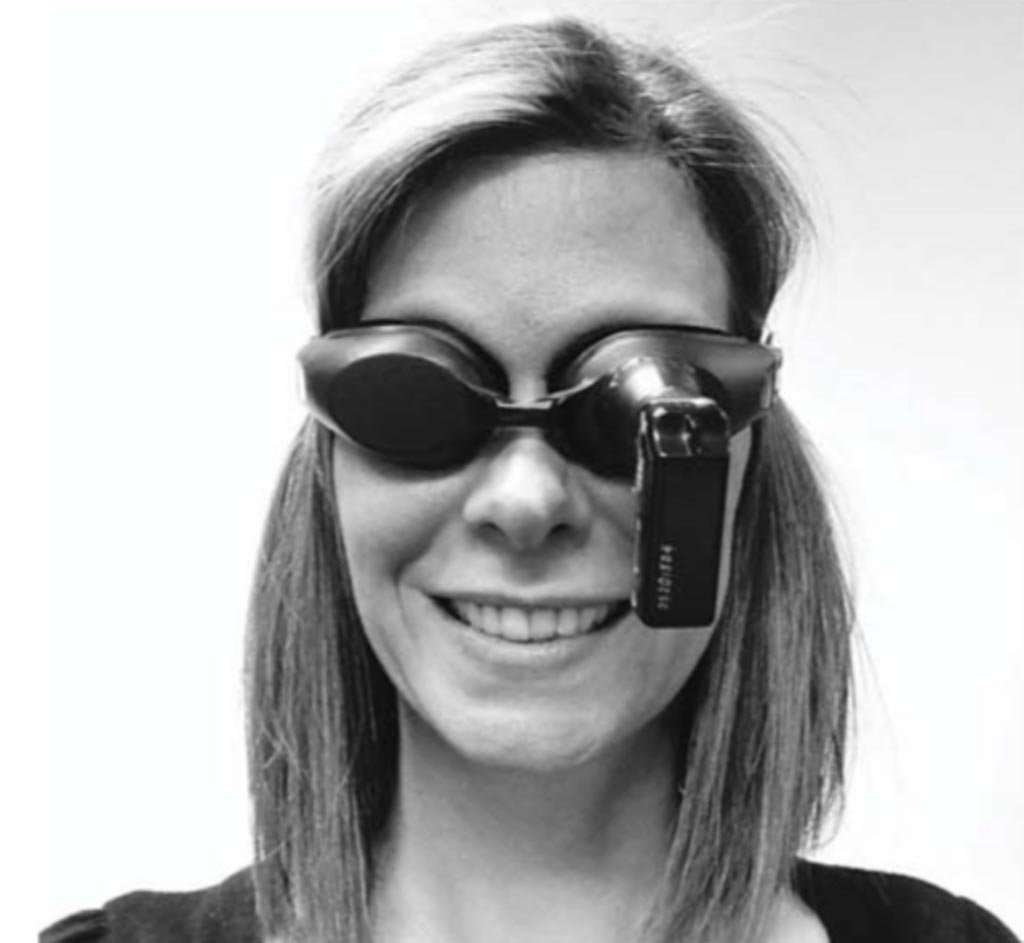
The “dizzy cam” goggles developed by Dr. Welgampola (Photo courtesy of Neurology).
Royal Prince Alfred Hospitals that record spontaneous and positional nystagmus eye movements may rapidly and accurately diagnose vertigo, claims a new study.
Researchers at the University of Sydney (US; Australia) and Royal Prince Alfred Hospital (RPA; Sydney, Australia) conducted a study to test a new system that could facilitate the diagnosis of vestibular disorders by capture of uncontrolled eye movements (known as ictal nystagmus). To do so, they developed miniature video-oculography goggles, consisting of lightweight swimming goggles inlaid with two infrared (IR) lights in the left ocular and attached to an audio/video recorder, thus enabling vision-denied recording of the uncontrolled left ictal nystagmus that accompany vertigo.
The study included 117 consenting patients with ictal video recordings and a final unblinded clinical diagnosis of Ménière disease (MD), vestibular migraine (VM), or benign paroxysmal positional vertigo (BPPV). The patients were taught to self-record spontaneous and positional nystagmus at home during spontaneous and positional vertigo. The video recordings included four positional components - sitting upright for 10 seconds; lying in supine position for 30 seconds; lying on the right side for 30 seconds; and lying on the left side for 30 seconds. Patients were also instructed to verbally report head orientation while recording.
The results showed the diagnostic accuracy of the goggles was highly effective in separating BPPV patients from those with other forms of positional vertigo, with a sensitivity of 100% and a specificity of 78%. It also showed diagnostic accuracy in patients with MD, characterized by high-velocity spontaneous horizontal nystagmus (95% sensitivity, 82% specificity) and in VM (93% sensitivity, 24% sensitivity). This spontaneous nystagmus was absent or minimal in all seven patients with BPPV. The study was published on May 15, 2019, in Neurology.
“Recurrent vertigo has ictal characteristics that assist with identification of the underlying inner ear balance disorder, and in the future we will be able to profile these disorders and separate them by their ictal nystagmus patterns,” said senior author Miriam Welgampola, PhD, of US and RPA. “Providing people with a pair of goggles that they can easily use at home to record eye movement has the potential to help with vertigo diagnosis, not only by a neurologist in clinic but also by physicians in an emergency room and physicians diagnosing patients remotely as well.”
The vestibular system includes the parts of the inner ear and brain that process the sensory information involved with controlling balance and eye movements. Commonly diagnosed vestibular disorders include BPPV, MN, labyrinthitis and vestibular neuritis, perilymph fistula, and secondary endolymphatic hydrops. Other problems related to vestibular dysfunction include vestibular migraine and complications from autoimmune disorders and allergies.
Related Links:
University of Sydney
Royal Prince Alfred Hospital




Researchers at the University of Sydney (US; Australia) and Royal Prince Alfred Hospital (RPA; Sydney, Australia) conducted a study to test a new system that could facilitate the diagnosis of vestibular disorders by capture of uncontrolled eye movements (known as ictal nystagmus). To do so, they developed miniature video-oculography goggles, consisting of lightweight swimming goggles inlaid with two infrared (IR) lights in the left ocular and attached to an audio/video recorder, thus enabling vision-denied recording of the uncontrolled left ictal nystagmus that accompany vertigo.
The study included 117 consenting patients with ictal video recordings and a final unblinded clinical diagnosis of Ménière disease (MD), vestibular migraine (VM), or benign paroxysmal positional vertigo (BPPV). The patients were taught to self-record spontaneous and positional nystagmus at home during spontaneous and positional vertigo. The video recordings included four positional components - sitting upright for 10 seconds; lying in supine position for 30 seconds; lying on the right side for 30 seconds; and lying on the left side for 30 seconds. Patients were also instructed to verbally report head orientation while recording.
The results showed the diagnostic accuracy of the goggles was highly effective in separating BPPV patients from those with other forms of positional vertigo, with a sensitivity of 100% and a specificity of 78%. It also showed diagnostic accuracy in patients with MD, characterized by high-velocity spontaneous horizontal nystagmus (95% sensitivity, 82% specificity) and in VM (93% sensitivity, 24% sensitivity). This spontaneous nystagmus was absent or minimal in all seven patients with BPPV. The study was published on May 15, 2019, in Neurology.
“Recurrent vertigo has ictal characteristics that assist with identification of the underlying inner ear balance disorder, and in the future we will be able to profile these disorders and separate them by their ictal nystagmus patterns,” said senior author Miriam Welgampola, PhD, of US and RPA. “Providing people with a pair of goggles that they can easily use at home to record eye movement has the potential to help with vertigo diagnosis, not only by a neurologist in clinic but also by physicians in an emergency room and physicians diagnosing patients remotely as well.”
The vestibular system includes the parts of the inner ear and brain that process the sensory information involved with controlling balance and eye movements. Commonly diagnosed vestibular disorders include BPPV, MN, labyrinthitis and vestibular neuritis, perilymph fistula, and secondary endolymphatic hydrops. Other problems related to vestibular dysfunction include vestibular migraine and complications from autoimmune disorders and allergies.
Related Links:
University of Sydney
Royal Prince Alfred Hospital

Gold Member
SARS‑CoV‑2/Flu A/Flu B/RSV Sample-To-Answer Test
SARS‑CoV‑2/Flu A/Flu B/RSV Cartridge (CE-IVD)
New
Medical-Grade Display
HL2316SHTB
New
Hypodermic Syringe
SurTract™ Safety Syringe
Channels
Artificial Intelligence
view channel
Machine Learning Approach Enhances Liver Cancer Risk Stratification
Hepatocellular carcinoma, the most common form of primary liver cancer, is often detected late despite targeted surveillance programs. Current screening guidelines emphasize patients with known cirrhosis,... Read more
New AI Approach Monitors Brain Health Using Passive Wearable Data
Brain health spans cognitive and emotional functions and can fluctuate even in adults without diagnosed disease. Detecting early changes remains difficult in routine care and burdens specialty services... Read more
Critical Care
view channel
Automated IV Labeling Solution Improves Infusion Safety and Efficiency
Medication administration in high-acuity settings is often complicated by multiple concurrent infusions, making accurate line identification essential. In a 10-hospital intensive care unit study, 60% of... Read more
First-Of-Its-Kind AI Tool Detects Pulmonary Hypertension from Standard ECGs
Pulmonary hypertension is a progressive, life‑threatening disease that is frequently missed early because symptoms such as dyspnea are nonspecific and diagnostic delays can exceed two years.... Read more
Surgical Techniques
view channel
Continuous Monitoring with Wearables Enhances Postoperative Patient Safety
Postoperative hypoxemia on general surgical wards is common and often missed by intermittent vital sign checks. Undetected low oxygen levels can delay recovery and raise the risk of complications that... Read more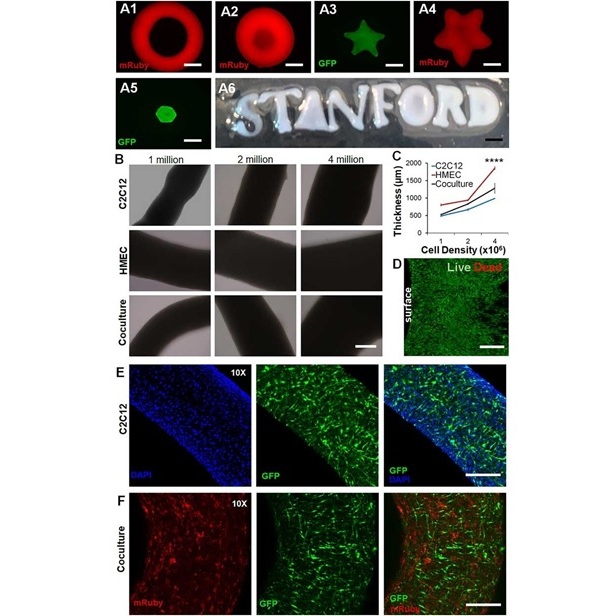
New Approach Enables Customized Muscle Tissue Without Biomaterial Scaffolds
Volumetric muscle loss is a traumatic loss of skeletal muscle that often leads to permanent functional impairment and limited reconstructive options. Current experimental strategies struggle to deliver... Read more
Patient Care
view channel
Wearable Sleep Data Predict Adherence to Pulmonary Rehabilitation
Chronic obstructive pulmonary disease (COPD) is a long-term lung disorder that makes breathing difficult and often disturbs sleep, reducing energy for daily activities. Limited engagement in pulmonary... Read more
Revolutionary Automatic IV-Line Flushing Device to Enhance Infusion Care
More than 80% of in-hospital patients receive intravenous (IV) therapy. Every dose of IV medicine delivered in a small volume (<250 mL) infusion bag should be followed by subsequent flushing to ensure... Read more


Business
view channel
GE HealthCare Leads Major European Initiative to Advance Cardio-Oncology Care
Cardiovascular complications are increasingly recognized among people undergoing or recovering from cancer treatment, driven by pre‑existing disease and the cardiotoxic effects of chemotherapy, radiotherapy,... Read more

