






AI Approach Lowers Radiation Exposure from CT Imaging
|
By HospiMedica International staff writers Posted on 06 Jul 2019 |


|
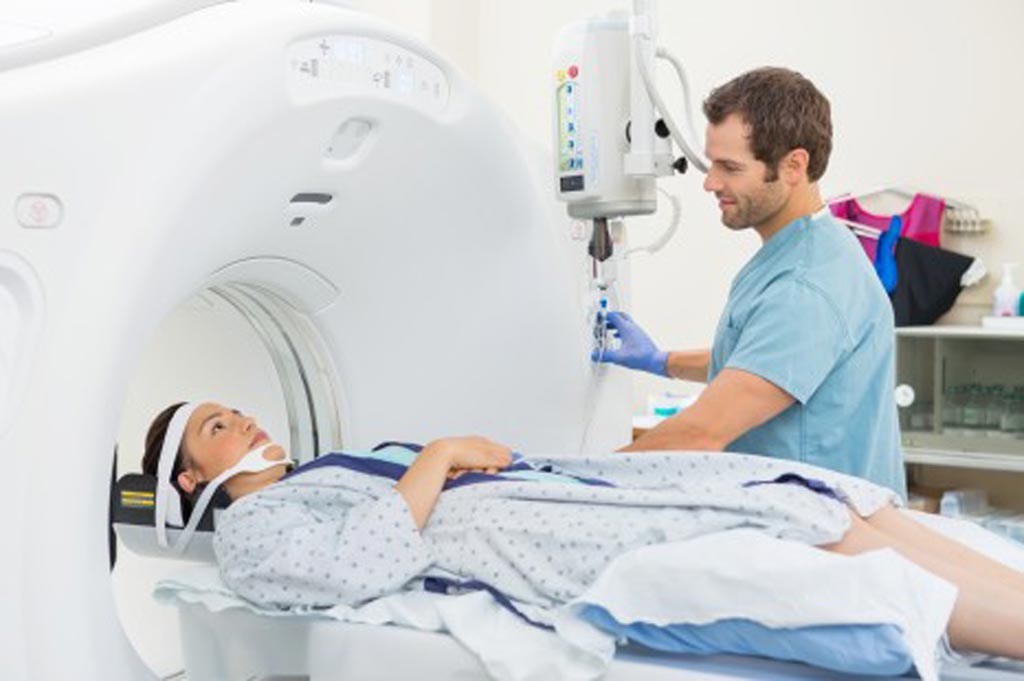
Image: Research shows machine learning has the potential to advance medical imaging, particularly CT scanning, by reducing radiation exposure and improving image quality (Photo courtesy of Axis Imaging News).
Engineers at the Rensselaer Polytechnic Institute (Troy, NY, USA) worked along with radiologists at Massachusetts General Hospital (Boston, MA, USA) and Harvard Medical School (Boston, MA, USA) to demonstrate that machine learning has the potential to vastly advance medical imaging, particularly computerized tomography (CT) scanning, by reducing radiation exposure and improving image quality. The team believes that their new research findings make a strong case for harnessing the power of artificial intelligence (AI) to improve low-dose CT scans.
Over the past several years, there has been significant focus on low-dose CT imaging techniques to alleviate concerns over patient exposure to X-ray radiation associated with widely used CT scans. However, reducing radiation can affect image quality. Engineers across the world have attempted to solve this problem by designing iterative reconstruction techniques to help sift through and remove interferences from CT images. However, the drawback is that these algorithms sometimes remove useful information or falsely alter the image.
In the latest research, the team attempted to address this persistent challenge by using a machine-learning framework. The developed a dedicated deep neural network and compared their best results to the best of what three major commercial CT scanners could produce with iterative reconstruction techniques. The researchers were looking to determine how the performance of their deep learning approach compared to the selected representative iterative algorithms currently being used clinically. They found that the deep learning algorithms developed by the Rensselaer team performed as well as, or better than, those current iterative techniques in an overwhelming majority of cases.
The researchers also found that their deep learning method was much quicker and allowed the radiologists to fine-tune the images according to clinical requirements. The positive results were realized without access to the original, or raw, data from all the CT scanners, and a more specialized deep learning algorithm is likely to perform even better if original CT data is made available, according to the researchers. They believe that these results confirm that deep learning could help produce safer, more accurate CT images while also running more rapidly than iterative algorithms.
“Radiation dose has been a significant issue for patients undergoing CT scans. Our machine learning technique is superior, or, at the very least, comparable, to the iterative techniques used in this study for enabling low-radiation dose CT,” said Ge Wang, the Clark & Crossan Endowed Chair Professor of biomedical engineering at Rensselaer, and a corresponding author on this paper. “It’s a high-level conclusion that carries a powerful message. It’s time for machine learning to rapidly take off and, hopefully, take over.”
Related Links:
Rensselaer Polytechnic Institute
Massachusetts General Hospital
Harvard Medical School




Over the past several years, there has been significant focus on low-dose CT imaging techniques to alleviate concerns over patient exposure to X-ray radiation associated with widely used CT scans. However, reducing radiation can affect image quality. Engineers across the world have attempted to solve this problem by designing iterative reconstruction techniques to help sift through and remove interferences from CT images. However, the drawback is that these algorithms sometimes remove useful information or falsely alter the image.
In the latest research, the team attempted to address this persistent challenge by using a machine-learning framework. The developed a dedicated deep neural network and compared their best results to the best of what three major commercial CT scanners could produce with iterative reconstruction techniques. The researchers were looking to determine how the performance of their deep learning approach compared to the selected representative iterative algorithms currently being used clinically. They found that the deep learning algorithms developed by the Rensselaer team performed as well as, or better than, those current iterative techniques in an overwhelming majority of cases.
The researchers also found that their deep learning method was much quicker and allowed the radiologists to fine-tune the images according to clinical requirements. The positive results were realized without access to the original, or raw, data from all the CT scanners, and a more specialized deep learning algorithm is likely to perform even better if original CT data is made available, according to the researchers. They believe that these results confirm that deep learning could help produce safer, more accurate CT images while also running more rapidly than iterative algorithms.
“Radiation dose has been a significant issue for patients undergoing CT scans. Our machine learning technique is superior, or, at the very least, comparable, to the iterative techniques used in this study for enabling low-radiation dose CT,” said Ge Wang, the Clark & Crossan Endowed Chair Professor of biomedical engineering at Rensselaer, and a corresponding author on this paper. “It’s a high-level conclusion that carries a powerful message. It’s time for machine learning to rapidly take off and, hopefully, take over.”
Related Links:
Rensselaer Polytechnic Institute
Massachusetts General Hospital
Harvard Medical School

Gold Member
SARS‑CoV‑2/Flu A/Flu B/RSV Sample-To-Answer Test
SARS‑CoV‑2/Flu A/Flu B/RSV Cartridge (CE-IVD)
New
Blood Pressure Monitor
Cuff Blood Pressure Monitor
New
Desk Aneroid Sphyg
Diagnostix 750D+
Latest AI News
- Machine Learning Approach Enhances Liver Cancer Risk Stratification
- New AI Approach Monitors Brain Health Using Passive Wearable Data
- AI Tool Maps Early Risk Patterns in Bloodstream Infections
- AI Model Identifies Rare Endocrine Disorder from Hand Images
- AI Tool Promises to Reduce Length of Hospital Stays and Free Up Beds
- Machine Learning Model Cuts Canceled Liver Transplants By 60%
Channels
Artificial Intelligence
view channel
Machine Learning Approach Enhances Liver Cancer Risk Stratification
Hepatocellular carcinoma, the most common form of primary liver cancer, is often detected late despite targeted surveillance programs. Current screening guidelines emphasize patients with known cirrhosis,... Read more
New AI Approach Monitors Brain Health Using Passive Wearable Data
Brain health spans cognitive and emotional functions and can fluctuate even in adults without diagnosed disease. Detecting early changes remains difficult in routine care and burdens specialty services... Read more

Critical Care
view channel
Automated IV Labeling Solution Improves Infusion Safety and Efficiency
Medication administration in high-acuity settings is often complicated by multiple concurrent infusions, making accurate line identification essential. In a 10-hospital intensive care unit study, 60% of... Read more
First-Of-Its-Kind AI Tool Detects Pulmonary Hypertension from Standard ECGs
Pulmonary hypertension is a progressive, life‑threatening disease that is frequently missed early because symptoms such as dyspnea are nonspecific and diagnostic delays can exceed two years.... Read more
Surgical Techniques
view channel
Continuous Monitoring with Wearables Enhances Postoperative Patient Safety
Postoperative hypoxemia on general surgical wards is common and often missed by intermittent vital sign checks. Undetected low oxygen levels can delay recovery and raise the risk of complications that... Read more
New Approach Enables Customized Muscle Tissue Without Biomaterial Scaffolds
Volumetric muscle loss is a traumatic loss of skeletal muscle that often leads to permanent functional impairment and limited reconstructive options. Current experimental strategies struggle to deliver... Read more
Patient Care
view channel
Wearable Sleep Data Predict Adherence to Pulmonary Rehabilitation
Chronic obstructive pulmonary disease (COPD) is a long-term lung disorder that makes breathing difficult and often disturbs sleep, reducing energy for daily activities. Limited engagement in pulmonary... Read more
Revolutionary Automatic IV-Line Flushing Device to Enhance Infusion Care
More than 80% of in-hospital patients receive intravenous (IV) therapy. Every dose of IV medicine delivered in a small volume (<250 mL) infusion bag should be followed by subsequent flushing to ensure... Read more

Health IT
view channel
EMR-Based Tool Predicts Graft Failure After Kidney Transplant
Kidney transplantation offers patients with end-stage kidney disease longer survival and better quality of life than dialysis, yet graft failure remains a major challenge. Although a successful transplant... Read more
Printable Molecule-Selective Nanoparticles Enable Mass Production of Wearable Biosensors
The future of medicine is likely to focus on the personalization of healthcare—understanding exactly what an individual requires and delivering the appropriate combination of nutrients, metabolites, and... Read more


Business
view channel
GE HealthCare Leads Major European Initiative to Advance Cardio-Oncology Care
Cardiovascular complications are increasingly recognized among people undergoing or recovering from cancer treatment, driven by pre‑existing disease and the cardiotoxic effects of chemotherapy, radiotherapy,... Read more

