






ACR Expands Pilot Program Focused on AI and Radiology
|
By HospiMedica International staff writers Posted on 06 Jul 2019 |


|

Image: The AI-LAB as a service provides a vendor-neutral framework to facilitate the development, modeling and validation of AI tools (Photo courtesy of ACR).
Radiology professionals from seven renowned health care institutions will use the ACR AI-LAB to demonstrate the process of creating investigational artificial intelligence (AI) models from image data without the use of a programming language. Using an AI model developed at one institution, each of the seven institutions will have the ability to evaluate and optimize the model for their own investigational use.
The American College of Radiology {(ACR), Reston, VA, USA} is making available the ACR AI-LAB as a service, which provides a vendor-neutral framework to facilitate the development, modeling and validation of AI tools. Based on the recently announced ACR AI-LAB reference architecture, this pilot represents a major milestone in the effort to allow institutions to develop high-quality algorithms that address local clinical needs, some of which may ultimately be made commercially available. In addition to the seven institutions, there are two major technology contributors; NVIDIA is providing software and edge infrastructure, and Nuance is providing last-mile integration to the participating radiologist.
The pilot – originally including Massachusetts General Hospital and The Ohio State University – now also includes Lahey Hospital and Medical Center, Emory University, The University of Washington, the University of California San Francisco and Brigham and Women’s Hospital. NVIDIA will provide its NVIDIA Clara AI software toolkits at no cost to the institutions to perform the annotation creation, transfer learning, and pipeline integration. In addition, Nuance will provide the last-mile technology required to integrate AI for the participating radiologist. Once the pilot is complete, the initiative is anticipated to progressively expand to all institutions interested in participating.
Sharing local AI models from image data between institutions for fine tuning — while patient information remains securely on site at the originating institution — has not previously been done successfully in radiology at this scale. This is due, in part, to the variability in how medical images are created, including the equipment, software, and protocols used. The pilot sites will use ACR AI-LAB to evaluate AI developed elsewhere, modifying the investigational algorithms to improve performance based on testing and evaluating them on local patient data. Creating the local AI models will not require ACR AI-LAB users to have programming skills. ACR AI-LAB allows users to adjust and change AI models without having to make line-by-line changes to the underlying code.
Once the pilot is complete, the consortium is anticipated to progressively expand to more institutions and vendors interested in participating. The investigational algorithms resulting from this project will undergo further evaluation and refinement by sites should they pursue commercialization, including obtaining appropriate regulatory clearance or approvals, as applicable.
“Today marks a major step in accelerating the development of AI for medical imaging. We know algorithms can underperform when deployed at sites where they weren’t trained. Now, radiologists in the pilot program will have access to AI algorithms developed outside their institutions in order evaluate a model’s performance using their own data and, as necessary, retrain the algorithm using their local data to enhance its performance,” said Bibb Allen Jr., MD, FACR, ACR Data Science Institute (ACR DSI) Chief Medical Officer.
“AI technology is entering the next phase where software writes software and less computer science expertise is required,” said Abdul Hamid Halabi, director of healthcare, at NVIDIA. “Radiologists have always been technology trailblazers. Working with the ACR AI-LAB to bring NVIDIA’s AI computing capability to the edge — where radiologists and their data reside — we are demonstrating that investigational AI tools can be made available to any imaging institution.”
Related Links:
American College of Radiology




The American College of Radiology {(ACR), Reston, VA, USA} is making available the ACR AI-LAB as a service, which provides a vendor-neutral framework to facilitate the development, modeling and validation of AI tools. Based on the recently announced ACR AI-LAB reference architecture, this pilot represents a major milestone in the effort to allow institutions to develop high-quality algorithms that address local clinical needs, some of which may ultimately be made commercially available. In addition to the seven institutions, there are two major technology contributors; NVIDIA is providing software and edge infrastructure, and Nuance is providing last-mile integration to the participating radiologist.
The pilot – originally including Massachusetts General Hospital and The Ohio State University – now also includes Lahey Hospital and Medical Center, Emory University, The University of Washington, the University of California San Francisco and Brigham and Women’s Hospital. NVIDIA will provide its NVIDIA Clara AI software toolkits at no cost to the institutions to perform the annotation creation, transfer learning, and pipeline integration. In addition, Nuance will provide the last-mile technology required to integrate AI for the participating radiologist. Once the pilot is complete, the initiative is anticipated to progressively expand to all institutions interested in participating.
Sharing local AI models from image data between institutions for fine tuning — while patient information remains securely on site at the originating institution — has not previously been done successfully in radiology at this scale. This is due, in part, to the variability in how medical images are created, including the equipment, software, and protocols used. The pilot sites will use ACR AI-LAB to evaluate AI developed elsewhere, modifying the investigational algorithms to improve performance based on testing and evaluating them on local patient data. Creating the local AI models will not require ACR AI-LAB users to have programming skills. ACR AI-LAB allows users to adjust and change AI models without having to make line-by-line changes to the underlying code.
Once the pilot is complete, the consortium is anticipated to progressively expand to more institutions and vendors interested in participating. The investigational algorithms resulting from this project will undergo further evaluation and refinement by sites should they pursue commercialization, including obtaining appropriate regulatory clearance or approvals, as applicable.
“Today marks a major step in accelerating the development of AI for medical imaging. We know algorithms can underperform when deployed at sites where they weren’t trained. Now, radiologists in the pilot program will have access to AI algorithms developed outside their institutions in order evaluate a model’s performance using their own data and, as necessary, retrain the algorithm using their local data to enhance its performance,” said Bibb Allen Jr., MD, FACR, ACR Data Science Institute (ACR DSI) Chief Medical Officer.
“AI technology is entering the next phase where software writes software and less computer science expertise is required,” said Abdul Hamid Halabi, director of healthcare, at NVIDIA. “Radiologists have always been technology trailblazers. Working with the ACR AI-LAB to bring NVIDIA’s AI computing capability to the edge — where radiologists and their data reside — we are demonstrating that investigational AI tools can be made available to any imaging institution.”
Related Links:
American College of Radiology

Gold Member
STI Test
Vivalytic Sexually Transmitted Infection (STI) Array
New
Blood Pressure Monitor
Cuff Blood Pressure Monitor
New
Syringe Pump
SP50 Series
Latest AI News
- AI Analysis of Pericardial Fat Refines Long-Term Heart Disease Risk
- Machine Learning Approach Enhances Liver Cancer Risk Stratification
- New AI Approach Monitors Brain Health Using Passive Wearable Data
- AI Tool Maps Early Risk Patterns in Bloodstream Infections
- AI Model Identifies Rare Endocrine Disorder from Hand Images
- AI Tool Promises to Reduce Length of Hospital Stays and Free Up Beds
Channels
Artificial Intelligence
view channel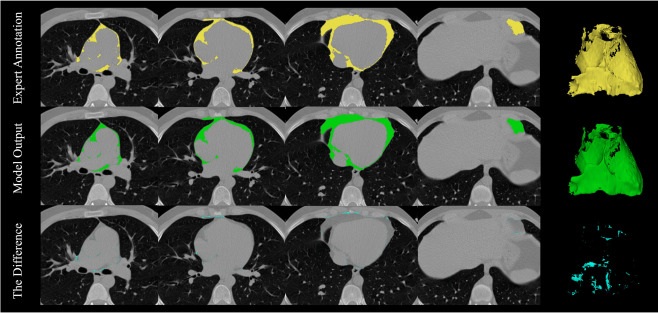
AI Analysis of Pericardial Fat Refines Long-Term Heart Disease Risk
Accurately identifying long-term cardiovascular disease risk in asymptomatic adults remains challenging for clinicians. Missed or underestimated risk delays preventive therapy and increases the chance... Read more
Machine Learning Approach Enhances Liver Cancer Risk Stratification
Hepatocellular carcinoma, the most common form of primary liver cancer, is often detected late despite targeted surveillance programs. Current screening guidelines emphasize patients with known cirrhosis,... Read more

Critical Care
view channel
Noninvasive Monitoring Device Enables Earlier Intervention in Heart Failure
Hospitalizations for heart failure with preserved ejection fraction (HFpEF) remain common because lung congestion often worsens before symptoms prompt treatment changes. Missed early decompensation... Read more
Automated IV Labeling Solution Improves Infusion Safety and Efficiency
Medication administration in high-acuity settings is often complicated by multiple concurrent infusions, making accurate line identification essential. In a 10-hospital intensive care unit study, 60% of... Read more

Surgical Techniques
view channel
Ultrasound Technology Aims to Replace Invasive BPH Procedures
Benign prostatic hyperplasia (BPH) is a frequent cause of lower urinary tract symptoms in aging men and often requires invasive procedures or prolonged recovery. With prevalence expected to rise as populations... Read more
Continuous Monitoring with Wearables Enhances Postoperative Patient Safety
Postoperative hypoxemia on general surgical wards is common and often missed by intermittent vital sign checks. Undetected low oxygen levels can delay recovery and raise the risk of complications that... Read more

Patient Care
view channel
Wearable Sleep Data Predict Adherence to Pulmonary Rehabilitation
Chronic obstructive pulmonary disease (COPD) is a long-term lung disorder that makes breathing difficult and often disturbs sleep, reducing energy for daily activities. Limited engagement in pulmonary... Read more
Revolutionary Automatic IV-Line Flushing Device to Enhance Infusion Care
More than 80% of in-hospital patients receive intravenous (IV) therapy. Every dose of IV medicine delivered in a small volume (<250 mL) infusion bag should be followed by subsequent flushing to ensure... Read more

Health IT
view channel
EMR-Based Tool Predicts Graft Failure After Kidney Transplant
Kidney transplantation offers patients with end-stage kidney disease longer survival and better quality of life than dialysis, yet graft failure remains a major challenge. Although a successful transplant... Read more
Printable Molecule-Selective Nanoparticles Enable Mass Production of Wearable Biosensors
The future of medicine is likely to focus on the personalization of healthcare—understanding exactly what an individual requires and delivering the appropriate combination of nutrients, metabolites, and... Read more


Business
view channel
GE HealthCare Leads Major European Initiative to Advance Cardio-Oncology Care
Cardiovascular complications are increasingly recognized among people undergoing or recovering from cancer treatment, driven by pre‑existing disease and the cardiotoxic effects of chemotherapy, radiotherapy,... Read more

