






Novel Articulating Implant Replaces Arthritic Ankle Joints
|
By HospiMedica International staff writers Posted on 09 Jul 2019 |


|
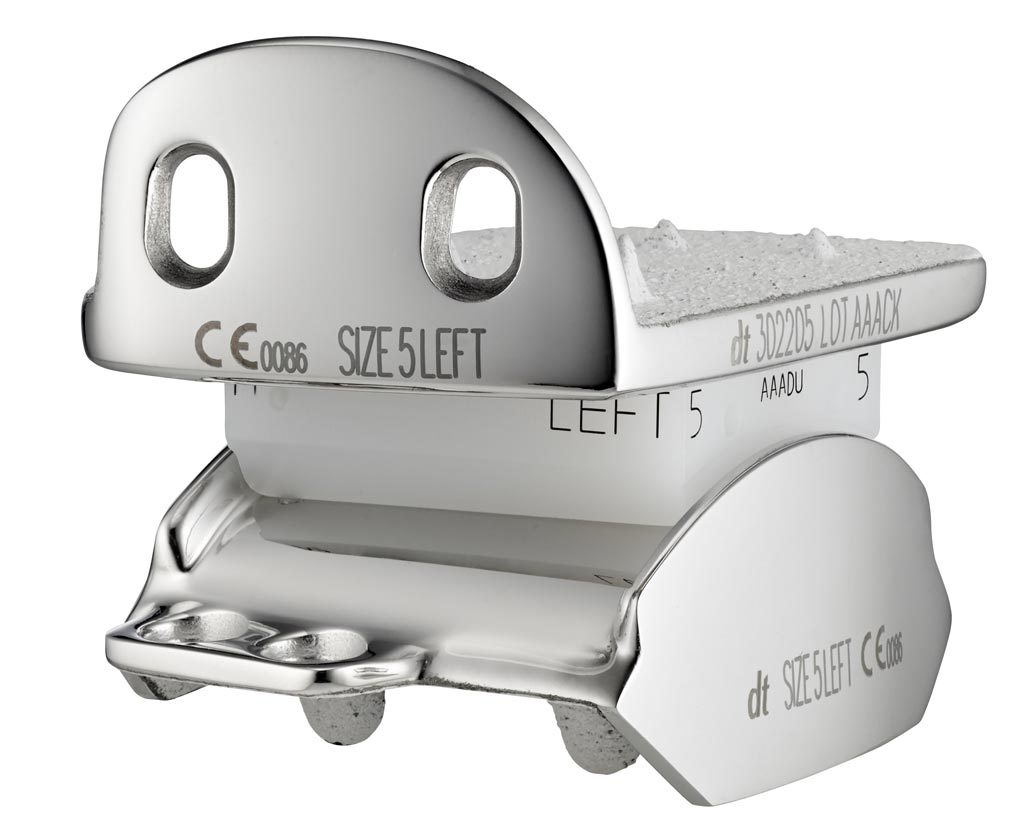
Image: The Hintermann Series H3 total ankle replacement system (Photo courtesy of DT MedTech).
A mobile-bearing implant replaces an ankle joint that has turned painful due to primary osteoarthritis, post-traumatic osteoarthritis, or arthritis secondary to inflammatory disease.
The DT MedTech (Baltimore, MD, USA) Hintermann Series H3 total ankle replacement (TAR) system is a non-cemented implant designed to reduce pain and improve motion in the ankle joint. The system is comprised of a cobalt-chrome (CoCr) tibial component with a double coating--titanium plasma spray coated and hydroxyapatite--that covers the very bottom of the tibia, which is also the upper portion of the ankle joint; a CoCr talar component with the same double coating that covers the talus; and an ultra-high molecular weight polyethylene (UHMWPE) sliding insert.
The tibial implant is comprised of a flat-loading plate and an anterior shield. The anatomically shaped flat surface allows for optimal contact with the subchondral bone of the entire resected tibia, including the cortical rim of the metaphysis to maximize the load transfer area without creating stress shielding. The tibial implant is available in seven sizes (0-6).
The talar implant is conically shaped to mimic the anatomic shape of the talus. Rims are provided on each side of this implant to provide mediolateral stability to the UHMWPE inlay bearing and to serve as a guide for anteroposterior translation. Polished overhangs on the medial and lateral side serve as anatomical articular surfaces. The talar implant is also available in seven sizes (0-6).
The UHMWPE inlay provides a flat planar surface to interface with the polished flat plane of the tibial implant and a concave surface to interface with the anatomically oriented polished surface of the talar implant. The PE inlay is available in four thicknesses (5, 6, 7, and 9mm) and matched sizes 0-6 to either orientation (right/left) of the prosthesis.
“I am very proud of this achievement. Since implanting the first H3, it has been a dream to bring the H3 to the U.S. market and enhance patient care and outcomes,” said foot and ankle surgeon Professor Beat Hintermann, MD, who developed the Hintermann total ankle replacement series. “We have seen stellar H3 results outside of the United States, and look forward to being able to provide American surgeons with this TAR.”
TAR was first attempted in the 1970s, but poor results led to its being considered inferior to ankle fusion until the late 1980s and early 1990s. By then, newer designs, which more closely replicate the natural anatomy of the ankle, showed improved clinical outcomes. TAR is now a viable alternative to the gold-standard treatment option, and provides late-stage ankle arthritis patients with fast pain relief and range of motion in the ankle, allowing individuals to restart recreational activities more quickly.
Related Links:
DT MedTech




The DT MedTech (Baltimore, MD, USA) Hintermann Series H3 total ankle replacement (TAR) system is a non-cemented implant designed to reduce pain and improve motion in the ankle joint. The system is comprised of a cobalt-chrome (CoCr) tibial component with a double coating--titanium plasma spray coated and hydroxyapatite--that covers the very bottom of the tibia, which is also the upper portion of the ankle joint; a CoCr talar component with the same double coating that covers the talus; and an ultra-high molecular weight polyethylene (UHMWPE) sliding insert.
The tibial implant is comprised of a flat-loading plate and an anterior shield. The anatomically shaped flat surface allows for optimal contact with the subchondral bone of the entire resected tibia, including the cortical rim of the metaphysis to maximize the load transfer area without creating stress shielding. The tibial implant is available in seven sizes (0-6).
The talar implant is conically shaped to mimic the anatomic shape of the talus. Rims are provided on each side of this implant to provide mediolateral stability to the UHMWPE inlay bearing and to serve as a guide for anteroposterior translation. Polished overhangs on the medial and lateral side serve as anatomical articular surfaces. The talar implant is also available in seven sizes (0-6).
The UHMWPE inlay provides a flat planar surface to interface with the polished flat plane of the tibial implant and a concave surface to interface with the anatomically oriented polished surface of the talar implant. The PE inlay is available in four thicknesses (5, 6, 7, and 9mm) and matched sizes 0-6 to either orientation (right/left) of the prosthesis.
“I am very proud of this achievement. Since implanting the first H3, it has been a dream to bring the H3 to the U.S. market and enhance patient care and outcomes,” said foot and ankle surgeon Professor Beat Hintermann, MD, who developed the Hintermann total ankle replacement series. “We have seen stellar H3 results outside of the United States, and look forward to being able to provide American surgeons with this TAR.”
TAR was first attempted in the 1970s, but poor results led to its being considered inferior to ankle fusion until the late 1980s and early 1990s. By then, newer designs, which more closely replicate the natural anatomy of the ankle, showed improved clinical outcomes. TAR is now a viable alternative to the gold-standard treatment option, and provides late-stage ankle arthritis patients with fast pain relief and range of motion in the ankle, allowing individuals to restart recreational activities more quickly.
Related Links:
DT MedTech

Gold Member
STI Test
Vivalytic Sexually Transmitted Infection (STI) Array
New
Medical Adhesive
MED 5570U
New
Surgical System
Stealth AXiS
Latest Surgical Techniques News
- Ultrasound Technology Aims to Replace Invasive BPH Procedures
- Continuous Monitoring with Wearables Enhances Postoperative Patient Safety
- New Approach Enables Customized Muscle Tissue Without Biomaterial Scaffolds
- Robot-Assisted Brain Angiography Improves Procedural Outcomes
- Brain Mapping Technology Enhances Precision in Brain Tumor Resection
- Handheld Robotic System Expands Options for Total Knee Surgery
- VR Experience Reduces Patient Anxiety Before Kidney Stone Procedure
- Injectable Mini Livers Offer Hope for Patients Awaiting Transplant
- Pulsed Field Ablation Technology Cleared in Europe for Persistent AFib
- AI-Powered Imaging Brings Real-Time Margin Clarity to Breast Cancer Surgery
- Minimally Invasive Device Safely Treats Challenging Brain Aneurysms
- Surgical Robot Makes Complex Liver Tumor Surgery Safer and Less Invasive
- Neurostimulation Implant Reduces Seizure Burden in Drug-Resistant Epilepsy
- Minimally Invasive Procedure Effectively Treats Small Kidney Cancers
- Fluorescence Probe Paired with Engineered Enzymes Lights Up Tumors for Easier Surgical Removal
- Novel Hydrogel Could Become Bone Implant of the Future
Channels
Artificial Intelligence
view channel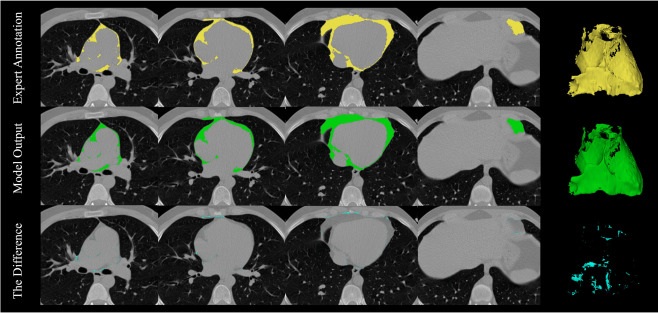
AI Analysis of Pericardial Fat Refines Long-Term Heart Disease Risk
Accurately identifying long-term cardiovascular disease risk in asymptomatic adults remains challenging for clinicians. Missed or underestimated risk delays preventive therapy and increases the chance... Read more
Machine Learning Approach Enhances Liver Cancer Risk Stratification
Hepatocellular carcinoma, the most common form of primary liver cancer, is often detected late despite targeted surveillance programs. Current screening guidelines emphasize patients with known cirrhosis,... Read more

Critical Care
view channel
Noninvasive Monitoring Device Enables Earlier Intervention in Heart Failure
Hospitalizations for heart failure with preserved ejection fraction (HFpEF) remain common because lung congestion often worsens before symptoms prompt treatment changes. Missed early decompensation... Read more
Automated IV Labeling Solution Improves Infusion Safety and Efficiency
Medication administration in high-acuity settings is often complicated by multiple concurrent infusions, making accurate line identification essential. In a 10-hospital intensive care unit study, 60% of... Read more

Patient Care
view channel
Wearable Sleep Data Predict Adherence to Pulmonary Rehabilitation
Chronic obstructive pulmonary disease (COPD) is a long-term lung disorder that makes breathing difficult and often disturbs sleep, reducing energy for daily activities. Limited engagement in pulmonary... Read more
Revolutionary Automatic IV-Line Flushing Device to Enhance Infusion Care
More than 80% of in-hospital patients receive intravenous (IV) therapy. Every dose of IV medicine delivered in a small volume (<250 mL) infusion bag should be followed by subsequent flushing to ensure... Read more

Health IT
view channel
EMR-Based Tool Predicts Graft Failure After Kidney Transplant
Kidney transplantation offers patients with end-stage kidney disease longer survival and better quality of life than dialysis, yet graft failure remains a major challenge. Although a successful transplant... Read more
Printable Molecule-Selective Nanoparticles Enable Mass Production of Wearable Biosensors
The future of medicine is likely to focus on the personalization of healthcare—understanding exactly what an individual requires and delivering the appropriate combination of nutrients, metabolites, and... Read more


Business
view channel
GE HealthCare Leads Major European Initiative to Advance Cardio-Oncology Care
Cardiovascular complications are increasingly recognized among people undergoing or recovering from cancer treatment, driven by pre‑existing disease and the cardiotoxic effects of chemotherapy, radiotherapy,... Read more

