Vascular Closure Device Seals Percutaneous Entry Point
|
By HospiMedica International staff writers Posted on 24 Jul 2019 |


|
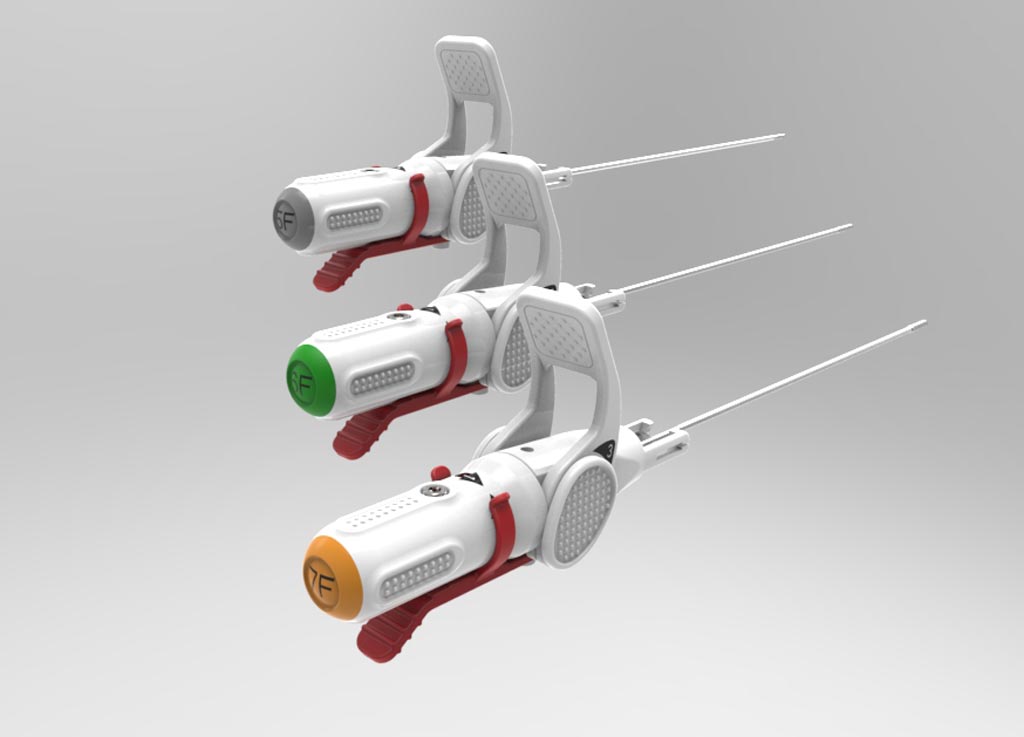
Image: The product line of the Celt ACD vascular closure devices (Photo courtesy of Vasorum).
An innovative closure device seals arterial puncture holes following percutaneous coronary intervention (PCI) catheter-based vascular procedures.
The Vasorum (Dublin, Ireland) Celt ACD is designed to close a femoral arteriotomy following intra-arterial procedures, such as peripheral or coronary angiography, arterial stents, balloon angioplasty, and diagnostic or interventional catheterization procedures involving the common femoral artery. During the procedure, a proprietary biocompatible stainless steel implant--which is radiopaque and visible under fluoroscopic control during all phases of deployment and implantation--is applied to both the inside and the outside of the puncture site in the femoral artery at the level of the arterial wall.
Celt ACD is available pre-mounted to a 5F, 6F, or 7F delivery system, and does not require the user to exchange the existing procedural sheath before deployment. The device is contraindicated in patients with a femoral artery lumen diameter less than 5mm, patients with a known allergy to stainless steel, in severe, acute non-cardiac systemic disease or terminal illness with a life expectancy of less than one year, and in patients with systemic bacterial or cutaneous infection, active hematoma, arteriovenous fistula (AVF), pseudoaneurysm, or low platelet count.
“Celt ACD has proven itself to be a best in class arterial puncture closure device. The device allows immediate closure of multiple re-sticks in calcified vessels, and is also very comfortable for patients,” said Jim Coleman MD, co-founder, CEO, and clinical director of Vasorum, adding, “the device allows rapid and complete hemostasis independent of vascular anatomy, including calcified arteries.”
Vascular complications related to arterial access are common causes of morbidity, mortality, and cost in those undergoing PCI. Many strategies have been tried to decrease bleeding and vascular access site complications; vascular closure devices emerged as an effective alternative to traditional mechanical compression, as they can reduce time to hemostasis, facilitate early patient mobilization, reduce patient discomfort associated with prolonged bed rest, improve patient satisfaction, and reduce hospital length of stay.
Related Links:
Vasorum





The Vasorum (Dublin, Ireland) Celt ACD is designed to close a femoral arteriotomy following intra-arterial procedures, such as peripheral or coronary angiography, arterial stents, balloon angioplasty, and diagnostic or interventional catheterization procedures involving the common femoral artery. During the procedure, a proprietary biocompatible stainless steel implant--which is radiopaque and visible under fluoroscopic control during all phases of deployment and implantation--is applied to both the inside and the outside of the puncture site in the femoral artery at the level of the arterial wall.
Celt ACD is available pre-mounted to a 5F, 6F, or 7F delivery system, and does not require the user to exchange the existing procedural sheath before deployment. The device is contraindicated in patients with a femoral artery lumen diameter less than 5mm, patients with a known allergy to stainless steel, in severe, acute non-cardiac systemic disease or terminal illness with a life expectancy of less than one year, and in patients with systemic bacterial or cutaneous infection, active hematoma, arteriovenous fistula (AVF), pseudoaneurysm, or low platelet count.
“Celt ACD has proven itself to be a best in class arterial puncture closure device. The device allows immediate closure of multiple re-sticks in calcified vessels, and is also very comfortable for patients,” said Jim Coleman MD, co-founder, CEO, and clinical director of Vasorum, adding, “the device allows rapid and complete hemostasis independent of vascular anatomy, including calcified arteries.”
Vascular complications related to arterial access are common causes of morbidity, mortality, and cost in those undergoing PCI. Many strategies have been tried to decrease bleeding and vascular access site complications; vascular closure devices emerged as an effective alternative to traditional mechanical compression, as they can reduce time to hemostasis, facilitate early patient mobilization, reduce patient discomfort associated with prolonged bed rest, improve patient satisfaction, and reduce hospital length of stay.
Related Links:
Vasorum

Gold Member
SARS‑CoV‑2/Flu A/Flu B/RSV Sample-To-Answer Test
SARS‑CoV‑2/Flu A/Flu B/RSV Cartridge (CE-IVD)
Head Rest
Medifa 61114_3
Half Apron
Demi
Latest Surgical Techniques News
- New Study Findings Could Halve Number of Stent Procedures
- Breakthrough Surgical Device Redefines Hip Arthroscopy
- Automated System Enables Real-Time "Molecular Pathology" During Cancer Surgery
- Groundbreaking Procedure Combines New Treatments for Liver Tumors
- Ablation Reduces Stroke Risk Associated with Atrial Fibrillation
- Optical Tracking Method Identifies Target Areas in Robot-Assisted Neurosurgery
- General Anesthesia Improves Post-Surgery Outcomes for Acute Stroke Patients
- Drug-Coated Balloons Can Replace Stents Even in Larger Coronary Arteries
- Magnetic Kidney Stone Retrieval Device Outperforms Ureteroscopic Laser Lithotripsy
- Absorbable Skull Device Could Replace Traditional Metal Implants Used After Brain Surgery
- Magic Silicone Liquid Powered Robots Perform MIS in Narrow Cavities
- 'Lab-on-a-Scalpel' Provides Real-Time Surgical Insights for POC Diagnostics in OR
- Biodegradable Brain Implant Prevents Glioblastoma Recurrence
- Tiny 3D Printer Reconstructs Tissues During Vocal Cord Surgery
- Minimally Invasive Procedure for Aortic Valve Disease Has Similar Outcomes as Surgery
- Safer Hip Implant Design Prevents Early Femoral Fractures
Channels

Critical Care
view channel
Magnetically Guided Microrobots to Enable Targeted Drug Delivery
Stroke affects 12 million people globally each year, often causing death or lasting disability. Current treatment relies on systemic administration of clot-dissolving drugs, which circulate throughout... Read more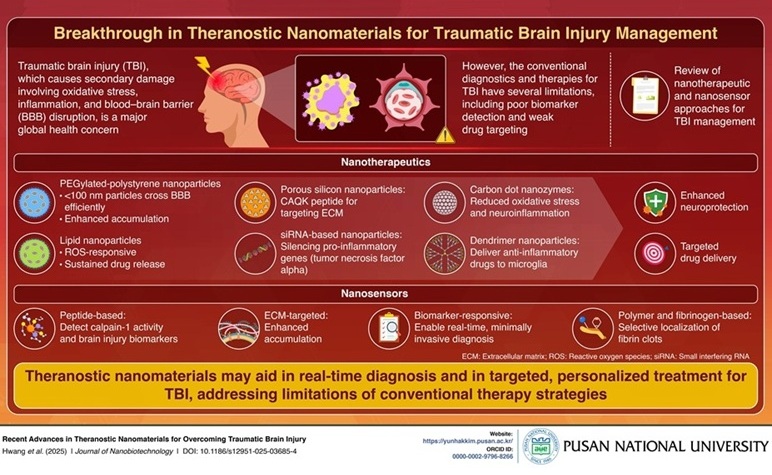
Smart Nanomaterials Detect and Treat Traumatic Brain Injuries Simultaneously
Traumatic brain injury (TBI) continues to leave millions with long-term disabilities every year. After a sudden impact from a fall, collision, or accident, the brain undergoes inflammation, oxidative stress,... Read more
Earlier Blood Transfusion Could Reduce Heart Failure and Arrhythmia in Heart Disease Patients
Blood loss during or after surgery can place significant stress on people with heart disease, increasing the risk of dangerous complications. Transfusions are often delayed until hemoglobin levels fall... Read more
Patient Care
view channel
Revolutionary Automatic IV-Line Flushing Device to Enhance Infusion Care
More than 80% of in-hospital patients receive intravenous (IV) therapy. Every dose of IV medicine delivered in a small volume (<250 mL) infusion bag should be followed by subsequent flushing to ensure... Read more
VR Training Tool Combats Contamination of Portable Medical Equipment
Healthcare-associated infections (HAIs) impact one in every 31 patients, cause nearly 100,000 deaths each year, and cost USD 28.4 billion in direct medical expenses. Notably, up to 75% of these infections... Read more
Portable Biosensor Platform to Reduce Hospital-Acquired Infections
Approximately 4 million patients in the European Union acquire healthcare-associated infections (HAIs) or nosocomial infections each year, with around 37,000 deaths directly resulting from these infections,... Read more
First-Of-Its-Kind Portable Germicidal Light Technology Disinfects High-Touch Clinical Surfaces in Seconds
Reducing healthcare-acquired infections (HAIs) remains a pressing issue within global healthcare systems. In the United States alone, 1.7 million patients contract HAIs annually, leading to approximately... Read moreHealth IT
view channel
Printable Molecule-Selective Nanoparticles Enable Mass Production of Wearable Biosensors
The future of medicine is likely to focus on the personalization of healthcare—understanding exactly what an individual requires and delivering the appropriate combination of nutrients, metabolites, and... Read more

Business
view channel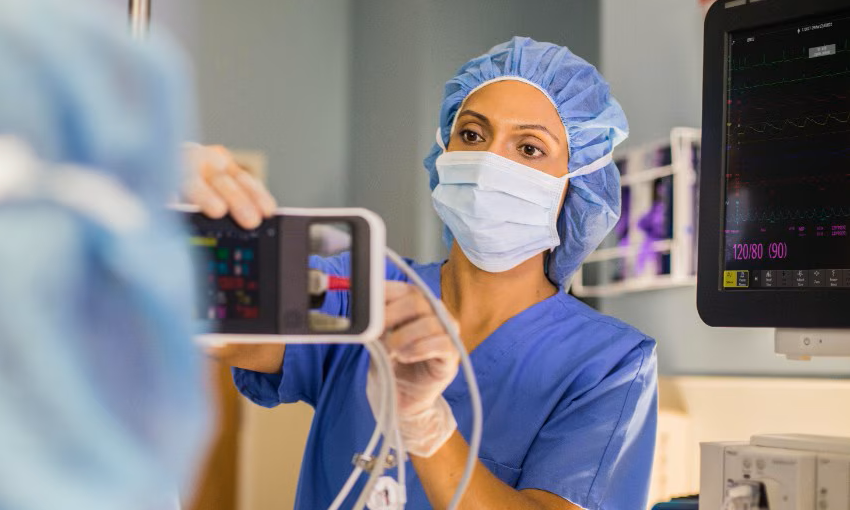
Philips and Masimo Partner to Advance Patient Monitoring Measurement Technologies
Royal Philips (Amsterdam, Netherlands) and Masimo (Irvine, California, USA) have renewed their multi-year strategic collaboration, combining Philips’ expertise in patient monitoring with Masimo’s noninvasive... Read more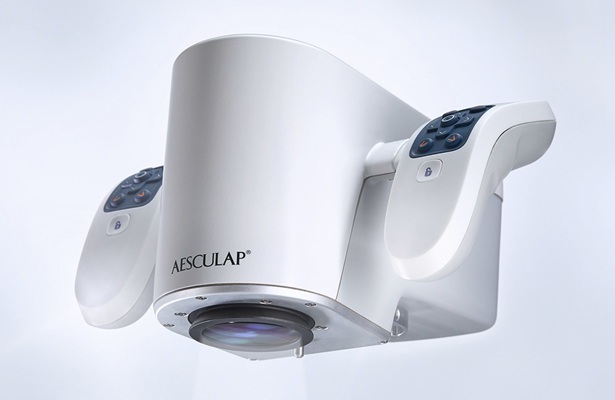
B. Braun Acquires Digital Microsurgery Company True Digital Surgery
The high-end microsurgery market in neurosurgery, spine, and ENT is undergoing a significant transformation. Traditional analog microscopes are giving way to digital exoscopes, which provide improved visualization,... Read more
CMEF 2025 to Promote Holistic and High-Quality Development of Medical and Health Industry
The 92nd China International Medical Equipment Fair (CMEF 2025) Autumn Exhibition is scheduled to be held from September 26 to 29 at the China Import and Export Fair Complex (Canton Fair Complex) in Guangzhou.... Read more