






AI Improves Efficiency and Accuracy of Breast Cancer Imaging
|
By HospiMedica International staff writers Posted on 12 Aug 2019 |


|
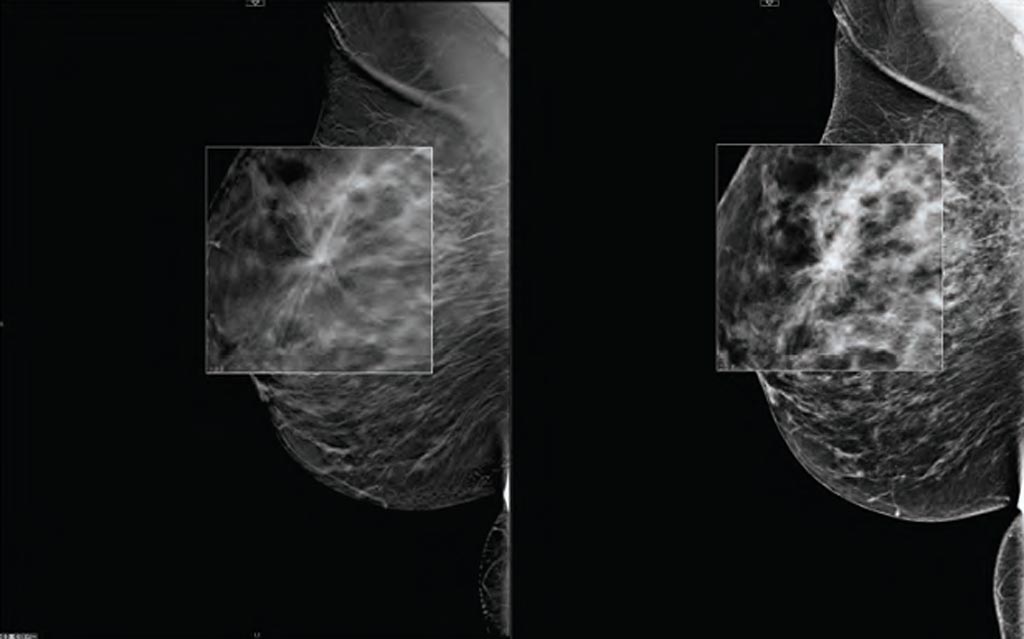
Image: Digital breast tomosynthesis compared to mammography (Photo courtesy of Carestream Health).
Artificial intelligence (AI) can help shorten digital breast tomosynthesis (DBT) reading time while maintaining or improving accuracy, claims a new study.
Researchers at the University of Pennsylvania (UPENN: Philadelphia, PA, USA), iCAD (Nashua, NH, USA), and other institutions have developed a deep learning AI system that is capable of identifying suspicious soft-tissue and calcified lesions in DBT images. The system was trained on a large DBT data set, following which its performance was tested by having 24 radiologists, including 13 breast subspecialists, each read 260 DBT examinations with and without AI assistance. The examinations included 65 cancer cases.
The results revealed that radiologist performance for the detection of malignant lesions increased from 0.795 without AI to 0.852 with AI, while reading time decreased by 52.7%, from 64.1 seconds without to 30.4 seconds with AI. Sensitivity increased from 77% without AI to 85% with AI, specificity increased from 62.7% without to 69.6% with AI, and recall rate for non-cancers decreased from 38% without to 30.9% with AI. The study was published on July 31, 2019, in Radiology: Artificial Intelligence.
“Overall, readers were able to increase their sensitivity by eight percent, lower their recall rate by seven percent, and cut their reading time in half when using AI concurrently while reading DBT cases,” said lead author Professor Emily Conant, MD, chief of breast imaging at UPENN. “The concurrent use of AI with DBT increases cancer detection, and may bring reading times back to about the time it takes to read digital mammography alone.”
DBT acquires multiple images over a limited angular range to produce a set of reconstructed images, which can then be viewed individually or sequentially in a cine loop, and in a 3D image of the breast, which can viewed in narrow slices, similar to CT scans. While in conventional 2D mammography overlapping tissues can mask suspicious areas, 3D images eliminate the overlap, making abnormalities easier to recognize. It is estimated that 3D DBT will replace conventional mammography within ten years.






Researchers at the University of Pennsylvania (UPENN: Philadelphia, PA, USA), iCAD (Nashua, NH, USA), and other institutions have developed a deep learning AI system that is capable of identifying suspicious soft-tissue and calcified lesions in DBT images. The system was trained on a large DBT data set, following which its performance was tested by having 24 radiologists, including 13 breast subspecialists, each read 260 DBT examinations with and without AI assistance. The examinations included 65 cancer cases.
The results revealed that radiologist performance for the detection of malignant lesions increased from 0.795 without AI to 0.852 with AI, while reading time decreased by 52.7%, from 64.1 seconds without to 30.4 seconds with AI. Sensitivity increased from 77% without AI to 85% with AI, specificity increased from 62.7% without to 69.6% with AI, and recall rate for non-cancers decreased from 38% without to 30.9% with AI. The study was published on July 31, 2019, in Radiology: Artificial Intelligence.
“Overall, readers were able to increase their sensitivity by eight percent, lower their recall rate by seven percent, and cut their reading time in half when using AI concurrently while reading DBT cases,” said lead author Professor Emily Conant, MD, chief of breast imaging at UPENN. “The concurrent use of AI with DBT increases cancer detection, and may bring reading times back to about the time it takes to read digital mammography alone.”
DBT acquires multiple images over a limited angular range to produce a set of reconstructed images, which can then be viewed individually or sequentially in a cine loop, and in a 3D image of the breast, which can viewed in narrow slices, similar to CT scans. While in conventional 2D mammography overlapping tissues can mask suspicious areas, 3D images eliminate the overlap, making abnormalities easier to recognize. It is estimated that 3D DBT will replace conventional mammography within ten years.

Gold Member
12-Channel ECG
CM1200B
New
POC Respiratory/Sore Throat Test
BIOFIRE SPOTFIRE (R/ST) Panel
New
Medical Examination & Procedure Light
Vega 80
Latest General/Advanced Imaging News
Channels
Artificial Intelligence
view channel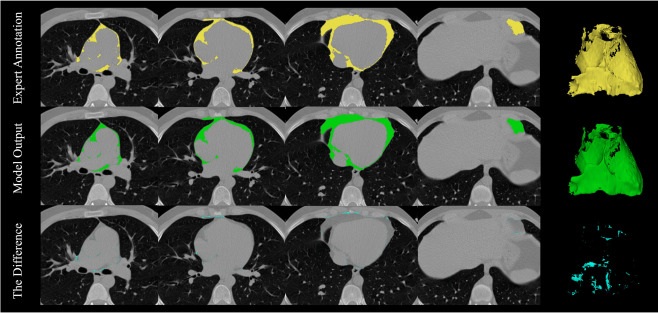
AI Analysis of Pericardial Fat Refines Long-Term Heart Disease Risk
Accurately identifying long-term cardiovascular disease risk in asymptomatic adults remains challenging for clinicians. Missed or underestimated risk delays preventive therapy and increases the chance... Read more
Machine Learning Approach Enhances Liver Cancer Risk Stratification
Hepatocellular carcinoma, the most common form of primary liver cancer, is often detected late despite targeted surveillance programs. Current screening guidelines emphasize patients with known cirrhosis,... Read more

Critical Care
view channel
Noninvasive Monitoring Device Enables Earlier Intervention in Heart Failure
Hospitalizations for heart failure with preserved ejection fraction (HFpEF) remain common because lung congestion often worsens before symptoms prompt treatment changes. Missed early decompensation... Read more
Automated IV Labeling Solution Improves Infusion Safety and Efficiency
Medication administration in high-acuity settings is often complicated by multiple concurrent infusions, making accurate line identification essential. In a 10-hospital intensive care unit study, 60% of... Read more

Surgical Techniques
view channel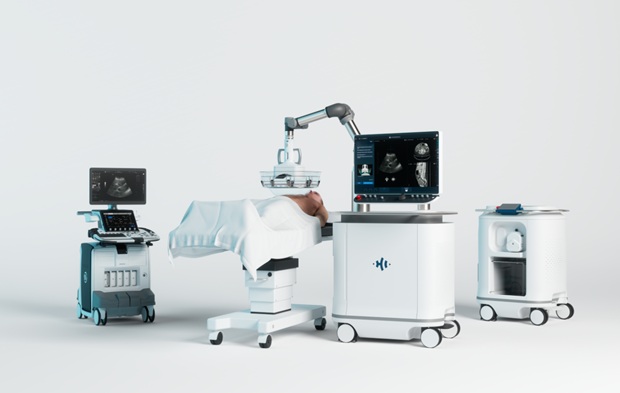
Ultrasound Technology Aims to Replace Invasive BPH Procedures
Benign prostatic hyperplasia (BPH) is a frequent cause of lower urinary tract symptoms in aging men and often requires invasive procedures or prolonged recovery. With prevalence expected to rise as populations... Read more
Continuous Monitoring with Wearables Enhances Postoperative Patient Safety
Postoperative hypoxemia on general surgical wards is common and often missed by intermittent vital sign checks. Undetected low oxygen levels can delay recovery and raise the risk of complications that... Read more
Patient Care
view channel
Wearable Sleep Data Predict Adherence to Pulmonary Rehabilitation
Chronic obstructive pulmonary disease (COPD) is a long-term lung disorder that makes breathing difficult and often disturbs sleep, reducing energy for daily activities. Limited engagement in pulmonary... Read more
Revolutionary Automatic IV-Line Flushing Device to Enhance Infusion Care
More than 80% of in-hospital patients receive intravenous (IV) therapy. Every dose of IV medicine delivered in a small volume (<250 mL) infusion bag should be followed by subsequent flushing to ensure... Read more

Health IT
view channel
EMR-Based Tool Predicts Graft Failure After Kidney Transplant
Kidney transplantation offers patients with end-stage kidney disease longer survival and better quality of life than dialysis, yet graft failure remains a major challenge. Although a successful transplant... Read more
Printable Molecule-Selective Nanoparticles Enable Mass Production of Wearable Biosensors
The future of medicine is likely to focus on the personalization of healthcare—understanding exactly what an individual requires and delivering the appropriate combination of nutrients, metabolites, and... Read more


Business
view channel
GE HealthCare Leads Major European Initiative to Advance Cardio-Oncology Care
Cardiovascular complications are increasingly recognized among people undergoing or recovering from cancer treatment, driven by pre‑existing disease and the cardiotoxic effects of chemotherapy, radiotherapy,... Read more

