






Nosocomial Infection Rates Fall in Single-Patient Rooms
|
By HospiMedica International staff writers Posted on 11 Sep 2019 |


|
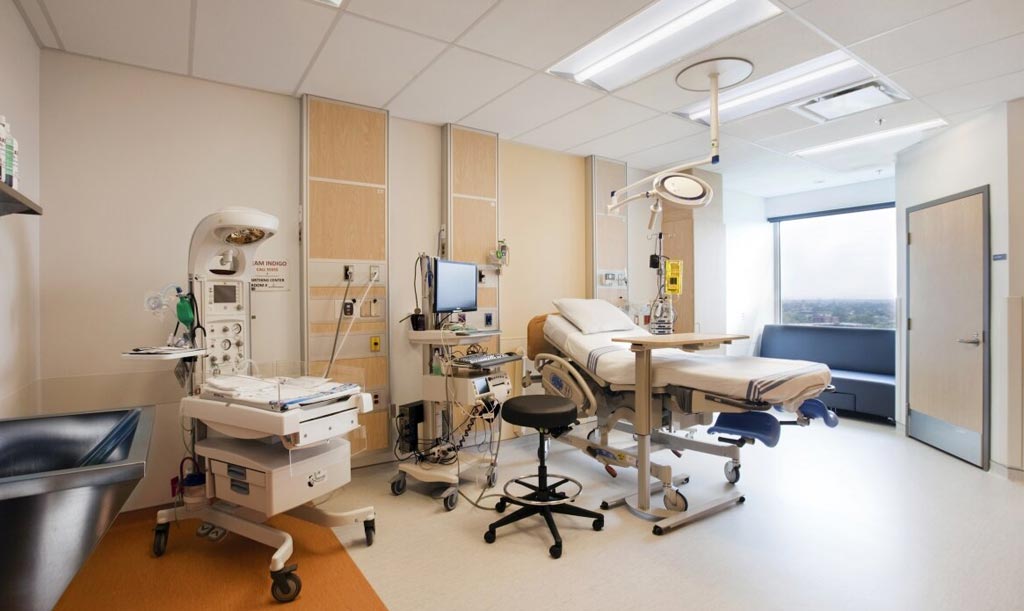
Image: A single patient room in the new Glen Hospital (Photo courtesy of McGill University).
A new study suggests that single-patient rooms help prevent drug-resistant organism colonization, resulting in significantly reduced rates of hospital-acquired infection (HAI).
Researchers at McGill University (Montreal, Canada) conducted a time-series analysis study that looked at changes in the rates of several infections over a period spanning 65 months, before and after evacuation of the old 417-bed Royal Victoria Hospital, which contained many 3-4 person ward-type rooms, to the new 350-bed Glen site facility, which exclusively features private rooms, most of which are equipped with individual toilets and showers and easy access to sinks for hand-washing. The synchronized move of all patients occurred on April 26, 2015.
The researchers then compared rates of vancomycin-resistant Enterococcus (VRE) and methicillin-resistant Staphylococcus aureus (MRSA) colonization, VRE and MRSA infection, and Clostridium difficile infection (CDI) per 10,000 patient-days. The results revealed an immediate and sustained reduction in nosocomial VRE and MRSA colonization rates, as well as VRE infection, following the move to the Glen site facility. Rates of CDI and MRSA infection, however, did not decrease. The study was published on August 19, 2019, in JAMA: Internal Medicine.
“The single-patient room experience at the Glen site has many benefits - privacy, confidentiality, comfort, reduced noise, and improved quality of sleep. Importantly, this study also found that private rooms might help reduce life-threatening infections,” said lead author Emily Gibson McDonald, MD. “We suspect that much like VRE, the spread of resistant gram-negative bacteria, particularly those which are emerging in Canada and concentrated in hospitals, could be more easily contained in an exclusively single-patient facility, when combined with continued infection control and hand hygiene measures, and a better use of antibiotics.”
“While we cannot prove causation in a study like this, the changes were so immediate and so striking that we are fairly convinced they were mostly a result of the move,” said senior author infectious diseases specialist Todd Campbell Lee, MD, of the McGill University Health Centre (MUHC). “However, the ongoing effort by the MUHC staff to keep the facilities rigorously clean, encourage excellent staff hand hygiene, and intervene more aggressively when outbreaks are discovered has helped maintain our rates fairly low.”
Four main pathogens are involved in HAIs, which are Clostridium difficile, MRSA, VRE, and Acinetobacter baumannii, which may persist on environmental surfaces for days or weeks. Clostridium difficile spores can persist on environmental surfaces for up to five months. Studies have shown that only 50% of environmental surfaces in a typical patient room may be effectively disinfected.
Related Links:
McGill University







Researchers at McGill University (Montreal, Canada) conducted a time-series analysis study that looked at changes in the rates of several infections over a period spanning 65 months, before and after evacuation of the old 417-bed Royal Victoria Hospital, which contained many 3-4 person ward-type rooms, to the new 350-bed Glen site facility, which exclusively features private rooms, most of which are equipped with individual toilets and showers and easy access to sinks for hand-washing. The synchronized move of all patients occurred on April 26, 2015.
The researchers then compared rates of vancomycin-resistant Enterococcus (VRE) and methicillin-resistant Staphylococcus aureus (MRSA) colonization, VRE and MRSA infection, and Clostridium difficile infection (CDI) per 10,000 patient-days. The results revealed an immediate and sustained reduction in nosocomial VRE and MRSA colonization rates, as well as VRE infection, following the move to the Glen site facility. Rates of CDI and MRSA infection, however, did not decrease. The study was published on August 19, 2019, in JAMA: Internal Medicine.
“The single-patient room experience at the Glen site has many benefits - privacy, confidentiality, comfort, reduced noise, and improved quality of sleep. Importantly, this study also found that private rooms might help reduce life-threatening infections,” said lead author Emily Gibson McDonald, MD. “We suspect that much like VRE, the spread of resistant gram-negative bacteria, particularly those which are emerging in Canada and concentrated in hospitals, could be more easily contained in an exclusively single-patient facility, when combined with continued infection control and hand hygiene measures, and a better use of antibiotics.”
“While we cannot prove causation in a study like this, the changes were so immediate and so striking that we are fairly convinced they were mostly a result of the move,” said senior author infectious diseases specialist Todd Campbell Lee, MD, of the McGill University Health Centre (MUHC). “However, the ongoing effort by the MUHC staff to keep the facilities rigorously clean, encourage excellent staff hand hygiene, and intervene more aggressively when outbreaks are discovered has helped maintain our rates fairly low.”
Four main pathogens are involved in HAIs, which are Clostridium difficile, MRSA, VRE, and Acinetobacter baumannii, which may persist on environmental surfaces for days or weeks. Clostridium difficile spores can persist on environmental surfaces for up to five months. Studies have shown that only 50% of environmental surfaces in a typical patient room may be effectively disinfected.
Related Links:
McGill University

Gold Member
12-Channel ECG
CM1200B
New
Wound Irrigation Solution
Prontosan®
New
Resorbable Bovine Collagen Membrane
GenDerm
Latest Critical Care News
- Noninvasive Monitoring Device Enables Earlier Intervention in Heart Failure
- Automated IV Labeling Solution Improves Infusion Safety and Efficiency
- First-Of-Its-Kind AI Tool Detects Pulmonary Hypertension from Standard ECGs
- 4D Digital Twin Heart Model Improves CRT Outcomes
- AI Turns Glucose Data Into Actionable Insights for Diabetes Care
- Microscale Wireless Implant Tracks Brain Activity Over Time
- Smart Mask Delivers Continuous, Battery-Free Breath Monitoring
- Routine Blood Pressure Readings May Identify Risk of Future Cognitive Decline
- CGM-Based Algorithm Enhances Insulin Dose Adjustment in Type 2 Diabetes
- Fish Scale–Based Implants Offer New Approach to Corneal Repair
- Dual-Function Wound Patch Combines Infection Sensing and Treatment
- Smartwatch Signals and Blood Tests Team Up for Early Warning on Insulin Resistance
- Smart Fabric Technology Aims to Prevent Pressure Injuries in Hospital Care
- Standardized Treatment Algorithm Improves Blood Pressure Control
- Combined Infection Control Strategy Limits Drug-Resistant Outbreak in NICU
- AI Helps Predict Which Heart-Failure Patients Will Worsen Within a Year
Channels
Artificial Intelligence
view channel
AI Analysis of Pericardial Fat Refines Long-Term Heart Disease Risk
Accurately identifying long-term cardiovascular disease risk in asymptomatic adults remains challenging for clinicians. Missed or underestimated risk delays preventive therapy and increases the chance... Read more
Machine Learning Approach Enhances Liver Cancer Risk Stratification
Hepatocellular carcinoma, the most common form of primary liver cancer, is often detected late despite targeted surveillance programs. Current screening guidelines emphasize patients with known cirrhosis,... Read more

Surgical Techniques
view channel
Ultrasound Technology Aims to Replace Invasive BPH Procedures
Benign prostatic hyperplasia (BPH) is a frequent cause of lower urinary tract symptoms in aging men and often requires invasive procedures or prolonged recovery. With prevalence expected to rise as populations... Read more
Continuous Monitoring with Wearables Enhances Postoperative Patient Safety
Postoperative hypoxemia on general surgical wards is common and often missed by intermittent vital sign checks. Undetected low oxygen levels can delay recovery and raise the risk of complications that... Read more

Patient Care
view channel
Wearable Sleep Data Predict Adherence to Pulmonary Rehabilitation
Chronic obstructive pulmonary disease (COPD) is a long-term lung disorder that makes breathing difficult and often disturbs sleep, reducing energy for daily activities. Limited engagement in pulmonary... Read more
Revolutionary Automatic IV-Line Flushing Device to Enhance Infusion Care
More than 80% of in-hospital patients receive intravenous (IV) therapy. Every dose of IV medicine delivered in a small volume (<250 mL) infusion bag should be followed by subsequent flushing to ensure... Read more

Health IT
view channel
EMR-Based Tool Predicts Graft Failure After Kidney Transplant
Kidney transplantation offers patients with end-stage kidney disease longer survival and better quality of life than dialysis, yet graft failure remains a major challenge. Although a successful transplant... Read more
Printable Molecule-Selective Nanoparticles Enable Mass Production of Wearable Biosensors
The future of medicine is likely to focus on the personalization of healthcare—understanding exactly what an individual requires and delivering the appropriate combination of nutrients, metabolites, and... Read more


Business
view channel
GE HealthCare Leads Major European Initiative to Advance Cardio-Oncology Care
Cardiovascular complications are increasingly recognized among people undergoing or recovering from cancer treatment, driven by pre‑existing disease and the cardiotoxic effects of chemotherapy, radiotherapy,... Read more

