






AI Solution Supporting Wins Best New Radiology Solution Award
|
By HospiMedica International staff writers Posted on 18 Sep 2019 |


|
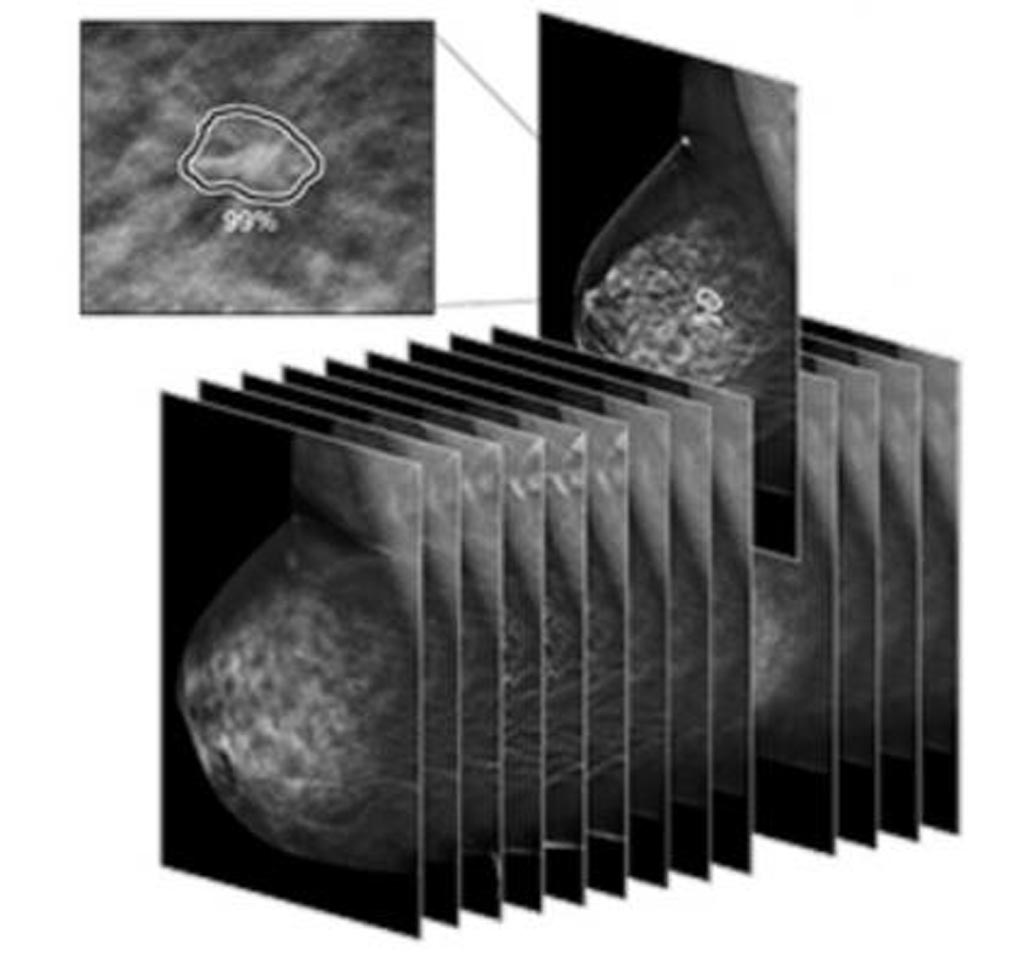
Image: The ProFound AI for DBT has been selected as the winner of the “Best New Radiology Solution” Award in the 2019 MedTech Breakthrough Awards program (Photo courtesy of iCAD).
An FDA-cleared artificial intelligence (AI) solution that supports breast cancer detection in 3D tomosynthesis has been selected as the winner of “Best New Radiology Solution” Award in the 2019 MedTech Breakthrough Awards program.
ProFound AI for Digital Breast Tomosynthesis (DBT) from iCAD Inc (Nashua, NH, USA) is the first and only US FDA-cleared AI solution that supports breast cancer detection in DBT, or 3D mammography. The technology is intended for use concurrently by radiologists reading DBT exams and uses a cutting-edge algorithm developed with the latest in deep learning.
Trained to detect malignant soft-tissue densities and calcifications, ProFound AI aids radiologists in breast cancer detection and is clinically proven to improve cancer detection rates, reduce false positives and unnecessary patient recalls, and decrease reading times for radiologists. The software rapidly and accurately analyzes each DBT image and provides radiologists with key information, such as Certainty of Finding and Case Scores, which assist radiologists in making clinical decisions and prioritizing caseloads.
ProFound AI for DBT runs on the PowerLook platform with NVIDIA graphical processing units (GPU). PowerLook is a flexible and reliable DICOM platform that easily integrates with image modalities, mammography review workstations, picture archiving and communication systems (PACS) and image storage systems. Leveraging the latest in GPU technology, the algorithm can rapidly process a four-view tomosynthesis case, ensuring results are available to radiologists in the most efficient manner.
“iCAD is a previous MedTech Breakthrough Award winner, and we are delighted to see the company continue to innovate. ProFound AI is a revolutionary technology built on the latest deep-learning and artificial intelligence technology that assists radiologists and addresses the challenges of reading breast tomosynthesis cases,” said James Johnson, managing director, MedTech Breakthrough. “We extend a hearty congratulations to the entire iCAD team on their innovative spirit and ability to execute on incorporating sophisticated AI technology in a platform that delivers incredibly real-world benefits.”




ProFound AI for Digital Breast Tomosynthesis (DBT) from iCAD Inc (Nashua, NH, USA) is the first and only US FDA-cleared AI solution that supports breast cancer detection in DBT, or 3D mammography. The technology is intended for use concurrently by radiologists reading DBT exams and uses a cutting-edge algorithm developed with the latest in deep learning.
Trained to detect malignant soft-tissue densities and calcifications, ProFound AI aids radiologists in breast cancer detection and is clinically proven to improve cancer detection rates, reduce false positives and unnecessary patient recalls, and decrease reading times for radiologists. The software rapidly and accurately analyzes each DBT image and provides radiologists with key information, such as Certainty of Finding and Case Scores, which assist radiologists in making clinical decisions and prioritizing caseloads.
ProFound AI for DBT runs on the PowerLook platform with NVIDIA graphical processing units (GPU). PowerLook is a flexible and reliable DICOM platform that easily integrates with image modalities, mammography review workstations, picture archiving and communication systems (PACS) and image storage systems. Leveraging the latest in GPU technology, the algorithm can rapidly process a four-view tomosynthesis case, ensuring results are available to radiologists in the most efficient manner.
“iCAD is a previous MedTech Breakthrough Award winner, and we are delighted to see the company continue to innovate. ProFound AI is a revolutionary technology built on the latest deep-learning and artificial intelligence technology that assists radiologists and addresses the challenges of reading breast tomosynthesis cases,” said James Johnson, managing director, MedTech Breakthrough. “We extend a hearty congratulations to the entire iCAD team on their innovative spirit and ability to execute on incorporating sophisticated AI technology in a platform that delivers incredibly real-world benefits.”

New
Gold Member
Handheld Blood Glucose Analyzer
STAT-Site
New
Syringe Pump
SP50 Series
New
Multi-Chamber Washer-Disinfector
WD 390
Latest AI News
- Machine Learning Approach Enhances Liver Cancer Risk Stratification
- New AI Approach Monitors Brain Health Using Passive Wearable Data
- AI Tool Maps Early Risk Patterns in Bloodstream Infections
- AI Model Identifies Rare Endocrine Disorder from Hand Images
- AI Tool Promises to Reduce Length of Hospital Stays and Free Up Beds
- Machine Learning Model Cuts Canceled Liver Transplants By 60%
Channels
Artificial Intelligence
view channel
Machine Learning Approach Enhances Liver Cancer Risk Stratification
Hepatocellular carcinoma, the most common form of primary liver cancer, is often detected late despite targeted surveillance programs. Current screening guidelines emphasize patients with known cirrhosis,... Read more
New AI Approach Monitors Brain Health Using Passive Wearable Data
Brain health spans cognitive and emotional functions and can fluctuate even in adults without diagnosed disease. Detecting early changes remains difficult in routine care and burdens specialty services... Read more
Critical Care
view channel
Automated IV Labeling Solution Improves Infusion Safety and Efficiency
Medication administration in high-acuity settings is often complicated by multiple concurrent infusions, making accurate line identification essential. In a 10-hospital intensive care unit study, 60% of... Read more
First-Of-Its-Kind AI Tool Detects Pulmonary Hypertension from Standard ECGs
Pulmonary hypertension is a progressive, life‑threatening disease that is frequently missed early because symptoms such as dyspnea are nonspecific and diagnostic delays can exceed two years.... Read more

Surgical Techniques
view channel
Continuous Monitoring with Wearables Enhances Postoperative Patient Safety
Postoperative hypoxemia on general surgical wards is common and often missed by intermittent vital sign checks. Undetected low oxygen levels can delay recovery and raise the risk of complications that... Read more
New Approach Enables Customized Muscle Tissue Without Biomaterial Scaffolds
Volumetric muscle loss is a traumatic loss of skeletal muscle that often leads to permanent functional impairment and limited reconstructive options. Current experimental strategies struggle to deliver... Read more
Patient Care
view channel
Wearable Sleep Data Predict Adherence to Pulmonary Rehabilitation
Chronic obstructive pulmonary disease (COPD) is a long-term lung disorder that makes breathing difficult and often disturbs sleep, reducing energy for daily activities. Limited engagement in pulmonary... Read more
Revolutionary Automatic IV-Line Flushing Device to Enhance Infusion Care
More than 80% of in-hospital patients receive intravenous (IV) therapy. Every dose of IV medicine delivered in a small volume (<250 mL) infusion bag should be followed by subsequent flushing to ensure... Read more

Health IT
view channel
EMR-Based Tool Predicts Graft Failure After Kidney Transplant
Kidney transplantation offers patients with end-stage kidney disease longer survival and better quality of life than dialysis, yet graft failure remains a major challenge. Although a successful transplant... Read more
Printable Molecule-Selective Nanoparticles Enable Mass Production of Wearable Biosensors
The future of medicine is likely to focus on the personalization of healthcare—understanding exactly what an individual requires and delivering the appropriate combination of nutrients, metabolites, and... Read more


Business
view channel
GE HealthCare Leads Major European Initiative to Advance Cardio-Oncology Care
Cardiovascular complications are increasingly recognized among people undergoing or recovering from cancer treatment, driven by pre‑existing disease and the cardiotoxic effects of chemotherapy, radiotherapy,... Read more

