






Smart Fever and Contact Tracing System Helps Businesses Reopen
|
By HospiMedica International staff writers Posted on 28 May 2020 |


|
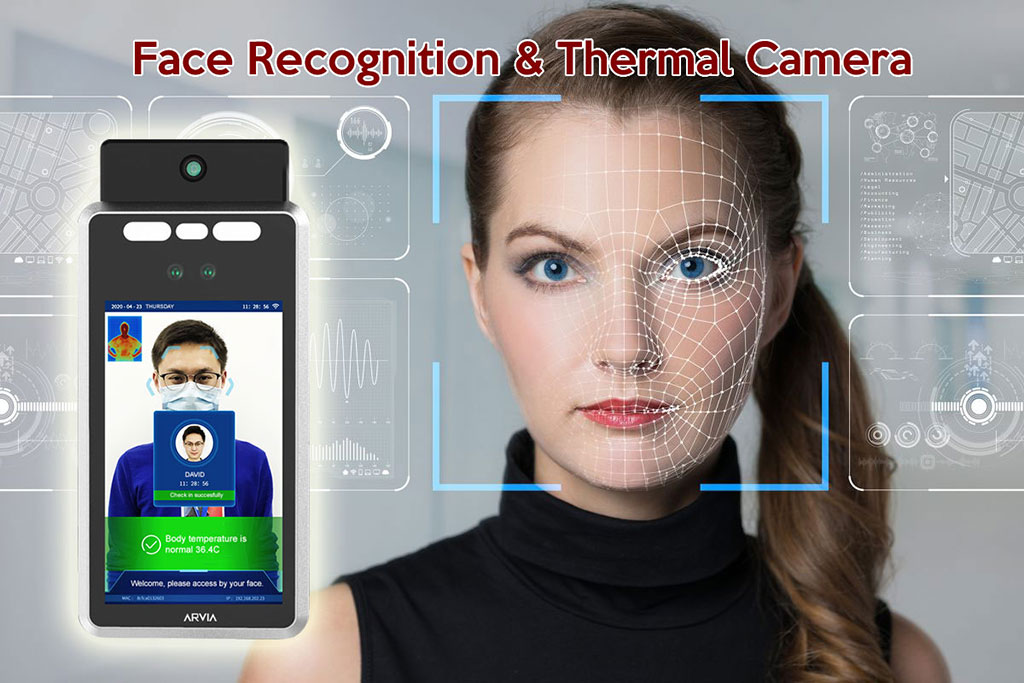
Image: The Arvia ARV-FS02 thermal camera and neural network processing system (Photo courtesy of Israk Solutions)
An integrated system comprised of a thermal imaging camera and contact tracing software helps fight the spread of COVID-19 and other pathogenic illnesses.
The Israk Solutions (Selangor, Malaysia) ARVIA ARV-FS02 fever screening camera and scanner is an integrated contact tracing system that keeps track of date and time records of all scanned faces for any building, and can be implemented as an independent system or can be customized and integrated into an attendance system or human resources management software. Small businesses can implement a simple process, using a self-registration form with indicators such as age, fatigue, loss of appetite, smell or taste or persistent cough, indicators that are as critical in identifying infections, in addition to fever screening.
Features include a 7-inch face-recognition terminal and a sensitive thermal camera available in wall-mounted, table top, or floor stand models, which can also be integrated with other enterprise software, such as turnstile controls, gate access, or attendance systems. Temperature measurement accuracy is ±0.3°C for a distance of 0.4 to 1.5-meters, and does not require foot-traffic to stop moving. Built-in facial recognition algorithms based on embedded neural networks support accurate recognition, even in multi-person crowds, side views, semi-occlusion, and blurred conditions. A 50,000-face library with 99.99% accuracy is accessible in both online and offline modes.
“Fever screening needs to be carried out strictly to identify an asymptomatic individual. However, having security personnel to carry out this screening might be ineffective and inefficient,” said the company in a press statement. “The security personnel is also prone to be exposed to the virus. Hence, it is viable for business owners to own a fever screening camera that captures the body temperature of passers-by in real-time.”
Facial recognition systems use biometrics to map facial features. The geometry of the face is rapidly analyzed, with key factors including interpapillary distance and the distance from forehead to chin. In all, there are over 65 quantifiable features that can be used to identify a face, generating a unique facial signature.
Related Links:
Israk Solutions




The Israk Solutions (Selangor, Malaysia) ARVIA ARV-FS02 fever screening camera and scanner is an integrated contact tracing system that keeps track of date and time records of all scanned faces for any building, and can be implemented as an independent system or can be customized and integrated into an attendance system or human resources management software. Small businesses can implement a simple process, using a self-registration form with indicators such as age, fatigue, loss of appetite, smell or taste or persistent cough, indicators that are as critical in identifying infections, in addition to fever screening.
Features include a 7-inch face-recognition terminal and a sensitive thermal camera available in wall-mounted, table top, or floor stand models, which can also be integrated with other enterprise software, such as turnstile controls, gate access, or attendance systems. Temperature measurement accuracy is ±0.3°C for a distance of 0.4 to 1.5-meters, and does not require foot-traffic to stop moving. Built-in facial recognition algorithms based on embedded neural networks support accurate recognition, even in multi-person crowds, side views, semi-occlusion, and blurred conditions. A 50,000-face library with 99.99% accuracy is accessible in both online and offline modes.
“Fever screening needs to be carried out strictly to identify an asymptomatic individual. However, having security personnel to carry out this screening might be ineffective and inefficient,” said the company in a press statement. “The security personnel is also prone to be exposed to the virus. Hence, it is viable for business owners to own a fever screening camera that captures the body temperature of passers-by in real-time.”
Facial recognition systems use biometrics to map facial features. The geometry of the face is rapidly analyzed, with key factors including interpapillary distance and the distance from forehead to chin. In all, there are over 65 quantifiable features that can be used to identify a face, generating a unique facial signature.
Related Links:
Israk Solutions

New
Gold Member
Handheld Blood Glucose Analyzer
STAT-Site
New
Blood Pressure Monitor
Cuff Blood Pressure Monitor
New
Desk Aneroid Sphyg
Diagnostix 750D+
Latest AI News
- Machine Learning Approach Enhances Liver Cancer Risk Stratification
- New AI Approach Monitors Brain Health Using Passive Wearable Data
- AI Tool Maps Early Risk Patterns in Bloodstream Infections
- AI Model Identifies Rare Endocrine Disorder from Hand Images
- AI Tool Promises to Reduce Length of Hospital Stays and Free Up Beds
- Machine Learning Model Cuts Canceled Liver Transplants By 60%
Channels
Critical Care
view channel
Automated IV Labeling Solution Improves Infusion Safety and Efficiency
Medication administration in high-acuity settings is often complicated by multiple concurrent infusions, making accurate line identification essential. In a 10-hospital intensive care unit study, 60% of... Read more
First-Of-Its-Kind AI Tool Detects Pulmonary Hypertension from Standard ECGs
Pulmonary hypertension is a progressive, life‑threatening disease that is frequently missed early because symptoms such as dyspnea are nonspecific and diagnostic delays can exceed two years.... Read more
Surgical Techniques
view channel
Continuous Monitoring with Wearables Enhances Postoperative Patient Safety
Postoperative hypoxemia on general surgical wards is common and often missed by intermittent vital sign checks. Undetected low oxygen levels can delay recovery and raise the risk of complications that... Read more
New Approach Enables Customized Muscle Tissue Without Biomaterial Scaffolds
Volumetric muscle loss is a traumatic loss of skeletal muscle that often leads to permanent functional impairment and limited reconstructive options. Current experimental strategies struggle to deliver... Read more
Patient Care
view channel
Wearable Sleep Data Predict Adherence to Pulmonary Rehabilitation
Chronic obstructive pulmonary disease (COPD) is a long-term lung disorder that makes breathing difficult and often disturbs sleep, reducing energy for daily activities. Limited engagement in pulmonary... Read more
Revolutionary Automatic IV-Line Flushing Device to Enhance Infusion Care
More than 80% of in-hospital patients receive intravenous (IV) therapy. Every dose of IV medicine delivered in a small volume (<250 mL) infusion bag should be followed by subsequent flushing to ensure... Read more

Health IT
view channel
EMR-Based Tool Predicts Graft Failure After Kidney Transplant
Kidney transplantation offers patients with end-stage kidney disease longer survival and better quality of life than dialysis, yet graft failure remains a major challenge. Although a successful transplant... Read more
Printable Molecule-Selective Nanoparticles Enable Mass Production of Wearable Biosensors
The future of medicine is likely to focus on the personalization of healthcare—understanding exactly what an individual requires and delivering the appropriate combination of nutrients, metabolites, and... Read more


Business
view channel
GE HealthCare Leads Major European Initiative to Advance Cardio-Oncology Care
Cardiovascular complications are increasingly recognized among people undergoing or recovering from cancer treatment, driven by pre‑existing disease and the cardiotoxic effects of chemotherapy, radiotherapy,... Read more

