EHR Patient Photographs Reduce Order Entry Errors
|
By HospiMedica International staff writers Posted on 07 Dec 2020 |


|
Displaying patient photographs in the electronic health record (EHR) reduces wrong-patient order entry (WPOE), according to a new study.
Researchers at Brigham and Women's Hospital (BWH; Boston, AM, USA), NewYork-Presbyterian Hospital/Columbia University Medical Center (NYP; New York, NY, USA), and other institutions conducted a study involving 71,851 emergency department (ED) patients (mean age, 49.2 years; 59.4% female, 76.7% non-Hispanic) to evaluate if displaying patient photographs in the banner of their EHR was associated with a decreased rate of WPOE errors. Patients were encouraged to have their photographs taken after informing them of the intended safety impact.
The results showed that the risk of WPOE errors was significantly lower when the patient’s photograph was displayed in the EHR (odds ratio of 0.72). After adjustment for potential confounders, the effect size remained essentially the same (odds ratio of 0.57). The risk of WPOE error was also significantly lower in patients with higher acuity levels, and among patients whose race was documented as White. The study was published on November 11, 2020, in JAMA Network Open.
“Displaying patient photographs in the EHR provides decision support functionality for enhancing patient identification and reducing WPOE errors, while being non-interruptive, with minimal risk of alert fatigue,” concluded lead author Hojjat Salmasian, MD, PhD, of BWH, and colleagues. “The successful implementation of such a program in an emergency department setting involves a modest financial investment, and requires appropriate engagement of patients and staff.”
Although studies indicate that practitioners place more than 99.9% of all orders for the correct patient, the large number of orders placed each day means that even an error rate of less than 1 in 1,000 would still lead to about 600,000 WPOE orders placed in the United States alone every year. WPOE rates are about double in the ED, which is attributed to the crowded, fast-paced environment and to frequent staff multitasking.
Related Links:
Brigham and Women's Hospital
NewYork-Presbyterian Hospital/Columbia University Medical Center





Researchers at Brigham and Women's Hospital (BWH; Boston, AM, USA), NewYork-Presbyterian Hospital/Columbia University Medical Center (NYP; New York, NY, USA), and other institutions conducted a study involving 71,851 emergency department (ED) patients (mean age, 49.2 years; 59.4% female, 76.7% non-Hispanic) to evaluate if displaying patient photographs in the banner of their EHR was associated with a decreased rate of WPOE errors. Patients were encouraged to have their photographs taken after informing them of the intended safety impact.
The results showed that the risk of WPOE errors was significantly lower when the patient’s photograph was displayed in the EHR (odds ratio of 0.72). After adjustment for potential confounders, the effect size remained essentially the same (odds ratio of 0.57). The risk of WPOE error was also significantly lower in patients with higher acuity levels, and among patients whose race was documented as White. The study was published on November 11, 2020, in JAMA Network Open.
“Displaying patient photographs in the EHR provides decision support functionality for enhancing patient identification and reducing WPOE errors, while being non-interruptive, with minimal risk of alert fatigue,” concluded lead author Hojjat Salmasian, MD, PhD, of BWH, and colleagues. “The successful implementation of such a program in an emergency department setting involves a modest financial investment, and requires appropriate engagement of patients and staff.”
Although studies indicate that practitioners place more than 99.9% of all orders for the correct patient, the large number of orders placed each day means that even an error rate of less than 1 in 1,000 would still lead to about 600,000 WPOE orders placed in the United States alone every year. WPOE rates are about double in the ED, which is attributed to the crowded, fast-paced environment and to frequent staff multitasking.
Related Links:
Brigham and Women's Hospital
NewYork-Presbyterian Hospital/Columbia University Medical Center

Gold Member
12-Channel ECG
CM1200B
Ureteral Dilatation Balloon
Dornier Equinox
MRI System
nanoScan MRI 3T/7T
Latest Critical Care News
- Nanogel Technology Almost 100% Effective in Destroying Drug-Resistant Bacteria Within Hours
- Wearable Ultrasound Sensor Delivers Noninvasive Treatment Without Surgery
- Gel-Free ECG System to Transform Heart Health Diagnosis
- Biodegradable Patch Repairs Damaged Tissue After Heart Attack
- Magnetically Guided Microrobots to Enable Targeted Drug Delivery

- Smart Nanomaterials Detect and Treat Traumatic Brain Injuries Simultaneously
- Earlier Blood Transfusion Could Reduce Heart Failure and Arrhythmia in Heart Disease Patients
- 'Smart' Shirt Detects Epileptic Seizures in Real Time
- Skin Patch Measures Effectiveness of Flu/COVID Vaccines in 10 Minutes
- Complete Revascularization Reduces Risk of Death from Cardiovascular Causes
- Tiny Fish-Inspired Robots Navigate Through Body to Deliver Targeted Drug Therapy
- Coronary Artery Stenosis Could Protect Patients from Pulmonary Embolism Effects
- Sweat-Powered Sticker Turns Drinking Cup into Health Sensor
- Skin-Mounted 3D Microfluidic Device Analyzes Sweat for Real-Time Health Assessment
- New Therapeutic Brain Implants to Eliminate Need for Surgery
- Stem Cell Patch Gently Heals Damaged Hearts Without Open-Heart Surgery
Channels

Surgical Techniques
view channel
Novel Endoscopy Technique Provides Access to Deep Lung Tumors
Detecting lung cancer early can save lives, but diagnosing small tumors deep in the outer regions of the lungs remains a major clinical challenge. Although CT scans frequently identify tiny suspicious... Read more
New Study Findings Could Halve Number of Stent Procedures
When a coronary artery becomes acutely blocked during a heart attack, opening it immediately is essential to prevent irreversible damage. However, many patients also have other narrowed vessels that appear... Read more
Patient Care
view channel
Revolutionary Automatic IV-Line Flushing Device to Enhance Infusion Care
More than 80% of in-hospital patients receive intravenous (IV) therapy. Every dose of IV medicine delivered in a small volume (<250 mL) infusion bag should be followed by subsequent flushing to ensure... Read more
VR Training Tool Combats Contamination of Portable Medical Equipment
Healthcare-associated infections (HAIs) impact one in every 31 patients, cause nearly 100,000 deaths each year, and cost USD 28.4 billion in direct medical expenses. Notably, up to 75% of these infections... Read more
Portable Biosensor Platform to Reduce Hospital-Acquired Infections
Approximately 4 million patients in the European Union acquire healthcare-associated infections (HAIs) or nosocomial infections each year, with around 37,000 deaths directly resulting from these infections,... Read more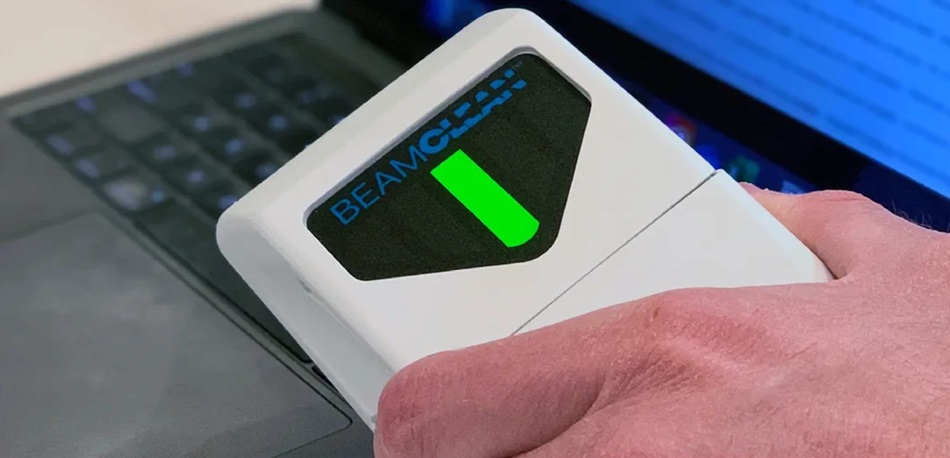
First-Of-Its-Kind Portable Germicidal Light Technology Disinfects High-Touch Clinical Surfaces in Seconds
Reducing healthcare-acquired infections (HAIs) remains a pressing issue within global healthcare systems. In the United States alone, 1.7 million patients contract HAIs annually, leading to approximately... Read moreHealth IT
view channel
EMR-Based Tool Predicts Graft Failure After Kidney Transplant
Kidney transplantation offers patients with end-stage kidney disease longer survival and better quality of life than dialysis, yet graft failure remains a major challenge. Although a successful transplant... Read more
Printable Molecule-Selective Nanoparticles Enable Mass Production of Wearable Biosensors
The future of medicine is likely to focus on the personalization of healthcare—understanding exactly what an individual requires and delivering the appropriate combination of nutrients, metabolites, and... Read more

Business
view channel
Philips and Masimo Partner to Advance Patient Monitoring Measurement Technologies
Royal Philips (Amsterdam, Netherlands) and Masimo (Irvine, California, USA) have renewed their multi-year strategic collaboration, combining Philips’ expertise in patient monitoring with Masimo’s noninvasive... Read more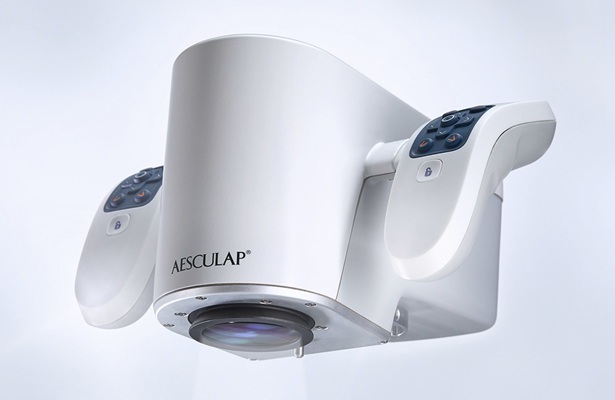
B. Braun Acquires Digital Microsurgery Company True Digital Surgery
The high-end microsurgery market in neurosurgery, spine, and ENT is undergoing a significant transformation. Traditional analog microscopes are giving way to digital exoscopes, which provide improved visualization,... Read more
CMEF 2025 to Promote Holistic and High-Quality Development of Medical and Health Industry
The 92nd China International Medical Equipment Fair (CMEF 2025) Autumn Exhibition is scheduled to be held from September 26 to 29 at the China Import and Export Fair Complex (Canton Fair Complex) in Guangzhou.... Read more