






AI-Based ICU Solution for Predicting Patient Deterioration Becomes Industry’s First Ever Device to Receive FDA Clearance
|
By HospiMedica International staff writers Posted on 09 Feb 2021 |


|
Illustration
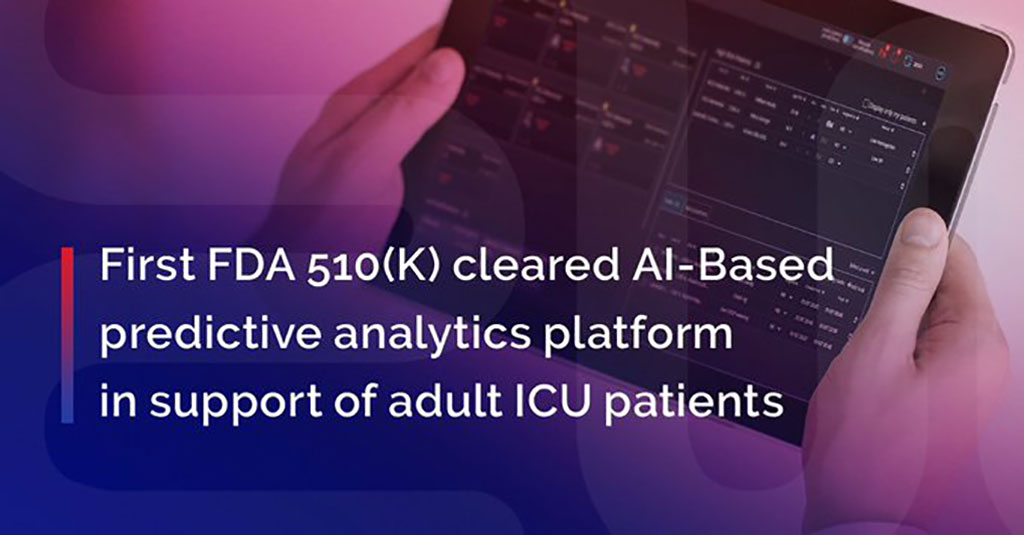
A new artificial intelligence (AI) based ICU solution for predicting the likelihood of patient deterioration up to eight hours in advance has become the industry’s first ever device to receive clearance from the US Food and Drug Administration (FDA).
The FDA has given 510(k) clearance and authorized the use of “CLEWICU,” an AI-based ICU solution from CLEW Medical (Netanya, Israel), to predict hemodynamic instability in adult patients. The clearance is the FDA’s first for such a device, and follows the FDA’s Emergency Use Authorization (EUA) for the company’s respiratory deterioration model granted in June 2020, for the predictive screening of COVID-19 and other ICU patients.
The COVID-19 pandemic has underscored the critical need for quick and accurate decision-making in intensive care units, as ICU capacity has faced unprecedented volumes. Conducting effective risk evaluation to improve patient identification and subsequent care plans requires the use of advanced tools that can provide comprehensive, predictive data to help medical professionals identify patients whose health conditions are likely to deteriorate, in addition to patients whose conditions are unlikely to deteriorate.
CLEWICU continuously monitors and categorizes patient risk levels, providing clinicians with physiological insight into a patient’s likelihood of future hemodynamic instability. The system provides notification of clinical deterioration up to eight hours in advance, enabling early evaluation and subsequent intervention for prompt, proactive patient care. The system also identifies low-risk patients who are unlikely to deteriorate, thus enabling better ICU resource management and optimization.
The analytical software product uses AI-based algorithms and machine-learning models trained to identify the likelihood of occurrence of significant clinical events for patients in the ICU. CLEWICU receives patient data from various sources, including Electronic Health Record (EHR) data and medical device data. The data is analyzed in near real-time to present calculated insights and notifications for dedicated AI models and provides a picture of overall unit status.
“We are proud to have received this landmark FDA clearance and deliver a first-of-its-kind product for the industry, giving healthcare providers the critical data that they need to prevent life-threatening situations,” said Gal Salomon, CLEW CEO.
“AI can be a powerful force for change in healthcare, enabling assessment of time-critical patient information and predictive warning of deterioration that could enable better informed clinical decisions and improved outcomes in the ICU,” said Dr. David Bates, Medical Director of Clinical and Quality Analysis in Information Systems at Mass General Brigham healthcare system and CLEW Advisory Board member.
“CLEW’s AI-based solution is a huge leap forward in ICU patient care, providing preemptive and potentially life-saving information that enables early intervention, reduces alarm fatigue and can potentially significantly improve clinical outcomes,” stated Professor Craig Lilly, University of Massachusetts Medical School.
Related Links:
CLEW Medical






The FDA has given 510(k) clearance and authorized the use of “CLEWICU,” an AI-based ICU solution from CLEW Medical (Netanya, Israel), to predict hemodynamic instability in adult patients. The clearance is the FDA’s first for such a device, and follows the FDA’s Emergency Use Authorization (EUA) for the company’s respiratory deterioration model granted in June 2020, for the predictive screening of COVID-19 and other ICU patients.
The COVID-19 pandemic has underscored the critical need for quick and accurate decision-making in intensive care units, as ICU capacity has faced unprecedented volumes. Conducting effective risk evaluation to improve patient identification and subsequent care plans requires the use of advanced tools that can provide comprehensive, predictive data to help medical professionals identify patients whose health conditions are likely to deteriorate, in addition to patients whose conditions are unlikely to deteriorate.
CLEWICU continuously monitors and categorizes patient risk levels, providing clinicians with physiological insight into a patient’s likelihood of future hemodynamic instability. The system provides notification of clinical deterioration up to eight hours in advance, enabling early evaluation and subsequent intervention for prompt, proactive patient care. The system also identifies low-risk patients who are unlikely to deteriorate, thus enabling better ICU resource management and optimization.
The analytical software product uses AI-based algorithms and machine-learning models trained to identify the likelihood of occurrence of significant clinical events for patients in the ICU. CLEWICU receives patient data from various sources, including Electronic Health Record (EHR) data and medical device data. The data is analyzed in near real-time to present calculated insights and notifications for dedicated AI models and provides a picture of overall unit status.
“We are proud to have received this landmark FDA clearance and deliver a first-of-its-kind product for the industry, giving healthcare providers the critical data that they need to prevent life-threatening situations,” said Gal Salomon, CLEW CEO.
“AI can be a powerful force for change in healthcare, enabling assessment of time-critical patient information and predictive warning of deterioration that could enable better informed clinical decisions and improved outcomes in the ICU,” said Dr. David Bates, Medical Director of Clinical and Quality Analysis in Information Systems at Mass General Brigham healthcare system and CLEW Advisory Board member.
“CLEW’s AI-based solution is a huge leap forward in ICU patient care, providing preemptive and potentially life-saving information that enables early intervention, reduces alarm fatigue and can potentially significantly improve clinical outcomes,” stated Professor Craig Lilly, University of Massachusetts Medical School.
Related Links:
CLEW Medical

Gold Member
POC Blood Gas Analyzer
Stat Profile Prime Plus
Adjustable Mobile Barrier
M-458
Absorbable Monofilament Mesh
Phasix Mesh
Latest Business News
- Philips and Masimo Partner to Advance Patient Monitoring Measurement Technologies
- B. Braun Acquires Digital Microsurgery Company True Digital Surgery
- CMEF 2025 to Promote Holistic and High-Quality Development of Medical and Health Industry
- Bayer and Broad Institute Extend Research Collaboration to Develop New Cardiovascular Therapies
- Medtronic Partners with Corsano to Expand Acute Care & Monitoring Portfolio in Europe
- Expanded Collaboration to Transform OR Technology Through AI and Automation
- Becton Dickinson to Spin Out Biosciences and Diagnostic Solutions Business
- Boston Scientific Acquires Medical Device Company SoniVie
- 2026 World Hospital Congress to be Held in Seoul
- Teleflex to Acquire BIOTRONIK’s Vascular Intervention Business
- Philips and Mass General Brigham Collaborate on Improving Patient Care with Live AI-Powered Insights
- Arab Health 2025 Celebrates Landmark 50th Edition
- Boston Scientific Acquires Medical Device Company Intera Oncology
- MEDICA 2024 to Highlight Hot Topics of MedTech Industry
- Start-Ups To Once Again Play Starring Role at MEDICA 2024
- Boston Scientific to Acquire AFib Ablation Company Cortex
Channels
Critical Care
view channel
Magnetically Guided Microrobots to Enable Targeted Drug Delivery
Stroke affects 12 million people globally each year, often causing death or lasting disability. Current treatment relies on systemic administration of clot-dissolving drugs, which circulate throughout... Read more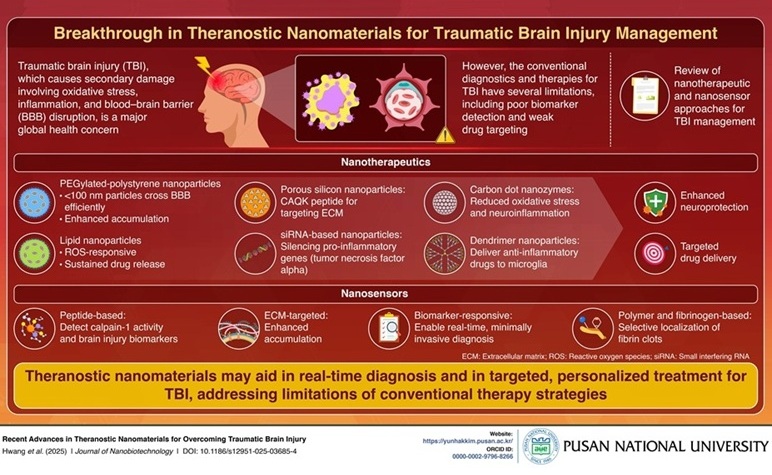
Smart Nanomaterials Detect and Treat Traumatic Brain Injuries Simultaneously
Traumatic brain injury (TBI) continues to leave millions with long-term disabilities every year. After a sudden impact from a fall, collision, or accident, the brain undergoes inflammation, oxidative stress,... Read more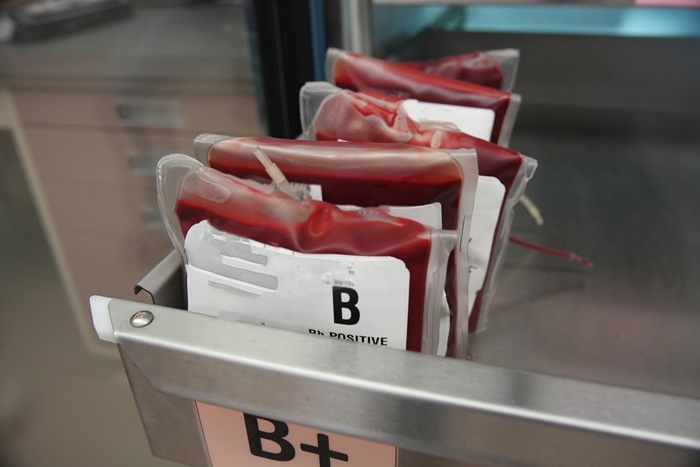
Earlier Blood Transfusion Could Reduce Heart Failure and Arrhythmia in Heart Disease Patients
Blood loss during or after surgery can place significant stress on people with heart disease, increasing the risk of dangerous complications. Transfusions are often delayed until hemoglobin levels fall... Read more
Surgical Techniques
view channel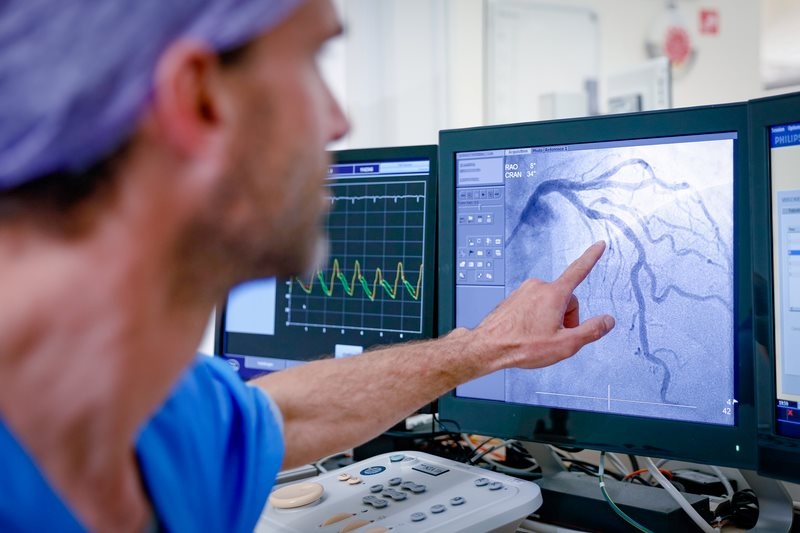
New Study Findings Could Halve Number of Stent Procedures
When a coronary artery becomes acutely blocked during a heart attack, opening it immediately is essential to prevent irreversible damage. However, many patients also have other narrowed vessels that appear... Read more
Breakthrough Surgical Device Redefines Hip Arthroscopy
Hip arthroscopy has surged in popularity, yet surgeons still face major mechanical constraints when navigating deep joint spaces through traditional cannulas. Limited tool mobility and the need for an... Read more
Patient Care
view channel
Revolutionary Automatic IV-Line Flushing Device to Enhance Infusion Care
More than 80% of in-hospital patients receive intravenous (IV) therapy. Every dose of IV medicine delivered in a small volume (<250 mL) infusion bag should be followed by subsequent flushing to ensure... Read more
VR Training Tool Combats Contamination of Portable Medical Equipment
Healthcare-associated infections (HAIs) impact one in every 31 patients, cause nearly 100,000 deaths each year, and cost USD 28.4 billion in direct medical expenses. Notably, up to 75% of these infections... Read more
Portable Biosensor Platform to Reduce Hospital-Acquired Infections
Approximately 4 million patients in the European Union acquire healthcare-associated infections (HAIs) or nosocomial infections each year, with around 37,000 deaths directly resulting from these infections,... Read more
First-Of-Its-Kind Portable Germicidal Light Technology Disinfects High-Touch Clinical Surfaces in Seconds
Reducing healthcare-acquired infections (HAIs) remains a pressing issue within global healthcare systems. In the United States alone, 1.7 million patients contract HAIs annually, leading to approximately... Read moreHealth IT
view channel
EMR-Based Tool Predicts Graft Failure After Kidney Transplant
Kidney transplantation offers patients with end-stage kidney disease longer survival and better quality of life than dialysis, yet graft failure remains a major challenge. Although a successful transplant... Read more

