






Surgical Light Delivers Optimal Illumination Performance
|
By HospiMedica International staff writers Posted on 24 Mar 2021 |


|

Image: The SunLED series of surgical lights (Photo courtesy of Mediland Enterprise)
A new series of surgical lights with high-end features provide surgeons with an enhanced working experience.
The Mediland Enterprise (Kueishan, Taiwan) SunLED Series of surgical lights is designed to emulate a cloverleaf, with a graceful, smooth three or four leaves configuration. Thanks to the calibrated precision of angles for each leaf, and precise allocation of multi-light sources and multi-modules, the SunLED mixes the light to achieve optimal optics performance in the operating room (OR). Four intelligent light mode patterns, natural white temperature, and shadowless performance provide a range of settings for different surgical needs.
A membrane control panel provides simple operation control, with intuitive control and adjustments via a motorized sterile handle that allow the surgeon to conveniently reach up and make quick adjustments. A touch-free gesture control mode grants the surgeon the option to change any mode and light pattern while reducing infection risk and improving hygiene. Thermal management and laminar flow design help fulfill hygiene requirements and prevent radiation heat to the patient, while also ensuring a comfortable work zone around the surgeon’s heads. An optional Full HD Camera system meets imaging demands.
“We see the demands of surgical equipment from the rise of diseases globally, and we listen to the feedback from our partnered hospitals. Thus, the new series of products are developed to provide clinicians a more convenient and better operating environment,” said Robin Chen, general manager of Mediland Enterprise. “It is essential to optimize the operating room with technologically advanced equipment for surgeons to perform surgical procedures with higher efficiency and achieve better surgical outcomes.”
The laminar airflow principle is designed to control particulate and microbial contamination in ambient air. In optimal conditions, the entire body of air moves with uniform velocity along parallel flow lines, with a minimum of eddies.
Related Links:
Mediland Enterprise




The Mediland Enterprise (Kueishan, Taiwan) SunLED Series of surgical lights is designed to emulate a cloverleaf, with a graceful, smooth three or four leaves configuration. Thanks to the calibrated precision of angles for each leaf, and precise allocation of multi-light sources and multi-modules, the SunLED mixes the light to achieve optimal optics performance in the operating room (OR). Four intelligent light mode patterns, natural white temperature, and shadowless performance provide a range of settings for different surgical needs.
A membrane control panel provides simple operation control, with intuitive control and adjustments via a motorized sterile handle that allow the surgeon to conveniently reach up and make quick adjustments. A touch-free gesture control mode grants the surgeon the option to change any mode and light pattern while reducing infection risk and improving hygiene. Thermal management and laminar flow design help fulfill hygiene requirements and prevent radiation heat to the patient, while also ensuring a comfortable work zone around the surgeon’s heads. An optional Full HD Camera system meets imaging demands.
“We see the demands of surgical equipment from the rise of diseases globally, and we listen to the feedback from our partnered hospitals. Thus, the new series of products are developed to provide clinicians a more convenient and better operating environment,” said Robin Chen, general manager of Mediland Enterprise. “It is essential to optimize the operating room with technologically advanced equipment for surgeons to perform surgical procedures with higher efficiency and achieve better surgical outcomes.”
The laminar airflow principle is designed to control particulate and microbial contamination in ambient air. In optimal conditions, the entire body of air moves with uniform velocity along parallel flow lines, with a minimum of eddies.
Related Links:
Mediland Enterprise

Gold Member
STI Test
Vivalytic Sexually Transmitted Infection (STI) Array
New
Medical Adhesive
MED 5570U
New
Patient Preoperative Skin Preparation
BD ChloraPrep
Latest Surgical Techniques News
- Ultrasound Technology Aims to Replace Invasive BPH Procedures
- Continuous Monitoring with Wearables Enhances Postoperative Patient Safety
- New Approach Enables Customized Muscle Tissue Without Biomaterial Scaffolds
- Robot-Assisted Brain Angiography Improves Procedural Outcomes
- Brain Mapping Technology Enhances Precision in Brain Tumor Resection
- Handheld Robotic System Expands Options for Total Knee Surgery
- VR Experience Reduces Patient Anxiety Before Kidney Stone Procedure
- Injectable Mini Livers Offer Hope for Patients Awaiting Transplant
- Pulsed Field Ablation Technology Cleared in Europe for Persistent AFib
- AI-Powered Imaging Brings Real-Time Margin Clarity to Breast Cancer Surgery
- Minimally Invasive Device Safely Treats Challenging Brain Aneurysms
- Surgical Robot Makes Complex Liver Tumor Surgery Safer and Less Invasive
- Neurostimulation Implant Reduces Seizure Burden in Drug-Resistant Epilepsy
- Minimally Invasive Procedure Effectively Treats Small Kidney Cancers
- Fluorescence Probe Paired with Engineered Enzymes Lights Up Tumors for Easier Surgical Removal
- Novel Hydrogel Could Become Bone Implant of the Future
Channels
Artificial Intelligence
view channel
AI Analysis of Pericardial Fat Refines Long-Term Heart Disease Risk
Accurately identifying long-term cardiovascular disease risk in asymptomatic adults remains challenging for clinicians. Missed or underestimated risk delays preventive therapy and increases the chance... Read more
Machine Learning Approach Enhances Liver Cancer Risk Stratification
Hepatocellular carcinoma, the most common form of primary liver cancer, is often detected late despite targeted surveillance programs. Current screening guidelines emphasize patients with known cirrhosis,... Read more

Critical Care
view channel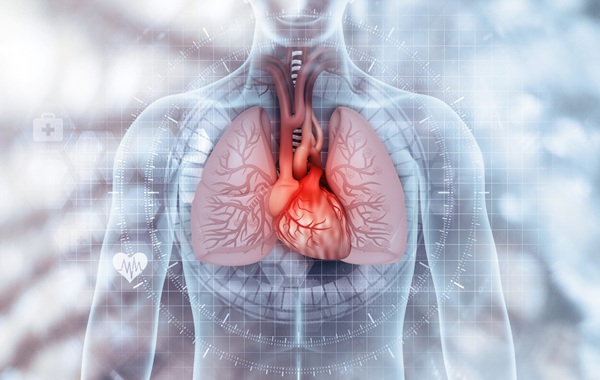
Noninvasive Monitoring Device Enables Earlier Intervention in Heart Failure
Hospitalizations for heart failure with preserved ejection fraction (HFpEF) remain common because lung congestion often worsens before symptoms prompt treatment changes. Missed early decompensation... Read more
Automated IV Labeling Solution Improves Infusion Safety and Efficiency
Medication administration in high-acuity settings is often complicated by multiple concurrent infusions, making accurate line identification essential. In a 10-hospital intensive care unit study, 60% of... Read more

Patient Care
view channel
Wearable Sleep Data Predict Adherence to Pulmonary Rehabilitation
Chronic obstructive pulmonary disease (COPD) is a long-term lung disorder that makes breathing difficult and often disturbs sleep, reducing energy for daily activities. Limited engagement in pulmonary... Read more
Revolutionary Automatic IV-Line Flushing Device to Enhance Infusion Care
More than 80% of in-hospital patients receive intravenous (IV) therapy. Every dose of IV medicine delivered in a small volume (<250 mL) infusion bag should be followed by subsequent flushing to ensure... Read more

Health IT
view channel
EMR-Based Tool Predicts Graft Failure After Kidney Transplant
Kidney transplantation offers patients with end-stage kidney disease longer survival and better quality of life than dialysis, yet graft failure remains a major challenge. Although a successful transplant... Read more
Printable Molecule-Selective Nanoparticles Enable Mass Production of Wearable Biosensors
The future of medicine is likely to focus on the personalization of healthcare—understanding exactly what an individual requires and delivering the appropriate combination of nutrients, metabolites, and... Read more


Business
view channel
GE HealthCare Leads Major European Initiative to Advance Cardio-Oncology Care
Cardiovascular complications are increasingly recognized among people undergoing or recovering from cancer treatment, driven by pre‑existing disease and the cardiotoxic effects of chemotherapy, radiotherapy,... Read more

