






Thoracic Bioimpedance System Monitors Respiratory Motion
|
By HospiMedica International staff writers Posted on 10 May 2021 |


|
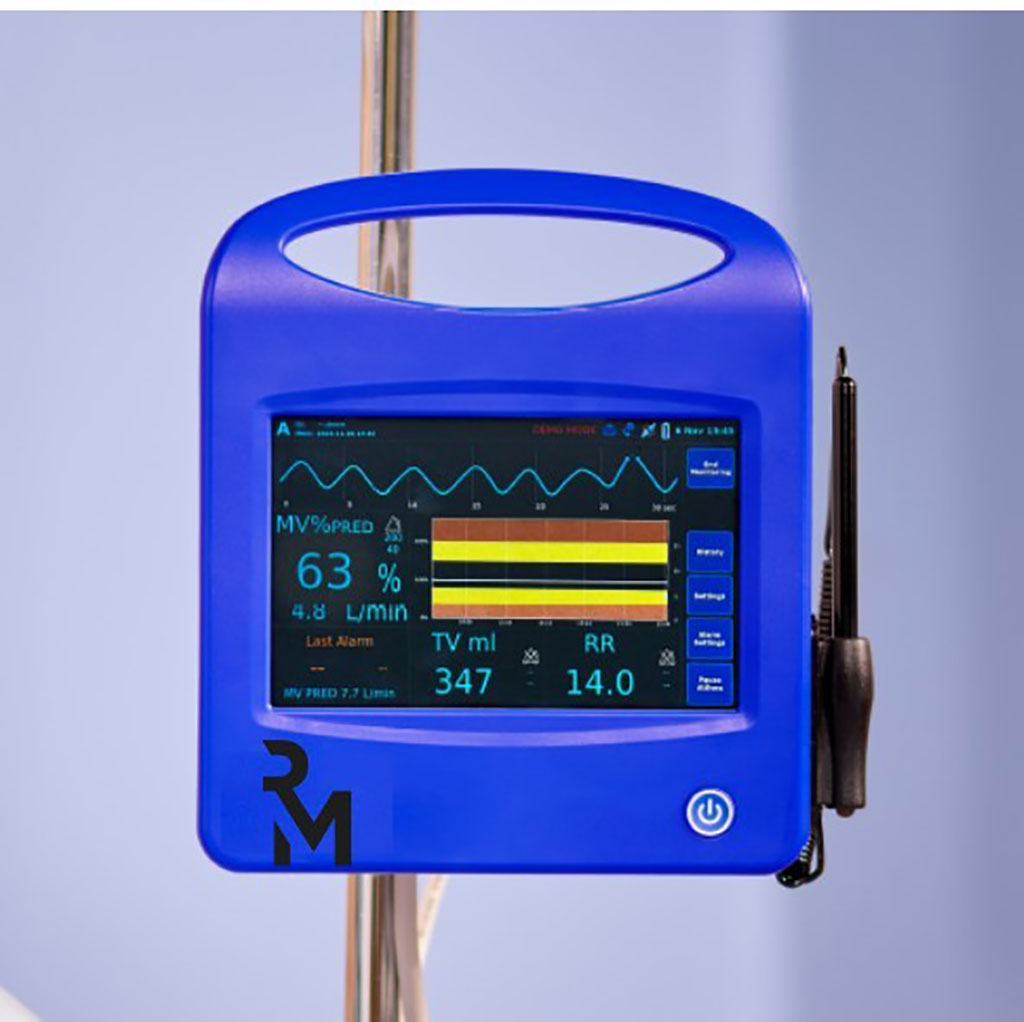
Image: The ExSpiron2Xi respiration monitor (Photo courtesy of Respiratory Motion)
A new digital breathing volume monitor helps assess respiratory function and provide early warning of impending collapse.
The Respiratory Motion (Watertown, MA, USA) ExSpiron 2Xi Respiratory Monitor System is a non‐invasive device designed to monitor breathing in patients of at least one year of age. The device contains a bioimpedance measurement system and a tablet PC housed within a single enclosure. The tablet uses a graphical user interface (GUI) for user input from the touch screen through a virtual keyboard and mouse, and presents respiratory tracing, as well as approximate scalar values and trends for minute ventilation (MV), tidal volume (TV), and respiratory rate (RR).
A reusable cable connects the ExSpiron 2Xi Monitor to a stabilized high frequency current generator and a single patient use electrode PadSet that is placed on the torso to deliver current to the patient’s skin. The same electrode PadSet records returning the impedance measurements, and an adaptive firmware circuit then conditions the voltage signal and converts it to digital form. Finally, a proprietary built-in software algorithm calculates respiratory parameters based on a non‐linear, regressive model trained data set.
“The Proven Respiratory Sentry has a new formula, and I am proud of announcing the launch of our ExSpiron2Xi,” said Laura Piccinini, CEO of Respiratory Motion. “Unique. Accurate. Confidence. The new digital platform of enhanced monitoring falls in line with Respiratory Motion's commitment to rapidly innovate leading-edge products and services that establish accurate and safe new products. Inspired Innovation is the fil rouge in Respiratory Motion's culture of meeting customer needs.”
Respiratory compromise increases patient mortality rates by over 30%, and hospital and ICU stays by almost 50% following post-operative respiratory failure, and is the largest single-source of avoidable in-patient days and the third most common patient safety event. By measuring MV, the amount of air moved through the lungs in one minute a an indication of the patient’s respiratory status can guide pain management, assess respiratory sufficiency, identify risk, and to individualize patient care pathways. MV can also replace End-Tidal CO2 for monitoring opioid induced respiratory depression.
Related Links:
Respiratory Motion





The Respiratory Motion (Watertown, MA, USA) ExSpiron 2Xi Respiratory Monitor System is a non‐invasive device designed to monitor breathing in patients of at least one year of age. The device contains a bioimpedance measurement system and a tablet PC housed within a single enclosure. The tablet uses a graphical user interface (GUI) for user input from the touch screen through a virtual keyboard and mouse, and presents respiratory tracing, as well as approximate scalar values and trends for minute ventilation (MV), tidal volume (TV), and respiratory rate (RR).
A reusable cable connects the ExSpiron 2Xi Monitor to a stabilized high frequency current generator and a single patient use electrode PadSet that is placed on the torso to deliver current to the patient’s skin. The same electrode PadSet records returning the impedance measurements, and an adaptive firmware circuit then conditions the voltage signal and converts it to digital form. Finally, a proprietary built-in software algorithm calculates respiratory parameters based on a non‐linear, regressive model trained data set.
“The Proven Respiratory Sentry has a new formula, and I am proud of announcing the launch of our ExSpiron2Xi,” said Laura Piccinini, CEO of Respiratory Motion. “Unique. Accurate. Confidence. The new digital platform of enhanced monitoring falls in line with Respiratory Motion's commitment to rapidly innovate leading-edge products and services that establish accurate and safe new products. Inspired Innovation is the fil rouge in Respiratory Motion's culture of meeting customer needs.”
Respiratory compromise increases patient mortality rates by over 30%, and hospital and ICU stays by almost 50% following post-operative respiratory failure, and is the largest single-source of avoidable in-patient days and the third most common patient safety event. By measuring MV, the amount of air moved through the lungs in one minute a an indication of the patient’s respiratory status can guide pain management, assess respiratory sufficiency, identify risk, and to individualize patient care pathways. MV can also replace End-Tidal CO2 for monitoring opioid induced respiratory depression.
Related Links:
Respiratory Motion

New
Gold Member
Handheld Blood Glucose Analyzer
STAT-Site
New
Wound Irrigation Solution
Prontosan®
New
Monitor/Defibrillator
Zenix
Latest Critical Care News
- Automated IV Labeling Solution Improves Infusion Safety and Efficiency
- First-Of-Its-Kind AI Tool Detects Pulmonary Hypertension from Standard ECGs
- 4D Digital Twin Heart Model Improves CRT Outcomes
- AI Turns Glucose Data Into Actionable Insights for Diabetes Care
- Microscale Wireless Implant Tracks Brain Activity Over Time
- Smart Mask Delivers Continuous, Battery-Free Breath Monitoring
- Routine Blood Pressure Readings May Identify Risk of Future Cognitive Decline
- CGM-Based Algorithm Enhances Insulin Dose Adjustment in Type 2 Diabetes
- Fish Scale–Based Implants Offer New Approach to Corneal Repair
- Dual-Function Wound Patch Combines Infection Sensing and Treatment
- Smartwatch Signals and Blood Tests Team Up for Early Warning on Insulin Resistance
- Smart Fabric Technology Aims to Prevent Pressure Injuries in Hospital Care
- Standardized Treatment Algorithm Improves Blood Pressure Control
- Combined Infection Control Strategy Limits Drug-Resistant Outbreak in NICU
- AI Helps Predict Which Heart-Failure Patients Will Worsen Within a Year
- Algorithm Allows Paramedics to Predict Brain Damage Risk After Cardiac Arrest
Channels
Artificial Intelligence
view channel
Machine Learning Approach Enhances Liver Cancer Risk Stratification
Hepatocellular carcinoma, the most common form of primary liver cancer, is often detected late despite targeted surveillance programs. Current screening guidelines emphasize patients with known cirrhosis,... Read more
New AI Approach Monitors Brain Health Using Passive Wearable Data
Brain health spans cognitive and emotional functions and can fluctuate even in adults without diagnosed disease. Detecting early changes remains difficult in routine care and burdens specialty services... Read more

Surgical Techniques
view channel
Continuous Monitoring with Wearables Enhances Postoperative Patient Safety
Postoperative hypoxemia on general surgical wards is common and often missed by intermittent vital sign checks. Undetected low oxygen levels can delay recovery and raise the risk of complications that... Read more
New Approach Enables Customized Muscle Tissue Without Biomaterial Scaffolds
Volumetric muscle loss is a traumatic loss of skeletal muscle that often leads to permanent functional impairment and limited reconstructive options. Current experimental strategies struggle to deliver... Read more

Patient Care
view channel
Wearable Sleep Data Predict Adherence to Pulmonary Rehabilitation
Chronic obstructive pulmonary disease (COPD) is a long-term lung disorder that makes breathing difficult and often disturbs sleep, reducing energy for daily activities. Limited engagement in pulmonary... Read more
Revolutionary Automatic IV-Line Flushing Device to Enhance Infusion Care
More than 80% of in-hospital patients receive intravenous (IV) therapy. Every dose of IV medicine delivered in a small volume (<250 mL) infusion bag should be followed by subsequent flushing to ensure... Read more

Health IT
view channel
EMR-Based Tool Predicts Graft Failure After Kidney Transplant
Kidney transplantation offers patients with end-stage kidney disease longer survival and better quality of life than dialysis, yet graft failure remains a major challenge. Although a successful transplant... Read more
Printable Molecule-Selective Nanoparticles Enable Mass Production of Wearable Biosensors
The future of medicine is likely to focus on the personalization of healthcare—understanding exactly what an individual requires and delivering the appropriate combination of nutrients, metabolites, and... Read more


Business
view channel
GE HealthCare Leads Major European Initiative to Advance Cardio-Oncology Care
Cardiovascular complications are increasingly recognized among people undergoing or recovering from cancer treatment, driven by pre‑existing disease and the cardiotoxic effects of chemotherapy, radiotherapy,... Read more

